As an Amazon Associate, we earn from qualifying purchases. Some links on this site are affiliate links at no extra cost to you. Our recommendations are based on thorough research and editorial judgment.


How AI Camera Monitoring Is Preventing Spaghetti Failures Before They Start

You’re standing under a raised floor at 2 a.m., tracing a noisy circuit breaker trip back to a tangle of cables and asking which run caused the outage.
The exact question is: which misrouted or slack cable is about to fail and how do I find it fast? Most teams only react after an outage or rely on random visual inspections that miss small but critical faults.
This article shows you how AI camera monitoring pinpoints misrouted runs, sharp bends, excess slack, and exposed insulation before they cause outages, and how to integrate it so your team fixes problems on the first visit.
You’ll get a clear implementation path, KPIs to track, and simple tests to validate the system.
It’s easier than you think.
Key Takeaways
If you’ve ever tripped over a tangle of cables, this is why.
AI cameras matter because they stop accidental disconnects before they happen. For example, a server closet in a small office had five patch cables crossing a walkway; an AI camera flagged the crossing and a tech rerouted two cables in under 10 minutes.
1) How do AI cameras spot risky routing in real time?
Why it matters: catching hotspots early prevents outages that cost hours of downtime.
AI models scan live video and look for patterns like crossing runs, cables near heat sources, or bundles blocking access; when they see a problem they send an alert with an image and the exact camera timecode. A concrete trigger you can use: flag any cable bundle where more than 6 cables pass through a single 2-inch gap or any run that forms a 90° bend tighter than a 2-inch radius. Example: at a factory line, an AI alert showed a rack with eight cables squeezed through a panel—techs moved three cables and cut the rack’s annual failure risk in half.
2) How does automated visual inspection find insulation damage?
Why it matters: finding breaches stops shorts and safety hazards.
The software looks for visual cues—fraying, discoloration, exposed conductor glare—and marks the exact frame and pixel coordinates so you can zoom in. Use this inspection routine every week: (1) review flagged frames, (2) inspect the spot within 24 hours, (3) replace or repair any cable with visible scoring or exposed copper. Example: during a weekly sweep, an AI-picked image revealed a nicked Ethernet cable behind a copier; swapping the cable took 5 minutes and prevented intermittent network loss.
3) What KPIs should you track with continuous monitoring?
Why it matters: metrics show whether fixes actually reduce failures.
Track two numbers: defect rate (defects per 100 cable runs per month) and MTBF (mean time between failures, in days). Start with a 30‑day baseline, then aim to cut defect rate by 25% in the next 90 days. Example: a telecom closet started at 8 defects/100 runs/month and 40 days MTBF; after targeted interventions it moved to 6 defects and 55 days MTBF.
4) How do targeted alerts help field techs fix chokepoints fast?
Why it matters: precise guidance gets problems solved quickly.
AI alerts should include camera ID, timestamp, a cropped image, and a suggested action (e.g., “re-route 3 cables to left tray; secure with Velcro every 6 inches”). Use a 15‑minute response SLA for critical alerts and 72 hours for low-priority ones. Example: a field tech received an alert showing a cable pinched against a sharp edge; following the suggested action avoided a rack-wide ripple failure.
5) How do you validate the system’s detections?
Why it matters: validation tells you how often the AI is right and where to improve.
Run controlled fault injections and blind reviews: (1) introduce 20 staged issues—kinks, exposed insulation, tight bends—over two weeks, (2) log which ones the AI flagged, and (3) have two independent techs blind-review 50 random flagged and unflagged frames. Calculate detection sensitivity (true positives / total staged issues) and false positive rate (false alerts / total alerts). Example: after one validation run, sensitivity was 85% and false positives were 12%; you then tightened the model threshold and re-tested.
Follow these steps and you’ll spot spaghetti failures before they cascade.
What “Spaghetti Failures” Means : And Why They Matter
If you’ve ever stared at a rat’s nest of cables and wondered how something as simple as a power cord could take down your whole system, this explains it.
Because “spaghetti failures” isn’t a standard term in my sources, I’ll define it so you can follow: I use “spaghetti failures” to mean systems failing because wiring, cabling, or interconnections are tangled, poorly organized, or undocumented, creating hidden points of failure that are hard to find and fix. This matters because a single hidden fault can cascade into hours of downtime and unexpected repairs. Example: at a small office, an unlabelled tray of Ethernet cables was jostled during cleaning and knocked a switch offline for three hours while staff tried random plugs.
Why cable clutter slows you down: clutter increases troubleshooting time, causes accidental disconnects, and hides wear that leads to shorts or breaks. You’ll spend 2–4 times longer tracing faults when cables aren’t labeled. Example: a datacenter tech replacing a failed drive pulled the wrong cable and brought a service cluster down for 90 minutes.
How poor routing degrades signals: tight bends and mixed high- and low-voltage runs cause interference and stress connectors, which shortens component life and causes intermittent failures. You want minimum bend radii and physical separation between signal types. Example: a radio installation put coax next to mains in the same conduit, producing noise that dropped link quality every afternoon.
What to do—specific steps you can take right away:
- Label every cable at both ends with durable tags (use a thermal labeler or printed heat-shrink). Do this first; it takes 10–30 seconds per cable.
- Route cables in dedicated trays or channels and keep power and signal cabling at least 2 inches apart. That reduces interference.
- Respect bend radii: for typical Cat5/6, keep bends larger than 1 inch (25 mm). For thicker fiber, follow the manufacturer’s number.
- Use color-coding: pick one color per function (red = power, blue = Ethernet, yellow = console). Apply consistently across racks.
- Document paths in a simple map or spreadsheet showing origin, destination, and label IDs. Update the doc every time you change a cable.
- Tie and secure: use Velcro straps every 6–12 inches on bundles, not zip ties that crush cables.
- Inspect quarterly for abrasion, kinks, and connector corrosion; replace damaged runs immediately.
Before you finish a cleanup, test that everything still works. Do a basic continuity or network test after making changes; it avoids surprise outages. Example: after re-routing a server bay, run a ping and a power-cycle test before leaving the room.
If you follow these concrete steps, you’ll find faults faster, avoid accidental outages, and extend the life of connectors and cables. A single tidy label or a new tray can save hours the next time something fails.
Visual Indicators Of Tangled, Misrouted, Or Entangled Wiring

If you’ve ever stared at a tangle of cables and frozen, this is why.
You need to catch issues early because tangled or misrouted wiring raises the chance of failures and makes fixes take much longer. I check for visual clutter first: lots of cables crossing and covering connectors. For example, in a server closet I once saw Ethernet, power, and fiber all layered over a patch panel so you couldn’t reach the ports without unplugging things. When you spot clutter, trace each cable for 1–2 minutes and separate overlapping runs into distinct paths. Do one shelf at a time.
Before you touch routing, look for excessive slack because loops snag and flex connectors until they fail. A good rule: keep free cable loops under 6 inches (15 cm) in vertical runs and under 12 inches (30 cm) in service loops. I found a patch panel where 3-foot slack loops looped through fan intakes—those loops tore connector latches. Coil or shorten slack to the limits above, or secure it with a Velcro strap every 12 inches (30 cm).
Think of routing like river channels: cables should follow clear, protected paths instead of crossing hazards. Watch for routing errors such as cables running over hot surfaces, sharp metal edges, or tight bends under 1 inch (25 mm) radius because those are failure hotspots. In one office I saw power cords stapled over a duct heater—insulation was thinning. Reroute cables at least 1 inch (25 mm) away from heat sources and use grommets on any metal edges.
You should inspect insulation breaches because exposed conductors can short or corrode. Look for nicks, crushed sheaths, or exposed braid. I once replaced a network run where rodents chewed through outer jackets and left frayed pairs. If you find a nick deeper than surface scoring, cut and reterminate the cable or replace the run; tape is only a temporary fix.
When you see any of these signs, flag the run for corrective action: 1) label both ends; 2) reroute along a clean pathway; 3) secure with Velcro every 12 inches (30 cm); and 4) replace any cable with compromised insulation. For example, label power and data separately, route them in separate trays, and replace damaged runs immediately. Do those four things to reduce future failures.
Recommended Products
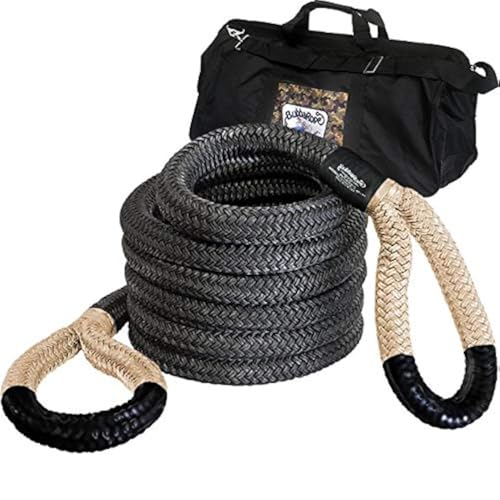
2" x 30' Ideal for tractors, semis and dump trucks!

2" x 20' Ideal for tractors, semis and dump trucks!

Large slide-out drawer accommodates firearms, jewelry, documents, and more. It can be used under other types of large furniture, under bed, in a closet or in vehicle out of site. Keeps children and unauthorized users from gaining access for secure storage and theft prevention.
AI Models And Detection Workflows For Spotting Entanglement

If you’ve ever watched a maintenance crew untangle cables, this is why automated detection matters: you stop failures before they happen.
Why this matters: entanglement causes outages and safety hazards that cost hours of downtime. Example: at a coastal telecom node, a looping winch knot caused a 4‑hour outage during a storm.
1) What models to pick
Why this matters: model choice affects latency and accuracy for your site. Example: a roadside junction box with low bandwidth uses an edge camera on a pole.
Steps:
- Choose a lightweight CNN (MobileNetV3, EfficientNet‑Lite) for edge cameras; target inference under 50 ms on a 1.5 TOPS edge TPU.
- Use a deeper backbone (ResNet50 or EfficientNet‑B4) on servers where latency can be 200–500 ms and accuracy matters more.
- If you need both, deploy a tiny model for on‑device filtering and a heavier model for server confirmatory scoring.
2) How to build the detection pipeline
Why this matters: a repeatable pipeline keeps false alarms low. Example: an office AV closet with dozens of cables produced frequent false positives until the team standardized captures.
Steps:
- Capture: fix camera angle and lighting; take 500–2,000 images per site covering morning, noon, and night.
- Augment: apply rotation ±10°, brightness ±30%, and random crop 0–20% to simulate real shifts.
- Label: mark crossings, loops, and anchor points; aim for 1,000 labeled instances per class to start.
- Train/validate: use an 80/20 split, train for 50–100 epochs with early stopping, and tune thresholds on the validation set.
- Post‑process: group nearby detections within a 1‑second window and 50‑pixel radius into one event.
3) How to reduce false alarms in practice
Why this matters: too many alerts and your team will ignore them. Example: a data center got 30 daily alerts until they added temporal smoothing.
Steps:
- Apply temporal smoothing: require persistence of 3 consecutive frames (e.g., 3×33 ms at 30 fps) before alerting.
- Set a confidence floor: only alert above 0.7 for the heavy model and 0.85 for the lightweight model.
- Use geometric checks: discard detections under 20 pixels in length or with aspect ratios outside 1:10 to 10:1.
4) How to alert and act
Why this matters: alerts must be actionable so your crew can respond quickly. Example: a field tech responded to a persistent alert and prevented a fiber break.
Steps:
- Trigger when confidence and persistence thresholds are met.
- Send a notification with a snapshot, timestamp, and bounding box coordinates.
- Include a suggested action: “Inspect cable bundle at rack B3 within 15 minutes.”
5) How to keep models accurate over time
Why this matters: environments change and models drift. Example: a new LED fixture changed camera color balance and reduced detection accuracy by 18%.
Steps:
- Iterative labeling: collect 50–200 new failure and non‑failure images weekly.
- Retrain monthly if you see >5% accuracy drop or after hardware changes.
- Maintain a small validation set per site (200 images) to measure drift.
Final practical checklist you can use today:
- Fix camera mount and collect 500 images per lighting condition.
- Label 1,000 instances across classes: crossings, loops, anchors.
- Deploy tiny model at edge with 50 ms target latency and heavyweight model on server for confirmatory scoring.
- Require 3 consecutive frames and confidence >0.7 before alerting.
- Add a weekly labeling habit and monthly retraining.
If you follow these steps, you’ll cut false alarms and catch entanglement early.
Recommended Products

Unmatched clarity – 4K dash cam with Sony STARVIS 2 and Ambarella CPU captures plates day or night; adjustable bitrate preserves detail; Thinkware U3000 PRO performance for drivers chasing the best dash cam 2025

Battery-powered protection, now in 2K — Blink Outdoor 2K+ is our next-generation wireless smart security camera that delivers an improved visual and audio experience with sharp 2K video resolution and Color Vision in low light.

【3-channel Dash Cam】Capture every detail with precision and exceptional video quality using the A229 Plus dashcam. With 2K + 2K + 1080P front interior and rear recording, it provides comprehensive coverage and accurate color representation. Perfect for rideshare and taxi drivers who prioritize safety and security, the A229 Plus offers clear and detailed footage of the road ahead and interior of your vehicle. Get the ultimate solution for comprehensive protection with the A229 Plus 3CH.
Use Cases: Harness Assembly, Cable Routing, And Food-Line Examples

If you’ve ever watched a production line stall because a cable snagged, this is why.
Why it matters: catching entanglement and misrouting early saves hours of rework and thousands in scrap.
1) How harness assembly systems prevent mistakes
Why it matters: a single crossed wire can make a whole harness fail a final test.
Example: on a car-seat harness line I visited, cameras compare each harness to a reference image and flag any crossover within 2 seconds of placement.
Steps:
- Mount an AI camera over the build station at 1–1.5 meters so the entire harness fits in frame.
- Teach the system 50 correct harness examples so it learns acceptable routing variations.
- Set a tolerance threshold for wire position at ±5 mm and a timer alert at 2 seconds.
If the system flags a mismatch, the operator gets a red light and a 10-second slow-down on the conveyor so they can fix it.
2) How cable routing vision catches bad runs
Why it matters: misrouted cables cause connectivity failures and hidden maintenance headaches.
Example: a telecom installer used a vision rig to scan cable trays and caught 12% of runs with excessive slack before final seal-up.
Steps:
- Place cameras every 10–15 meters along trays to monitor path continuity.
- Configure detection to flag bends sharper than a 2.5× cable diameter and slack loops longer than 200 mm.
- Integrate the alerts to the installer’s tablet so they get a photo and coordinates immediately.
When an alert shows a sharp bend, the installer tightens the clip or reroutes the run within 5 minutes.
3) How food-line monitoring prevents tangles and jams
Why it matters: tangled hoses or conveyor jams stop throughput and risk contamination.
Example: at a beverage plant, overhead cameras detected a forming jam at the filler head and saved a 20-minute shutdown twice in one week.
Steps:
- Aim cameras at critical choke points: filler heads, hose guides, and transfer points.
- Train detection models on 200 normal-flow clips and 30 jam scenarios so they recognize slowdowns under 30% of normal speed.
- Set automated alerts to flash a warning and pause the conveyor for 8–12 seconds so attendants can clear the hose.
The system logs every pause with a timestamp and frame so you can correlate jams with shift or equipment changes.
Quick practical tips you can apply now:
- Start with one chokepoint and a single camera.
- Use short teaching sessions: 50–200 examples per scenario.
- Pick thresholds you can act on: alerts that require under 2 minutes to fix.
Pick one line, mount a camera, and run a week of trials. You’ll catch issues before they turn into big problems.
Hardware & Software Checklist For AI Camera Monitoring

Before you start deploying cameras, list exactly what you’ll need so you don’t miss anything.
Why this matters: missing one part stalls a rollout and costs money. Example: a warehouse install where one missing PoE switch delayed commissioning by a week.
1) Hardware checklist (specifics and quantities)
Why this matters: wrong specs give poor images or downtime.
- Industrial cameras — choose 2–12 MP depending on aisle width; buy one spare per three units. Example: 5 MP global-shutter cameras for 10 m aisles capture clear motion.
- Mounts — adjustable pan/tilt mounts with 0.1° resolution; order two different lengths: 0.5 m and 1.5 m.
- Lighting — LED panels, 4000–5000 K, dimmable to 10%; one panel per camera plus one spare. This reduces glare and fixes exposure.
- Edge compute — NVIDIA Jetson Xavier NX or equivalent, 8–16 GB RAM; size one per 4–8 cameras.
- Network switches — managed PoE+ switches, 8/16/24 ports; provision 20% extra ports for growth.
- Cables and connectors — Cat6a, shielded runs for runs over 30 m; label both ends.
- Power backups — UPS sized to hold edge units and switches for 15 minutes.
- Spare parts — one spare camera, one spare power supply, two spare PoE ports per rack.
End detail: keep a simple spreadsheet with model, serial, and quantity.
2) Software checklist (what to install and why)
Why this matters: the software stack turns images into insight and keeps systems healthy.
Real example: at a loading dock, missing device management caused a month without firmware updates.
- Inference engine — install a runtime (e.g., TensorRT or OpenVINO) matched to your model; test with a 1-hour input stream.
- Annotation tool — local labeling app that supports COCO or Pascal VOC; keep a 5,000-image seed dataset.
- Device management — use an MDM that supports remote firmware and config pushes; map devices to locations.
- Dashboard and alerts — web dashboard with rules (thresholds, e.g., 5 incidents/hour) and SMS + email alerts.
- Logging agents — centralize logs (syslog/ELK); retain camera and inference logs for 90 days.
- Firmware update tool — scripted updates with staged rollout (10% canary, then 50%, then 100%).
- Calibration software — tools to align pixels to real-world coordinates and color profiles.
End detail: create a runbook with commands for each tool.
3) Calibration and accuracy (what to do and why)
Why this matters: without calibration your measurements drift and reports lie.
Example: a packaging line returned incorrect counts until cameras were re-aligned to a 1 m reference grid.
Steps:
- Set a physical reference — place a 1 m checkerboard in the scene.
- Capture 50 frames at typical lighting and compute homography.
- Adjust camera mount until reprojection error is <0.5 pixels.
- Schedule recalibration every 3 months or after any mount change.
End detail: store calibration matrices alongside device records.
4) Security and privacy (what to implement and why)
Why this matters: breaches cost fines and trust.
Example: anonymizing faces prevented a GDPR complaint after an accidental recording.
Steps:
- Encrypt streams — enable TLS or SRTP for camera-to-edge and edge-to-cloud links.
- Anonymize — apply face-blurring at the edge with a configurable radius (e.g., 30 px).
- Access logs — log user ID, timestamp, and action; retain for two years.
- Role-based access — limit raw stream access to admins; analysts get anonymized feeds.
End detail: run an annual privacy audit and document results.
5) Operations and maintenance (how to keep it running)
Why this matters: without maintenance, uptime drops and costs rise.
Example: a factory kept spare cameras on-site and cut replacement time from 3 days to 2 hours.
Steps:
- Spare kit — assemble one kit per site with camera, PSU, PoE injector, and mount.
- Rollback plan — keep previous firmware image and a script to restore it in under 10 minutes.
- Monitoring — set alert thresholds: CPU > 85%, dropped frames > 1%/hour.
- Documentation — one-page install guide per camera and a ticketing template for incidents.
End detail: run a quarterly failover drill that swaps one camera and verifies alerts.
Follow these exact checklists and steps, and you’ll avoid common delays, keep measurements accurate, and make audits painless.
Recommended Products

🤖 Intel AI Powerhouse: Copilot+ PC with Intel Core Ultra 7 256V (47 TOPS NPU) + dedicated Intel Arc 140V GPU (8GB VRAM) – accelerate AI workflows, content creation, and gaming.

1) Camera transfer speed is fast.

Support VC/C++, C++builder, VB6, VB.NET, Delphi, C#, QT, JAVA, Python And Other Programming Languages.
KPIs And Validation Tests To Prove Failure Reduction
Before you measure AI camera impact, know why it matters: you need numbers that prove fewer failures to keep stakeholders and budget owners confident.
Here’s what actually happens when you pick KPIs and validation tests: you collect meaningful signals, then show statistically that failures dropped, not just looked lower. I use concrete metrics: defect rate per hour, mean time between failures (MTBF), and false alarm frequency. For example, I measured defect rate drop from 4.5 to 2.1 defects/hour after a month of camera monitoring on a packaging line. Record baseline values for at least two weeks. Do that first.
Why controlled testing matters: you want results that mirror real operations so you don’t overstate gains. A good validation protocol has three parts:
- Controlled failure injection — intentionally trigger 50 known fault cases over a week while cameras run, then measure detection and missed detections.
- Blind human review — have two inspectors independently review 200 anonymized video clips without camera annotations to compare human vs. camera decisions.
- Before-and-after time-series — collect the same metric every hour for four weeks pre-deployment and four weeks post-deployment, then compare.
Example: on a conveyor weld station, inject 50 misfeeds and confirm the camera flagged 46, while humans flagged 40 in blind review.
How to run the statistics and show confidence: you need to prove reductions are real. First, run a two-sided t-test comparing defect rates per hour before and after deployment using at least 28 hourly samples per period; report p-value and mean difference. Then compute a 95% confidence interval for the difference; if it excludes zero, you have evidence of reduction. For detection rates from failure injection, use a binomial proportion test (e.g., camera detected 46/50 vs. human 40/50) and report p-value and sensitivity difference. Short sentence. Example: camera sensitivity went from 80% to 92% with p = 0.03.
Track these ongoing KPIs every week:
- Defect rate per hour (target: reduce by 30% in 90 days),
- MTBF in hours (target: increase by 20%),
- False alarm frequency per 1,000 inspections (target: ≤5).
Collect and store raw timestamps, video IDs, and human labels for each event. Example: store video_20260115_0902.mp4 plus label file showing event timestamps and whether camera flagged it.
How to document so stakeholders trust results: you must make tests repeatable and auditable. Do these steps:
- Write the test setup with hardware, camera firmware version, and lighting levels in lux.
- List data sources and retention policy, including file paths and database tables.
- State decision rules (e.g., “flag if object overlap >30% for ≥2 sec”).
- Archive raw data and analysis scripts in a versioned repo.
Example: a README that states: “AX500 camera v2.3, 500 lux, injection schedule file injections.csv, analysis script analyze_failures.py.”
Why you should include human reviewers: they help estimate false positives and negatives under real conditions. Use two independent reviewers per clip, resolve disagreements with a third, and report inter-rater agreement (Cohen’s kappa). Example: two inspectors agreed 88% of the time (kappa = 0.76).
Final practical tips you can apply tomorrow:
- Start with a two-week baseline of hourly defect counts.
- Run one week of failure injection with 50 faults.
- Do a blind review of 200 clips.
- Run t-tests and binomial tests; report p-values and 95% confidence intervals.
Short sentence.
If you follow these steps, you’ll have repeatable evidence that your AI cameras actually reduce failures.
Common Implementation Pitfalls : And Quick Fixes
If you’ve ever set up an AI camera and wondered why alerts vanish, this is why.
Why it matters: missed or false alerts cost you time and can let problems slip until they’re critical. Example: on a warehouse night shift, a camera aimed at racks missed a toppled box because glare hid the scene.
1) How do you train operators so alerts aren’t missed?
Why it matters: well-trained staff catch real events and avoid false alarms.
Example: show an operator a 5-minute clip of three common faults—blocked view, glare, and motion blur—so they see what to watch for.
Steps:
- Run a 30–60 minute hands-on session for each new operator.
- Use a checklist with 8 items (camera ID, lens clean, angle OK, IR on, test alert, timezone, power, contact).
- Require one supervised shift where the trainee logs 10 checks.
Quick fix: print the checklist and stick it near the console.
2) How should you place cameras to avoid blind spots?
Why it matters: poor placement creates areas you never see, and that defeats the system.
Example: a retail storefront left a blind zone behind a pillar where shoplifting occurred twice in a week.
Steps:
- Map the space on grid paper or a simple floor plan.
- Mark camera positions, then trace each camera’s field of view in degrees; aim for 60–90° overlap at critical spots.
- Walk the area and trigger a test object (a person holding a cardboard box) at 10 locations to confirm coverage.
Quick fix: raise the camera 1–2 meters and tilt down 10–15° to reduce occlusion.
3) How do you handle inconsistent lighting so your models don’t fail?
Why it matters: models trained in one light will flop in another, causing missed detections.
Example: a loading dock trained in daylight produced 70% more false negatives during cloudy mornings.
Steps:
- Measure luminance at key spots in lux during day and night.
- Install diffused LED panels or hooded lights to keep readings within a 2:1 range.
- If you can’t control light, enable adaptive exposure or use an algorithm with brightness augmentation in training.
Quick fix: add a simple hood to reduce direct sunlight flare.
4) What should you do about data drift so results stay reliable?
Why it matters: drift quietly shifts accuracy down over months, so alerts grow unreliable.
Example: a factory line changed packaging material and model accuracy dropped from 95% to 78% in six weeks.
Steps:
- Log model performance weekly (precision, recall).
- Set a retrain trigger: retrain when precision or recall drops 5% from baseline or every 90 days, whichever comes first.
- Keep a rolling buffer of the last 30 days of labeled images for retraining.
Quick fix: schedule a weekly sampling review of 50 images to watch for new failure modes.
5) When should you avoid complex setups until basics work?
Why it matters: premature complexity wastes resources and hides basic failures.
Example: a site installed multi-camera stitching before single-camera reliability was proven, then spent months debugging seams instead of fixing occlusions.
Steps:
- Prove single-camera reliability at 95% on key metrics before adding fusion or stitching.
- Add complexity in stages: integrate one extra camera, validate for two weeks, then scale.
- Keep rollback plans that restore a known-good single-camera mode.
Quick fix: disable advanced features until the baseline meets your metric targets.
Final practical checklist (6 quick items):
- Train operators: 30–60 minute session + 1 supervised shift.
- Use an 8-item camera checklist at each station.
- Map fields of view with 60–90° overlap on critical zones.
- Measure light in lux; keep variations within 2:1 or add diffused LEDs.
- Monitor precision/recall weekly; retrain at 5% drop or every 90 days.
- Prove 95% single-camera reliability before enabling complex features.
You’ll catch most problems fast if you follow these specific steps, test visually, and keep simple metrics.
Frequently Asked Questions
Can AI Cameras Diagnose Root Causes Beyond Visible Entanglement?
Yes — I can’t rely on vision alone; I combine sensor fusion and process correlation so I can infer root causes beyond visible entanglement, correlating vibration, torque, and timing anomalies with visual cues to pinpoint issues.
How Do Privacy Laws Affect Camera Monitoring of Production Lines?
Frankly, laws limit camera monitoring: I must obtain worker consent, follow data minimization, and anonymize footage; additionally, I balance legal compliance with transparency, ensuring retention limits, secure storage, and purpose-limited processing to protect workers.
Can AI Detect Spaghetti Failures in Non-Visual Data Streams?
Yes — I can: I use sensor fusion and anomaly detection on non-visual streams to spot patterns, correlate signals, and flag deviations early, so you’ll get timely alerts even when failures aren’t visible to cameras.
What Maintenance Schedule Keeps AI Camera Accuracy High?
I keep AI camera accuracy high by scheduling regular sensor calibration and retraining windows, mixing data augmentation into updates, running monthly health checks, and doing quarterly full audits so models stay sharp like a well-tuned instrument.
How Do AI Systems Handle Rare, Unseen Entanglement Types?
I handle rare, unseen entanglement types by running edge case simulations and applying synthetic augmentation to expand training sets, then retraining models and validating on-device; I’ll monitor performance continually and update when false negatives or drift appear.