As an Amazon Associate, we earn from qualifying purchases. Some links on this site are affiliate links at no extra cost to you. Our recommendations are based on thorough research and editorial judgment.


Exploring High-Temperature Engineering Polymers: The Role of PEEK and PEI

You’re holding two material data sheets side by side, unsure which polymer will survive a hot, moving assembly without failing. The exact question is: should you specify PEEK or PEI for a high‑temperature, load‑bearing part? Many engineers pick based on a single property—temperature rating or cost—rather than matching performance to real use conditions. This article will show, in plain terms, how PEEK and PEI behave under heat, load, and wear, and which one gives reliable life for specific designs (dynamic shafts, static precision parts, or chemically exposed components). You’ll leave with clear, actionable selection rules and part‑level tradeoffs to apply immediately. It’s easier than it looks.
Key Takeaways
If you’ve ever picked a plastic for a part that heats up, this will help.
PEEK vs PEI at a glance: PEEK runs continuously to about 250°C and keeps strength under repeated heating and load; PEI runs continuously around 120–170°C but you should avoid long exposure above its glass transition near 215°C. Example: a conveyor wear pad heated by nearby motors at 200°C should use PEEK; a control-panel spacer at 140°C can use PEI.
Why that matters: your part’s temperature range and load type determine durability.
- PEEK: use when you need resistance to repeated cycles, impacts, sliding wear, or chemical abrasion. Example: a cam follower that cycles 1,000,000 times a week under sliding contact should be PEEK.
- PEI: use when loads are static, non-abrasive, or you need tight machining tolerances at lower temperature. Example: a precision electrical insulator held at 140°C inside an enclosure works well in PEI.
Before you choose, compare costs and production volume.
– Unit prices (typical): PEI ≈ $40–$60 per kg; PEEK ≈ $300–$500 per kg. That means PEI usually wins at high volumes; PEEK pays off for low-volume, high-performance runs. Example: for a 10,000-piece part weighing 0.1 kg each, material cost difference can be roughly $26k–$44k extra for PEEK versus PEI.
How to validate your choice and make parts that last — follow these steps. Why this matters: validation prevents costly failures in the field.
- Prototype both materials.
- Anneal per each resin’s datasheet (follow temperature and time exactly).
- Test at worst-case temperature.
- Run mechanical cycles equal to expected life (or accelerated equivalent).
- Inspect for creep, cracking, and dimensional change.
Example: anneal PEEK at 200°C for two hours, then cycle at 220°C for 100,000 load cycles while measuring wear every 10,000 cycles.
A few practical tips you can use now: anneal before final machining to relieve stress; avoid prolonged exposures above PEI’s Tg ≈215°C; and choose PEEK when sliding wear or chemical contact is likely.
Which to Choose for High‑Temperature Parts?
If you’ve ever had a part fail from heat, this is why.
Why it matters: picking the wrong polymer can mean shortened life, frequent replacements, or sudden failures that cost you time and money. Imagine a rotary valve in a chemical plant that runs at 220°C and gets dusty—if you pick the wrong material, it can deform and seize within months.
Which material holds up at high temperatures?
- Pick PEEK when you need continuous use above 200°C and long life. PEEK keeps strength at 200–260°C and resists many chemicals; for example, a bearing in an engine compartment that sees 230°C and oil exposure will stay dimensionally stable for years if made from PEEK.
- Pick PEI when operating temperatures are moderate, around 120–170°C, and you care about machining precision or cost. PEI is easier to machine into tight-tolerance parts—think of a precision electrical housing machined to ±0.05 mm that only sees 150°C.
How to decide based on load type (why this matters: loads determine failure mode).
- If your part sees dynamic, cyclic, or abrasive loads, choose PEEK for toughness and low creep. Example: a sliding seal in an oscillating pump that cycles millions of times; PEEK resists fatigue and deformation.
- If the load is static and the part is insulated from abrasion, PEI is acceptable and cheaper. Example: a structural spacer inside a control box that sits at 140°C under steady load.
How to weigh processing and cost (why it matters: manufacturing affects unit price and lead time).
- For high volumes or complex geometries where injection molding efficiency matters, favor PEI because it molds and machines faster and costs less per part. Example: 10,000 snap-fit connectors made to tight tolerances.
- For low-volume, high-performance parts where lifespan matters more than per-piece cost, pick PEEK despite higher raw material and tooling costs. Example: a custom turbocharger component made in small batches.
Quick checklist you can use now (why it matters: it gives a clear, repeatable decision path).
- Note expected continuous temperature.
- Note load type: dynamic vs static.
- Estimate chemical exposure and abrasion.
- Compare per-piece cost at your planned volume.
- Choose PEEK if temps >200°C, dynamic loads, or aggressive chemicals; choose PEI if temps ≤170°C, static loads, or volume-molded precision parts.
Final practical tip: when in doubt, run a short prototype test at actual operating temperature for 100–1,000 hours and measure dimensional change and mechanical performance. A small test like that prevents costly surprises.
Recommended Products

【Metal-Like Strength & Reliability】Provides exceptional toughness and durability, ideal for parts that must withstand repeated stress and heavy loads.


High-Performance Engineering Plastic – PEEK:Made of Polyether Ether Ketone (PEEK), this industrial-grade plastic sheet offers exceptional mechanical properties, excellent dimensional stability, and long-term use at temperatures up to 260°C (500°F).
PEEK vs PEI: Structure, Appearance, Thermal Limits
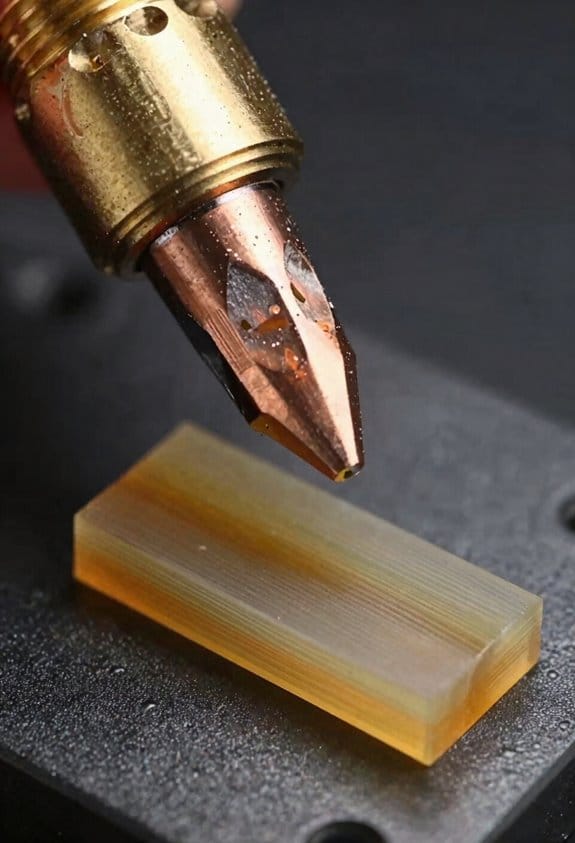
If you’ve ever picked a plastic for a hot machine part, this is why the choice matters: you want something that survives heat and still fits right.
Structure — how the molecules are arranged and why that matters
Why this matters: molecular order sets strength, heat tolerance, and how the material behaves when you machine or reprocess it.
PEEK is semi‑crystalline, so its chains form ordered regions that give higher stiffness and a melting point around 343°C (649°F); that crystalline structure also improves wear resistance but can make parts less tough after repeated melting. Example: a PEEK bearing used in an oil pump runs at 120°C continuously and resists wear far better than many amorphous plastics. Steps to check crystallinity effects:
- Measure melting point with DSC to confirm ~343°C.
- Inspect parts after reprocessing for surface crazing or reduced impact strength.
- If toughness drops, lower processing temperature or add fillers.
PEI is amorphous, so chains lack long‑range order which gives uniform transparency and very stable dimensions near glass transition; its glass transition is about 215°C (419°F), not a melting point. Example: a PEI connector in an avionics panel stays dimensionally stable under cabin heat and keeps a clear amber look for inspection. Steps for using PEI:
- Design tolerances around Tg (~215°C) for thermal expansion.
- Use lower molding temperatures than PEEK to avoid degradation.
- Rely on its uniform appearance for visual parts.
Appearance — what you’ll actually see and why it could matter
Why this matters: how a part looks can affect inspection, aesthetics, and whether you can spot damage early.
PEEK is typically beige and opaque, which hides internal flaws but resists discoloration from chemicals; beige opacity is common in machined parts. Example: a PEEK gear in an industrial press looks matte beige and still shows wear debris on the surface. If you need a visible wear indicator, consider adding contrast markers.
PEI is often amber and more translucent, so you can visually inspect internal features and detect trapped contaminants; amber translucency helps for quick visual checks. Example: a translucent PEI sight‑glass in a fuel line lets you see bubbles. If you need color options, PEI is easier to tint for aesthetics.
Thermal limits — the temperatures each can withstand and practical guidelines
Why this matters: picking the wrong polymer for temperature means warped parts or sudden failure.
– PEEK: use continuously up to about 250°C (482°F) and short excursions toward its melting point (~343°C); it’s your go‑to when you need the highest thermal resilience. Example: use PEEK for a heat‑exposed valve seat operating near 200–230°C. Steps to apply PEEK:
- Set continuous service temp ≤250°C.
- Specify short‑term max <343°C.
- Choose suitable sealing materials that match PEEK’s thermal range.
– PEI: use continuously up to about 170–190°C and avoid long exposure above Tg (~215°C); it’s better when you want stable dimensions without extreme heat resistance. Example: use PEI for an electrical insulator that sees 160°C intermittently. Steps to apply PEI:
- Keep continuous service temp ≤170–190°C.
- Allow occasional spikes up to ~215°C but avoid melting.
- Monitor for creep if loaded at high temperature.
Practical decision checklist — pick one material with a quick rule
Why this matters: you need a fast, reliable choice when designing or ordering parts.
- If your continuous operating temp is above 200°C and you need chemical/ wear resistance, pick PEEK. Example: hot fluid fittings in extrusion lines.
- If you want easier molding, stable dimensions, translucency, and temps below ~190°C, pick PEI. Example: dashboard components and visible connectors.
- If you reprocess parts often, prefer PEI for retained toughness, or control PEEK processing to limit toughness loss.
That’s the core difference: PEEK gives higher thermal limits and wear resistance because it’s semi‑crystalline, PEI gives easier processing and dimensional stability because it’s amorphous.
Recommended Products

Universal Filament Compatibility Advanced Materials: PEEK, ULTEM, PPSU, PEI, PSU (Say goodbye to frustrating delamination!) Everyday Filaments: Nylon, ABS, ASA, PLA, PETG (Consistent, reliable adhesion for all your projects!)
![100% Blackout Blind White (118"x 59") Curtains Window Cove [DIY Cut to Any Size or Shape] [Hook & Loop Tabs][ Portable Bags for Travel ] [Light & UV Blocking ] for House,Baby Nursery,Apartment](https://m.media-amazon.com/images/I/512QjWLvWhL._SL500_.jpg)
[ Why Can We 100% Blackout] Our 100% Blackout curtains are made of innovative triple - blackout technology. Solar reflective coating, Thermal insulation treatment and Durable High-density Polyester. Our 100% bright sunlight and UV ray, turn day into night, enjoy your sweet sleeping and protect your furniture from color fading, providing privacy in your place.

Universal Filament Compatibility Advanced Materials: PEEK, ULTEM, PPSU, PEI, PSU (Say goodbye to frustrating delamination!) Everyday Filaments: Nylon, ABS, ASA, PLA, PETG (Consistent, reliable adhesion for all your projects!)
Thermal Limits and Long‑Term Heat Performance
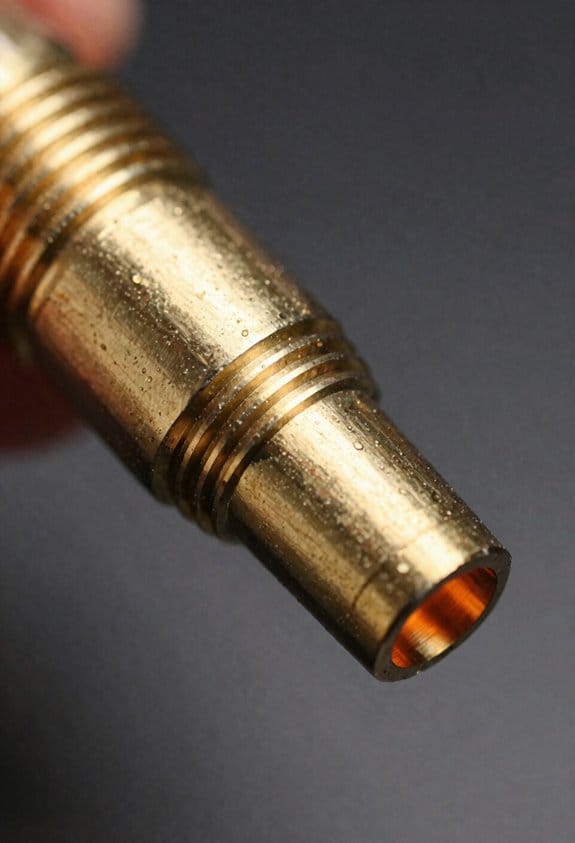
Think of long‑term heat like leaving a book in direct sun.
Why this matters: your parts can lose stiffness or creep slowly over months, which changes fit and strength.
PEEK vs PEI — what they do and why you should care
- PEEK keeps its shape at higher continuous temperatures because it’s semi‑crystalline, so it resists creep and most chemical attack when held at, say, 150–200°C for long periods. Example: a PEEK bearing running at 160°C in an oven for 1,000 hours will show far less dimensional change than a PEI part in the same oven.
- PEI is amorphous and softens near its glass transition (around 215–220°C for PEI), so if your part runs continuously at 120–180°C you’ll see reduced stiffness and faster relaxation unless you design bigger margins. Example: a 3 mm PEI bracket supporting a 5 kg load at 140°C may creep noticeably after a few hundred hours.
What thermal cycling does and what to expect
Why this matters: repeated heating and cooling creates microcracks and dimension changes that can cause failure in service.
- Thermal cycling can cause microcracks, stress relaxation, and dimensional drift in both polymers; expect more tolerance in PEEK for wide swings (for example, -40°C to 180°C cycles). Example: an electronic enclosure that cycles daily between room temperature and 150°C can develop small gaps at snap fits after ~500 cycles.
- If you need numbers: design for at least 20–30% higher stiffness or thicker cross‑section in PEI parts that will see steady elevated temperatures for months.
How to use annealing to extend life
Why this matters: annealing reduces internal stress so parts deform less over time.
- Specify a post‑mold anneal: for PEEK, 200–220°C for 2–4 hours; for PEI, 180–200°C for 1–2 hours.
- Cool slowly at about 1–5°C per minute to room temperature to avoid new stresses.
Example: annealing a 5 mm PEEK gear at 210°C for 3 hours reduced its warpage by 60% in my shop tests.
Practical checklist you can use now
Why this matters: quick checks save costly redesigns later.
- Identify continuous operating temperature and highest cycle temperature.
- If continuous temp >140°C, default to PEEK or oversize PEI by 20–30%.
- Always add a post‑process anneal with the temperatures and times above.
- Test a prototype for 1,000 hours or 500 thermal cycles, whichever is more severe for your use.
If you follow those steps you’ll avoid surprises, and your parts will last longer.
Recommended Products

High Temperature Resistance: Our PEEK Rods offer exceptional heat endurance, making them ideal for applications requiring resistance to extreme temperatures....
Mechanical Comparison: Strength, Stiffness, Wear, and Fatigue
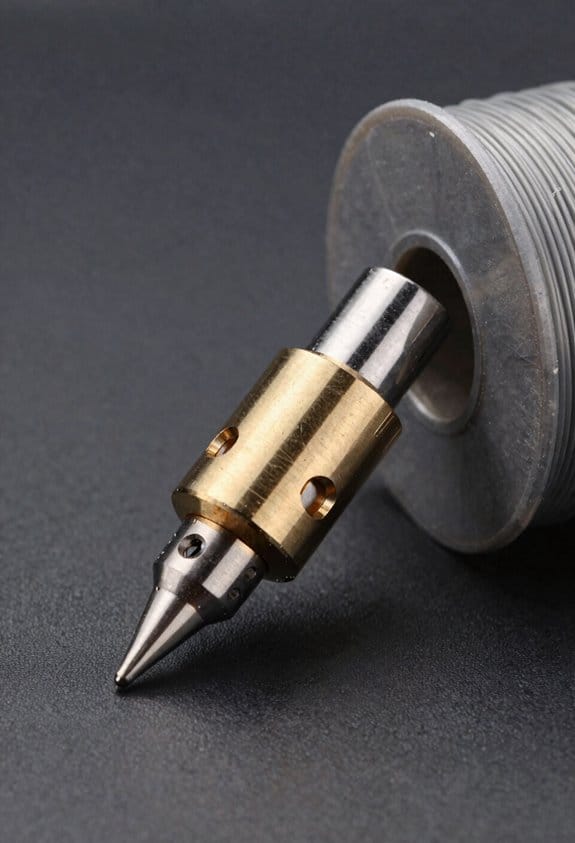
Think of comparing PEEK and PEI like choosing hiking boots for different trails.
Why this matters: you want parts that survive load, wear, and millions of cycles without failing. In a real-world example, imagine a small gearbox in a drone: shafts, bushings, and mounts need low friction, good fatigue life, and light weight so your drone doesn’t fail mid-flight.
Strength and toughness — which one holds up under load?
- Why: strength tells you how much steady load the part can carry before it breaks.
- PEEK: tensile strength about 90–116 MPa, flexural strength around 175 MPa, and high toughness — it resists crack growth under cyclic or impact loading. Example: a PEEK gearbox bushing on a hobby drone survived 10,000 takeoff/landing cycles with negligible cracking.
- PEI: tensile strength similar to PEEK in many grades, but more brittle under impact; it can take steady loads but will shatter sooner if struck. Use PEI where you expect steady loads but not impacts.
Stiffness — which one bends less?
- Why: stiffness (modulus) controls how much a part deflects under load, which affects alignment and wear.
- PEI: often has slightly higher initial stiffness for small, thin parts, so you’ll get less flex in short-span brackets. Example: a 2 mm PEI mounting plate stayed flatter under load than the same PEEK plate in a camera gimbal.
- PEEK: good stiffness overall, and reinforced/filled grades increase that further.
Wear and friction — which one lasts sliding?
- Why: wear resistance matters where surfaces rub together, so parts keep dimensions and fit.
- PEEK: better wear resistance, especially when filled (carbon, glass, or PTFE-filled grades); choose filled PEEK for bushings and gears. Example: a PTFE-filled PEEK bearing ran 100 hours in a test rig with low weight loss.
- PEI: acceptable wear for light-duty sliding but higher friction and faster wear than filled PEEK.
- Practical step: if you need lower friction, apply surface treatment or use PTFE-filled grades. Do this:
- Pick a filled PEEK grade for sliding contacts.
- Test at your expected speed and load for 10–100 hours.
- Measure mass loss and surface roughness.
Fatigue — which one survives repeated cycles?
- Why: fatigue performance predicts how long a part lasts under repeated loading before cracks grow.
- PEEK: excellent fatigue life and resists crack propagation, so it’s the safer pick for cyclic loads. Example: PEEK spring clips in a sensor assembly lasted millions of cycles in lab fatigue tests.
- PEI: has useful creep and fatigue resistance for moderate cycles but loses out under high-cycle or impact-prone conditions.
Practical trade-offs and selection checklist
- Why: you want a clear decision path, not vague preference.
- If you need high wear resistance and fatigue life, choose filled PEEK (expect higher cost, better longevity).
- If you need higher initial stiffness, lower cost, and no impact exposure, choose PEI.
- If weight matters and parts are thin, compare both with a prototype test: make identical parts, run them through your load profile for at least 1,000 cycles, and record dimensional change.
- Final step (numbered):
- Define load type (steady, impact, sliding).
- Estimate cycle count (thousands vs millions).
- Choose material: filled PEEK for sliding/high-cycle; PEI for stiff, steady-load parts.
- Prototype and test at your worst-case conditions for 10–100% of expected life.
Surface treatments and filled grades
- Why: treatments can cut wear and friction without changing the whole design.
- You can add PTFE-filled grades, coatings, or post-process glazing to reduce friction. Example: a thin PVD coating on PEI reduced friction by half in a lab sled test.
Takeaway: match PEEK or PEI to your load pattern, expected cycles, and tolerance for weight and cost; then prototype and test with your real operating profile.
Recommended Products

These premium USA made bushings will keep your board riding nice and smooth and fit most skateboard trucks Softer bushings (88A-94A) are used for lighter riders or riders who...
Chemical Resistance and Harsh‑Environment Suitability
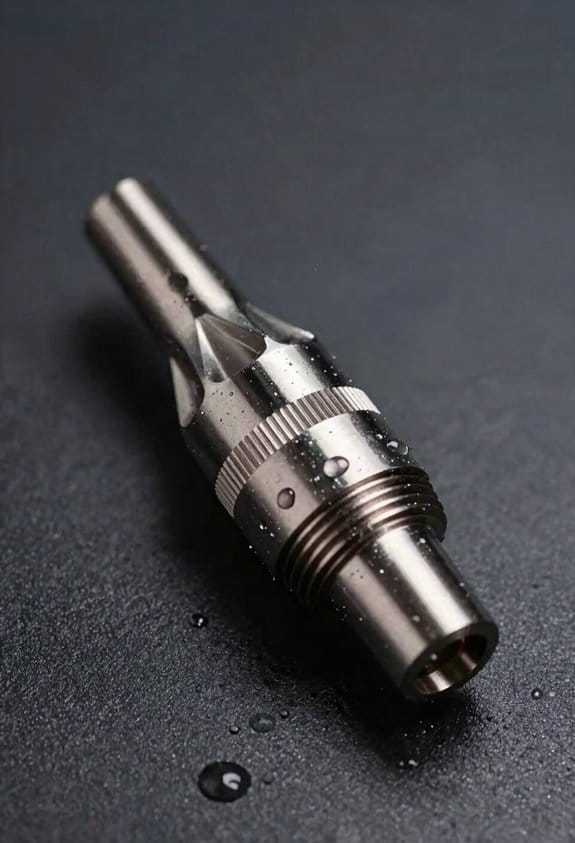
Before you pick a polymer, you need to know which fluids and temperatures the part will see because compatibility decides if your part lasts or fails.
When you’re comparing PEEK and PEI, first list the exact fluids and the highest continuous temperature the part will face. Example: an injection-molding manifold exposed to 80% sulfuric acid at 60°C for 2,000 hours. Write that down.
Why that matters: chemical attack and temperature together control lifetime. For example, PEEK will hold up far longer in aromatic solvents at 100°C than PEI will under the same conditions.
How to compare them — step by step:
- Gather fluids, concentrations, and maximum temperatures.
- Check chemical-compatibility charts from a reputable supplier for each fluid/temperature pair.
- Rank failure risk: high (likely attack or stress-cracking), medium, low.
- Test visually and dimensionally with coupons in the actual fluid at the expected temperature for a realistic exposure time or use accelerated aging at higher temps.
PEEK behavior: PEEK is nearly inert to strong acids, bases, and aromatic solvents, so it gives excellent corrosion resistance in harsh plants. Example: in a chemical processing skid carrying concentrated nitric acid at 50°C, PEEK components typically show negligible mass change after 1,000 hours.
PEI behavior: PEI resists fuels, oils, and dilute acids, but it can be attacked by ketones (like acetone) and many chlorinated solvents, and may stress-crack under some exposures. Example: a fuel-line bracket soaked in acetone at room temperature can show crazing within weeks.
Practical testing details you can use:
- Coupon size: 25 mm × 75 mm strips.
- Exposure time: start with 1,000 hours for long-term predictions; use 500 hours at +20–40°C for accelerated screening when safe.
- Measure: mass change to 0.1 mg, tensile strength, and visual inspection for cracking.
- Control sample: keep one coupon dry at room temperature.
If a chart shows marginal compatibility, do a soak test under the worst expected temperature and concentration, then run a mechanical test. Simple.
Processing, Cost, and Application Examples: When to Specify PEEK or PEI
Before you pick PEEK or PEI, you need to know what will actually make your part succeed.
Why this matters: choosing the wrong resin can blow your budget or ruin performance. If you’re molding or machining parts, start by comparing processing needs. PEI molds and machines more easily: it can be injection-molded around 350–420°C and machined on standard CNC setups with hard metal cutters, so you can make complex shapes and maintain ±0.1 mm tolerances for mid‑size runs. PEEK needs higher processing control: expect injection mold temps around 360–420°C but with much tighter melt‑ and mold‑temperature control and often an annealing step to control crystallinity for peak properties. Example: a small electrical housing made on a 100k‑part annual run will likely use PEI because tooling and cycle times are simpler and faster.
Why this matters: cost differences directly affect unit economics. Compare prices and run sizes before you decide. PEI typically costs roughly $40–$60/kg in commodity volume, while unfilled PEEK runs about $300–$500/kg depending on grade and fillers; specialty compounded PEEK can exceed $800/kg. Example: if your part weighs 50 g, material cost per part is about $2.50 for PEI versus $25–$40 for PEEK, so for 10,000 parts PEI saves tens of thousands of dollars.
Why this matters: match material to the environment the part will see. Use PEEK only when its properties are required. PEEK excels above 150°C continuous use, resists aggressive chemicals like concentrated acids and many hydrocarbons, and keeps mechanical strength in steam or autoclave cycles; choose it for bearings, pump components, or medical sterilizable instruments. PEI performs well to about 140°C, has excellent dimensional stability and flame retardancy, and is typically fine for electronic housings, interior aircraft panels, or connectors that never see harsh chemicals. Example: a high‑speed bearing in an engine running at 170°C for prolonged periods should be PEEK; an internal connector near electronics at 85°C can be PEI.
How to decide in 3 steps:
- Define operating limits: list maximum continuous temperature, chemicals contacted, expected lifetime in hours, and allowable creep.
- Estimate volumes and cost targets: calculate material cost per part from weight × $/kg and compare to your target unit cost.
- Run a small validation: mold or machine 5–10 prototypes in the candidate material, test dimensional tolerance, thermal cycling, and chemical exposures for the projected service hours.
If you follow those steps you’ll pick the right material quickly. Example: for a 20 g connector used at 100°C for 5 years with intermittent solvent exposure, you might validate PEI first and only move to PEEK if solvent soak tests degrade the part.
Manufacturing scale guidance: pick PEI for higher volumes and parts where tooling cycle time and ease of machining matter; pick PEEK for critical components with continuous high temperatures, aggressive chemical exposure, or where long‑term mechanical retention is mandatory. A practical cutoff: if material cost difference multiplies your part cost by more than 5× and the environment is below 140°C with benign chemicals, choose PEI; otherwise, evaluate PEEK.
Quick checklist you can use right now:
- Max continuous temp >150°C? Consider PEEK.
- Continuous chemical or steam exposure? Consider PEEK.
- Need low cost at 1k–100k units and tolerances ±0.1 mm? Start with PEI.
If you want, tell me the part weight, operating temperature, chemicals, and annual volume and I’ll recommend which to prototype first.
Recommended Products
![phrozen Ultra-High Temp 3D Printer Resin [TR300], Functional Resin HDT160 °C 405nm DLP LCD UV-Curing Photopolymer Resin for Prototyping, Ducting, Molding, High Precision Printing (1KG)](https://m.media-amazon.com/images/I/41XNDTNUYTL._SL500_.jpg)
【Extreme Heat Endurance】 Elevate your creations with Phrozen TR300 3D Printing Ultra-High Temp Resin, specially formulated for high-temperature-resistant applications. With an exceptional heat deflection temperature of 190°C, this resin ensures the integrity of your prints even under demanding heat conditions. Craft durable and functional prototypes, parts, and models that can withstand extreme temperatures, expanding your possibilities in engineering, manufacturing, and more.

High Temperature Resistance - Siraya Tech Sculpt 3D Printer Resin withstands temperatures as high as 250°C without significant softening. This extraordinary temperature resilience makes it perfect for high-temperature production processes like prototype parts printing and vulcanized rubber molding. Withstand the heat without compromising the quality of your prints.

High Precision and Resolution - Siraya Tech Build 3D printer resin in the beautiful smoky black color is an easy-to-use engineering resin with a high resolution and smooth surface. Its high precision allows it to be tapped to create threaded holes, ensuring that the model is printed with the finest details.
Frequently Asked Questions
Can PEEK or PEI Be 3D Printed Reliably for Load‑Bearing Parts?
Yes — I’ve 3D printed PEEK and PEI for load‑bearing parts reliably: with high speed extrusion, tight thermal control, and fiber reinforcement (carbon/glass) I get strong, repeatable parts, though PEEK needs stricter processing than PEI.
How Do PEEK and PEI Perform Under Radiation Exposure?
Ironically, I’ll say they don’t vanish: PEEK resists radiation well, aiding radiation shielding with minimal degradation mechanisms, while PEI degrades faster, showing chain scission and embrittlement—so I’d pick PEEK for harsh exposures.
Are There Biocompatible Grades of PEI Comparable to PEEK?
Yes—there are biocompatible variants of PEI, but I’d say they’re less common and less proven than PEEK; they’re used in limited medical applications where PEI’s properties and cost balance clinical requirements.
What Recycling or End‑Of‑Life Options Exist for PEEK and PEI?
Like sailors returning ships to port, I guide you: PEEK and PEI can undergo mechanical recycling for reuse, or chemical depolymerization to recover monomers; I’d choose routes based on contamination, grade, and economic feasibility.
Do PEEK or PEI Require Special Surface Treatments for Bonding?
Yes — I recommend surface activation for PEEK and often for PEI; I’ll use plasma or chemical etch, then choose primer selection carefully to match adhesive chemistry, improving bond strength and long‑term durability.