As an Amazon Associate, we earn from qualifying purchases. Some links on this site are affiliate links at no extra cost to you. Our recommendations are based on thorough research and editorial judgment.

7 Large Format 3D Printers That’ll Transform Your Prototyping Game

You spend hours tweaking a tiny prototype, only to watch the part warp when you try to scale it up for a functional test, and the whole process stalls because your printer can’t handle the larger build volume you need. The frustration of re‑printing, re‑designing, and re‑finishing repeats until you finally realize the machine itself is the bottleneck.
A good large‑format FDM printer separates itself from the rest with a truly spacious, envelope and a motion system that can keep up with high speeds without sacrificing accuracy; many buyers mistakenly focus only on nozzle size or price, overlooking core factors like rigidity, input‑shaping firmware, and multi‑toolhead capability.
This guide reviews seven large‑format FDM printers that each offer at least a 420 × 420 × 500 mm build area and can reach 600 mm/s print speeds. We selected them based on build volume, motion precision, and advanced features such as dual extrusion and high‑temperature hotends.
By the end, you’ll know which model fits your prototyping workflow, what trade‑offs to expect, and how to avoid common purchasing pitfalls.
Key Takeaways
If you need to prototype a full‑scale part without spending hours on assembly, the massive build volume—up to one cubic metre—lets you print the whole thing in a single go. You’ll cut down on post‑processing and keep your workflow smooth. No more juggling multiple prints.
For anyone who values speed as much as detail, the high‑speed CoreXY or dual‑axis motion system with input shaping pushes nozzle speeds to 500–700 mm/s while still preserving fine features. You’ll see rapid results without sacrificing quality. It’s fast and precise.
What makes this printer stand out is its ability to handle high‑temperature engineering filaments. Hotends rated at 300 °C or higher, plus a heated or enclosed chamber, let you work with nylon, PPS‑CF, and PEEK. You can finally print the tough materials your projects demand. Tough material support.
You get reliable dimensional accuracy without missed‑step nightmares thanks to closed‑loop motion and pressure‑advance tuning. Your prints stay consistent, and you won’t waste time fixing errors. Consistency is built in.
Perfect for remote workers and busy makers, the integrated auto‑leveling, bed‑mesh probing, and remote monitoring keep the first layer stuck and reduce failures. You can start a print and walk away, confident it will finish correctly. Peace of mind.
| Anycubic Kobra 3 Max 3D Printer – 600mm/s 420x420x500mm Auto‑Leveling | 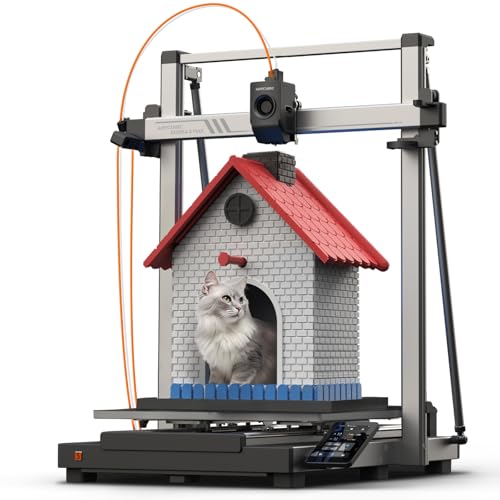 | High‑Speed Giant | Build Volume: 420 × 420 × 500 mm | Frame Material: Metal (all‑metal frame) | Auto‑Leveling: Yes (auto‑leveling) | VIEW LATEST PRICE | Read Our Analysis |
| Prusa XL 5‑Toolhead 3D Printer 360³mm Build Volume |  | Multi‑Tool Pro | Build Volume: 360 × 360 × 360 mm | Frame Material: Metal (CoreXY frame) | Auto‑Leveling: Yes (always‑perfect first layer) | VIEW LATEST PRICE | Read Our Analysis |
| Snapmaker Artisan Dual Extrusion 3D Printer with 7″ Touchscreen |  | Versatile Maker | Build Volume: 400 × 400 × 400 mm | Frame Material: Aluminum (die‑cast) | Auto‑Leveling: Yes (auto bed leveling) | VIEW LATEST PRICE | Read Our Analysis |
| QIDI PLUS4 3D Printer – High-Speed Large Build Auto-Leveling | Engineering Elite | Build Volume: 305 × 305 × 280 mm | Frame Material: Aluminum (6 mm thick) | Auto‑Leveling: Yes (fully auto leveling) | VIEW LATEST PRICE | Read Our Analysis | |
| Industrial 3DPrinter 1000x1000x1000mm Large Format FDM 3DPrinter | Industrial Titan | Build Volume: 1000 × 1000 × 1000 mm | Frame Material: Metal (industrial chassis) | Auto‑Leveling: Not specified (no auto‑leveling mentioned) | VIEW LATEST PRICE | Read Our Analysis | |
| ELEGOO Neptune 4 Max 3D Printer 500mm/s Printing | 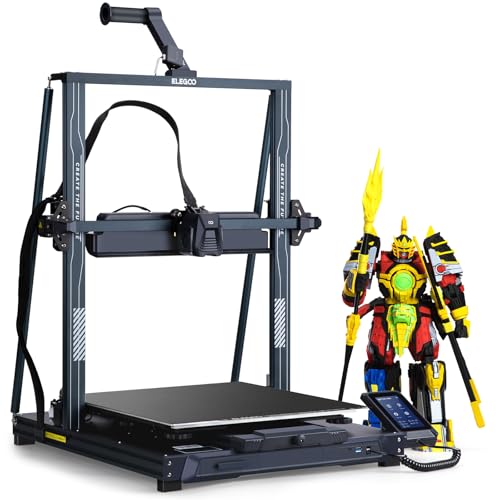 | Precision Performer | Build Volume: 420 × 420 × 480 mm | Frame Material: Metal (all‑metal) | Auto‑Leveling: Not specified (no auto‑leveling mentioned) | VIEW LATEST PRICE | Read Our Analysis |
| Creality Ender 5 Max 3D Printer – Large Build Fast Print Auto Leveling Metal Frame WLAN Control |  | Production Powerhouse | Build Volume: 400 × 400 × 400 mm | Frame Material: Die‑cast aluminum (all‑metal) | Auto‑Leveling: Yes (64‑point auto leveling) | VIEW LATEST PRICE | Read Our Analysis |
More Details on Our Top Picks
Anycubic Kobra 3 Max 3D Printer – 600mm/s 420x420x500mm Auto‑Leveling
If you need to print parts that won’t fit on a regular desktop machine, the 420 × 420 × 500 mm build volume lets you tackle full‑scale sand‑table tiles, large pet‑playground components, or single‑piece prototypes without cutting them up. For anyone who wants speed, the dual‑axis core system and SG15 bearings push the nozzle to 600 mm/s and accelerate at 10 000 mm/s², so you finish big jobs faster. You get reliable prints because auto‑leveling and AI‑driven monitoring pause the job the something goes wrong, saving material and time.
What makes this 3D printer stand out is its ability to handle a wide range of filaments—PLA, ABS, PETG, TPU, and more—so you can choose the right material for any project. You can also add up to eight colors with Anycubic ACE Pro units, giving you multi‑color capability without a separate machine. The footprint is compact at 29.5 × 32.25 × 7.25 inches, and it weighs just 47 lb, making it easy to fit in a workshop or garage.
You get a one‑year warranty and 24/7 support, so you’re covered if anything unexpected happens. This printer solves the hassle of large‑format printing by combining a massive work area with fast, stable motion and smart error detection. Perfect for hobbyists who love ambitious builds, it lets you bring big ideas to life without breaking the bank.
- Build Volume:420 × 420 × 500 mm
- Frame Material:Metal (all‑metal frame)
- Auto‑Leveling:Yes (auto‑leveling)
- Maximum Print Speed:600 mm/s
- Filament Compatibility (Standard Materials):PLA, PLA+, TPU, ABS, ASA, PETG, Matte/ Silk PLA
- Connectivity / Network Control:Not specified (stand‑alone)
- Additional Feature:AI print monitoring
- Additional Feature:SG15 high‑precision bearings
- Additional Feature:10,000 mm/s² acceleration
Prusa XL 5‑Toolhead 3D Printer 360³mm Build Volume
If you need to crank out large, multi‑material prototypes without chopping them into pieces, the 360 × 360 × 360 mm build volume lets you print the whole thing in one go. For anyone who hates the hassle of swapping filaments, five independent toolheads snap into place instantly, so you can blend up to five colors or materials in a single job. You’ll notice the first layer stays perfect across the entire bed thanks to the load‑cell sensor in the Nextruder and the tuned Input Shaper with Pressure Advance. The CoreXY motion system keeps the head moving smoothly, reducing vibration and delivering precise details. You get a pre‑assembled printer, a satin sheet, and a 1 kg PLA spool right out of the box. Perfect for small‑batch manufacturers, this machine also includes Wi‑Fi and Prusa Connect for remote control, yet it works offline if you prefer a simple setup. The design is tough enough for daily use, and the quick‑swap toolheads save you time and material. Enjoy the freedom to print big parts without the usual compromises.
- Build Volume:360 × 360 × 360 mm
- Frame Material:Metal (CoreXY frame)
- Auto‑Leveling:Yes (always‑perfect first layer)
- Maximum Print Speed:Not explicitly listed (high speed implied)
- Filament Compatibility (Standard Materials):Not listed (multi‑material toolheads)
- Connectivity / Network Control:Prusa Connect, offline capable
- Additional Feature:Five‑head tool changer
- Additional Feature:Input Shaper + Pressure Advance
- Additional Feature:Lifetime technical assistance
Snapmaker Artisan Dual Extrusion 3D Printer with 7″ Touchscreen
If you need to print big parts without sacrificing detail, the 7‑inch touchscreen lets you set up jobs in a flash. You’ll love the dual‑extrusion system for switching between PLA, ABS, PETG, TPU, or Nylon without stopping. The printer’s 400 mm³ build volume fits on a sturdy aluminum frame that stays steady during long runs.
For anyone who runs a home workshop or small business, the planetary drive and micron‑grained steel guiderails keep the print head moving precisely. Auto‑leveling takes the guesswork out of bed preparation, and each nozzle’s temperature can be set independently. Quick‑swap modular design means you can change the toolhead in about a minute.
What makes this 3D printer stand out is the live G‑code preview in Snapmaker’s free software, so you see exactly what will happen before the first layer. If you later add laser or CNC modules, the same touchscreen controls them, keeping your workflow seamless. Perfect for DIY enthusiasts, educators, and makers who need reliable, high‑resolution output.
- Build Volume:400 × 400 × 400 mm
- Frame Material:Aluminum (die‑cast)
- Auto‑Leveling:Yes (auto bed leveling)
- Maximum Print Speed:Not specified
- Filament Compatibility (Standard Materials):PLA, ABS, PETG, TPU, Nylon
- Connectivity / Network Control:USB/PC, unified software (no Wi‑Fi)
- Additional Feature:7″ touchscreen interface
- Additional Feature:Modular quick‑swap toolheads
- Additional Feature:Dual‑nozzle temperature control
QIDI PLUS4 3D Printer – High-Speed Large Build Auto-Leveling
If you need to print large engineering parts quickly, the 12 × 12 × 11‑inch build volume gives you plenty of space. The Core XY system pushes the head up to 600 mm/s, so you get speed without losing detail. You’ll notice the smooth layer positioning thanks to the independent dual‑motor Z‑axis with 10 mm lead screws and linear shafts.
For anyone who struggles with warping on big prints, the 6 mm aluminum heated bed stays flat and stable. The active chamber heats to 65 °C, helping high‑temperature filaments like PPS‑CF or PPA‑CF stick together better. The 80 W hotend reaches 370 °C and the metal throat nozzle resists wear and clogs.
What makes this 3D printer stand out is the auto‑leveling and built‑in HD camera, which simplify setup and monitoring. Filament‑runout detection keeps you from wasting time, and the QIDI app lets you watch jobs remotely and receive time‑lapse videos. Perfect for hobbyists who want multi‑color prints, the optional QIDI BOX adds extra filament slots.
- Build Volume:305 × 305 × 280 mm
- Frame Material:Aluminum (6 mm thick)
- Auto‑Leveling:Yes (fully auto leveling)
- Maximum Print Speed:600 mm/s
- Filament Compatibility (Standard Materials):High‑temp engineering filaments (PPS‑CF, PPA‑CF/GF, ABS, ASA, PC, PA, PET)
- Connectivity / Network Control:QIDI mobile app, QIDI Studio slicer, remote printing
- Additional Feature:Active chamber heating
- Additional Feature:Integrated filament cutter
- Additional Feature:Remote HD camera monitoring
Industrial 3DPrinter 1000x1000x1000mm Large Format FDM 3DPrinter
If you need to turn a massive CAD model into a real‑world part in days, the 1 m³ build envelope of the H‑1000 makes that possible. You can print a full‑size prototype without splitting it into smaller pieces, which saves you time and assembly hassle. No more juggling multiple prints.
For anyone who works with functional prototypes, the 0.1 mm layer precision and 0.01 mm positioning give you crisp details across the entire cubic meter. You’ll notice the fine text and tight tolerances that other large printers often miss. The result feels like a professional CNC finish.
What makes this FDM printer stand out is its material flexibility. You can switch between PLA for quick visual models, TPU for flexible joints, or PE for stronger, more durable parts. You get the right material for strength, flexibility, or cost without buying a separate machine.
You get a huge build volume without sacrificing accuracy, so your large‑scale projects stay true to the digital design. The printer’s footprint fits a factory floor, not a desk, and it weighs 1261 lb, meaning it stays put during heavy duty use. You’ll control it from a laptop using the supplied software, keeping the workflow simple.
Perfect for industrial designers, engineers, and manufacturers, this machine lets you produce functional parts fast. You’ll appreciate the one‑year warranty from Lluofeng, which adds peace of mind for a high‑investment tool. The printer arrived on the market in November 2026 and carries ASIN B0G3FXDLZ8.
- Build Volume:1000 × 1000 × 1000 mm
- Frame Material:Metal (industrial chassis)
- Auto‑Leveling:Not specified (no auto‑leveling mentioned)
- Maximum Print Speed:Not specified
- Filament Compatibility (Standard Materials):PLA, TPU, PE, other plastics
- Connectivity / Network Control:Laptop connection (no network features)
- Additional Feature:0.01 mm positioning accuracy
- Additional Feature:1261 lb weight capacity
- Additional Feature:Enterprise‑grade warranty
ELEGOO Neptune 4 Max 3D Printer 500mm/s Printing
If you need to crank out big parts fast while keeping detail, the 420 × 420 × 480 mm build space gives you room for large prototypes. A metal frame keeps everything steady, so you won’t see wobble at high speeds. The printer runs Klipper firmware, pushing the X/Y axes to 500 mm/s with 8 000 mm/s² acceleration. Input shaping and pressure advance tame vibration, letting you print quickly without ghosting. A direct‑drive extruder with a 5.2:1 reduction ratio feeds filament smoothly, and the 300 °C hotend handles PLA, PETG, ABS, TPU, and nylon. Double‑sided cooling fans and a model‑cooling blower keep prints flat, preventing warping. Wi‑Fi, USB, and LAN connections let you send files with a single click. Use bed clips for prints larger than 300 × 300 mm to stop shifting. Perfect for hobbyists who love large, detailed prints, this machine delivers speed and accuracy without compromise.
- Build Volume:420 × 420 × 480 mm
- Frame Material:Metal (all‑metal)
- Auto‑Leveling:Not specified (no auto‑leveling mentioned)
- Maximum Print Speed:500 mm/s (default 250 mm/s)
- Filament Compatibility (Standard Materials):PLA, PETG, ABS, TPU, Nylon
- Connectivity / Network Control:Wi‑Fi, LAN, USB‑disk, one‑click file transfer
- Additional Feature:Klipper firmware support
- Additional Feature:Double‑sided cooling fans
- Additional Feature:Wi‑Fi + LAN connectivity
Creality Ender 5 Max 3D Printer – Large Build Fast Print Auto Leveling Metal Frame WLAN Control
If you need to print big parts without waiting forever, the 400 × 400 × 400 mm build volume gives you plenty of space for oversized models or batch jobs. For anyone who worries about wobble, the die‑cast aluminum frame keeps the printer steady even when you push the X‑axis at 700 mm/s. You get fast, accurate prints without sacrificing quality.
What makes this 3D printer stand out is the CoreXY system paired with high‑torque motors, delivering smooth motion and high speed while maintaining precision. The direct‑drive dual‑gear extruder feeds filament reliably, so you won’t get jams during long runs. The heated bed reaches temperature quickly, improving adhesion for PLA, PETG, ABS and more.
You get reliable first layers without manual tweaking because the 64‑point auto‑leveling probe and Z‑offset take care of the bed. The tri‑color status light shows progress at a glance, so you always know what’s happening. WLAN connectivity lets you control several printers from one interface, perfect for a small studio or print farm.
Perfect for hobbyists who want professional‑grade performance, this printer fits most workspaces at 15.7 inches per side and 66.9 lb. The sturdy metal frame and stable rail system keep tall models from wobbling. You’ll appreciate the speed, reliability and ease of use.
- Build Volume:400 × 400 × 400 mm
- Frame Material:Die‑cast aluminum (all‑metal)
- Auto‑Leveling:Yes (64‑point auto leveling)
- Maximum Print Speed:700 mm/s
- Filament Compatibility (Standard Materials):PLA, PETG, ABS, ASA, PA, others
- Connectivity / Network Control:WLAN multi‑printer control, grouped management
- Additional Feature:64‑point auto‑leveling
- Additional Feature:1000 W rapid‑heating bed
- Additional Feature:WLAN multi‑printer control
Factors to Consider When Choosing a Large Format 3D Printer
If you need to print large parts or several pieces at once, a big build volume is a game‑changer because it cuts down on assembly time. You’ll love the ability to fit bigger projects in a single run, which means fewer hassles later.
For anyone who values speed, look for a printer that can move quickly while staying precise; high acceleration and a solid motion system keep the nozzle on track without wobble. This translates into faster production without sacrificing quality.
What makes this 3D printer stand out is its material flexibility and smart bed features. It handles a wide range of filaments, so you can tackle many project ideas, and the auto‑leveling saves you time while boosting first‑layer adhesion.
You get reliable calibration without endless manual tweaks, letting you focus on creating rather than troubleshooting.
Perfect for hobbyists and small‑shop owners, this machine balances size, speed, and ease of use in a way that feels intuitive and efficient.
Build Volume Capacity
If you need to print a large, single‑piece model and want to avoid constant re‑orienting, start by checking the printer’s build volume. You should measure your object, then add a little extra space for supports and for rotating it to reduce overhangs. This extra room helps keep the print stable and the finish smooth.
For anyone who worries about long print times and material waste, remember that a bigger envelope means longer jobs and higher filament consumption. Choose a size that meets your biggest design without inflating costs. Keep the extra material and post‑processing time in mind.
What makes a large‑format 3D printer stand out is its ability to handle tall prints without wobble. Treat height (Z) as a separate factor; you’ll need a sturdy frame and tight layer adhesion for tall objects. A solid, flat bed and consistent temperature control keep dimensions accurate across the whole surface.
You get a printer that fits through doors and under ceilings without sacrificing build size. Verify the footprint matches your workshop’s layout and that shipping dimensions are manageable. This prevents nasty surprises when you move the machine.
Perfect for hobbyists with a dedicated space, this printer’s motion system must be strong enough to support a large bed. Look for a design that minimizes vibration and keeps the platform level. A reliable system means your large parts stay true to size.
Print Speed & Acceleration
If you’re trying to finish big 3‑D prints faster, crank up the speed and acceleration on your large‑format printer. Pushing the maximum speed to several hundred mm/s will shave hours off a job, but you’ll need a solid motion system to keep the finish smooth. High acceleration—often thousands of mm/s²—helps the head change direction quickly, yet it can introduce ringing if the frame isn’t stiff enough. Use input shaping and pressure‑advance to tame those vibrations and avoid blobbing. Choose dual‑axis gantries, high‑precision bearings, and solid lead screws so the printer stays on target under the extra forces. Make sure the hotend and cooling can keep up with the melt flow at those speeds, or you’ll see under‑extrusion and weak layer bonding. The result is a printer that tackles large parts with speed while still delivering the detail you expect.
Material Compatibility Range
If you want to push a large‑format printer to its limits, you need to know whether it can handle the filaments you plan to use. For anyone who prints with PLA, PETG, ABS, TPU, nylon, or engineering polymers like PC, PEEK, or PPS‑CF, the hotend must hit at least 300 °C and the heated bed should stay above 100 °C. You get stable thermal conditions when the printer includes an actively heated or enclosed chamber.
What makes this printer stand out is its extruder design. A direct‑drive or high‑torque geared unit with hardened filament paths prevents slipping when you feed flexible or abrasive filaments. If you run multi‑material jobs, look for a machine that offers multi‑feeders, runout detection, and built‑in filament cutters.
Perfect for creators who experiment with carbon‑filled or glass‑filled filaments, the printer should support wear‑resistant nozzles such as hardened steel, ruby, or coated options. Modular hotends let you swap in specialized nozzles quickly, so you won’t be stuck with a single material. This flexibility keeps your workflow smooth and your prints reliable.
Auto‑Leveling and Calibration
If you’re tired of the first layer sticking or the nozzle crashing, a solid auto‑leveling system is a lifesaver. It probes the bed at many points—often more than sixteen—so you get a detailed height map that smooths out any warp across the whole surface. You’ll notice a consistent first layer even on large prints, and you won’t waste time manually tweaking the nozzle height each time you change filaments.
For anyone who swaps between multiple extruders, look for a printer that remembers Z‑offsets per nozzle. This means you can switch tools without a failed start, and the machine automatically applies the right offset for each one. It also helps when you move between different build plates or materials, because you can store separate leveling profiles and pull them up in seconds.
What makes this printer stand out is its temperature compensation. As the heated bed expands, the firmware updates the mesh in real time, keeping the surface flat and preventing uneven extrusion on tall, wide prints. You’ll also appreciate the ability to run a remote leveling pass, so you can keep the workflow moving without stopping the whole job.
You get reliable first‑layer performance without the hassle of constant manual adjustments. The system’s adaptive height feature monitors the nozzle distance during the start and fine‑tunes it on the fly, which cuts down on failed prints and saves you material. In short, the auto‑leveling and calibration tools let you focus on designing and printing, not on troubleshooting the bed.
Motion System Precision
If you’re printing massive posters or architectural models, you need a motion system that won’t wobble. A CoreXY or dual‑rail design keeps the motors stationary and spreads the load, so the moving mass stays low and you can crank up speed without smearing details. The result is crisp edges even on big prints.
For anyone who hates uneven layers, precision linear guides and quality bearings replace the cheap rods you see on budget machines. They cut out play, which dramatically lowers layer‑registration error and keeps surfaces smooth. You’ll notice the difference on the first sheet.
What makes this printer stand out is its stiff frame paired with input‑shaping firmware. The combination tames resonant ringing when you push the accelerations high, preserving dimensional fidelity. No more ghosting on tall prints.
You get a dual‑Z or independent dual‑motor Z axis without the usual runout. Balanced lead‑screw forces keep Z‑banding at bay, so tall prints stay straight from bottom to top. Your large‑format projects stay true to size.
The closed‑loop components—encoders, fine lead screws, and tight belt tooth profiles—translate every command into exact extrusion. With pressure‑advance tuned, your material flows perfectly, giving you the accuracy you need for professional‑grade work. No compromise on detail.
Network Connectivity Options
If you need your 3D prints to start without waiting for a slow upload, a wired Ethernet connection gives you the fastest, most reliable link. Your large‑format printer will move gigabytes of data in seconds, keeping latency low for smooth remote monitoring. No cables? Not a problem.
For anyone who values flexibility, a Wi‑Fi option lets you send files and tweak settings from anywhere in the shop. It’s perfect when you want to avoid a tangle of cords, though a weak or crowded wireless network can cause hiccups in multi‑printer farms. Keep the signal strong.
What makes this printer stand out is its ability to fall back on USB or SD cards when the network is down. You can still print securely offline, and you won’t lose a job because of a busted router. Simple, reliable.
You get automated queuing and remote slicing without hunting for complex setups. Look for built‑in FTP or SMB shares, a web GUI, and REST APIs that let your software talk directly to the machine. These features turn a tedious workflow into a smooth one.
The printer solves security worries by supporting TLS/SSH firmware updates and isolated VLANs or subnets. Strong passwords keep unauthorized users out, protecting both your designs and the hardware. Stay safe, stay productive.
Frequently Asked Questions
What Filament Types Are Compatible With These Large‑Format Printers?
Like a versatile toolbox, these large‑format printers accept PLA, ABS, PETG, TPU, and nylon filaments. PLA melts around 190‑220 °C, offering easy printing and low warping, while ABS requires 230‑250 °C and a heated bed to prevent cracking. PETG blends strength and flexibility, printing at 230‑250 °C with moderate adhesion. TPU provides rubber‑like elasticity, demanding slower speeds and precise extrusion. Nylon delivers high durability, needing high temperature and a dry environment to avoid moisture absorption. Choose based on part strength, flexibility, and temperature tolerance.
How Do I Calibrate Bed Leveling for Uneven or Warped Surfaces?
You start by cleaning the bed, then attach a piece of paper or a feeler gauge at multiple points. Adjust the Z‑offset until the paper slides with slight resistance, checking corners and the center. If the surface warps, use a flexible build plate or a heated glass panel, re‑level after each thermal cycle. Verify consistency by repeating the test after every print, correcting any drift before beginning the next job.
What Maintenance Schedule Is Recommended for High‑Speed Extruders?
You clean clean the nozzle weekly, then check the drive gear and feeder every two weeks, while you lubricate the bearings monthly; this rhythm balances wear and performance. Replace worn parts promptly, and inspect the motor temperature after long runs. Keep the filament path dust‑free, tighten belts if tension drops, and verify the extruder steps per millimeter quarterly. Record each service in a log to track trends and avoid unexpected failures.
Can I Print With Multiple Materials Simultaneously on These Models?
Yes, you can print with multiple materials on these large‑format printers, but you must use a dual‑extruder or multi‑material system that controls each filament separately. The printer’s firmware coordinates the nozzles, switching between plastics, composites, or flexible filaments as the toolpath requires. You’ll need to calibrate temperature and flow for each material, guarantee proper adhesion between layers, and monitor for cross‑contamination, especially when using soluble supports. Proper slicing software also must support multi‑material assignments.
How Does Ambient Temperature Affect Print Quality at Large Build Volumes?
Like a desert sunrise, ambient temperature shapes large‑volume prints; if the room’s too cold, the filament contracts, causing layer delamination, warping, and reduced adhesion. If it’s too hot, the material softens, leading to sagging and loss of detail. Keep the space between 20‑25 °C, use enclosure heating or cooling as needed, and monitor temperature drift with a sensor, ensuring consistent thermal conditions throughout the build.