As an Amazon Associate, we earn from qualifying purchases. Some links on this site are affiliate links at no extra cost to you. Our recommendations are based on thorough research and editorial judgment.

4 Flashforge 3D Printers That Ignite Your Creative Projects

Imagine spending hours tweaking a 3‑D model, only to watch the first layer wobble and the print fail, leaving you with a tangled mess of filament. Or picture a weekend project that stalls because the printer’s nozzle clogs mid‑print, forcing you to restart and waste precious time.
What really separates a reliable 3‑D printer from a disappointing one is how it handles core tasks like auto‑leveling, filament management, and motion precision—many buyers overlook these, assuming any printer will deliver consistent results.
This guide reviews four Flashforge printers, selected for their speed, multi‑color capability, and robust enclosure features. By the end, you’ll know which models excel in coreXY motion, filament auto‑refill, and quick‑swap tooling, and how they match your specific creative needs.
Key Takeaways
If you’re looking for a printer that can handle multi‑color projects without constant filament swaps, the AD5X’s CoreXY frame and Intelligent Filament System do the heavy lifting. Its 220 × 220 × 220 mm build volume gives you plenty of space, while the 600 mm/s travel keeps prints moving quickly. You’ll love the auto‑refilling feature that lets you switch colors on the fly.
For anyone who needs a sturdy, enclosed machine for high‑temperature prints, the Adventurer 5M Pro’s metal frame and sealed chamber are a game‑changer. It reaches 200 °C fast, so PLA and other materials melt in seconds. One‑click auto‑leveling means you spend less time tweaking the bed and more time creating.
What makes this class of printers stand out is the shared support for 1.75 mm filaments, including Dynta and AMOLEN PLA. Tight diameter tolerances cut down on jams, giving you smoother extrusion. You’ll notice fewer interruptions and more consistent results.
You get reliable first layers without manual bed tweaks thanks to integrated auto‑leveling and vibration compensation. The AD5X’s fast hot‑end heating and hardened nozzle options let you tackle complex, vibrant designs with ease. The Adventurer 5M Pro’s rapid heating keeps your workflow moving.
Perfect for hobbyists who want both speed and color flexibility, these printers let you dive into ambitious projects without sacrificing convenience. Enjoy high‑speed performance and seamless color changes, all while keeping your prints accurate and jam‑free.
| Dynta 3D Printer Filament 250g 1.75mm PLA (Multiple Colors) | 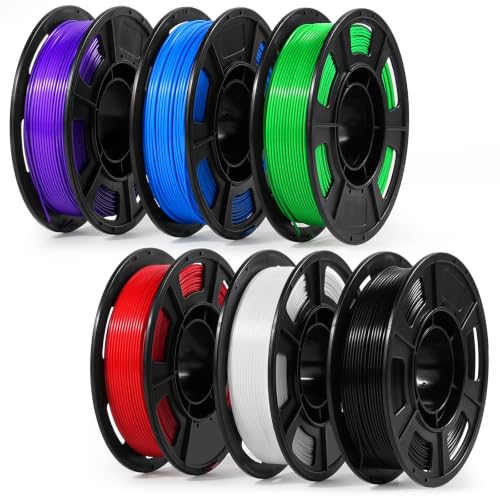 | Colorful Essentials | Build Volume: 220 × 220 × 220 mm | Nozzle Temperature Max: 230 °C (typical PLA) | Filament Compatibility: PLA (1.75 mm) | VIEW LATEST PRICE | Read Our Analysis |
| AMOLEN Silk PLA 3D Filament Bundle 4x200g Dual Color | 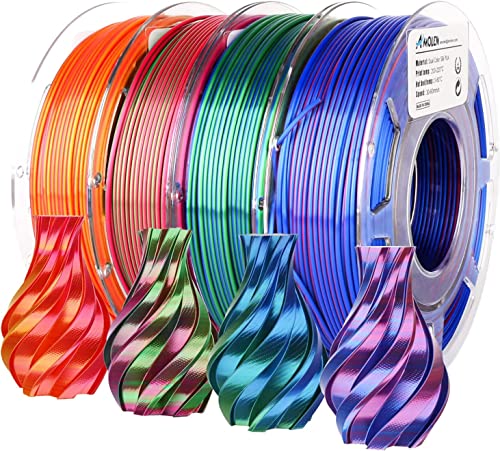 | Silk Finish | Build Volume: 220 × 220 × 220 mm | Nozzle Temperature Max: 230 °C (typical PLA) | Filament Compatibility: PLA Silk (1.75 mm) | VIEW LATEST PRICE | Read Our Analysis |
| Flashforge AD5X Multi-Color 3D Printer 600mm/s Auto-Leveling 300°C Extruder | 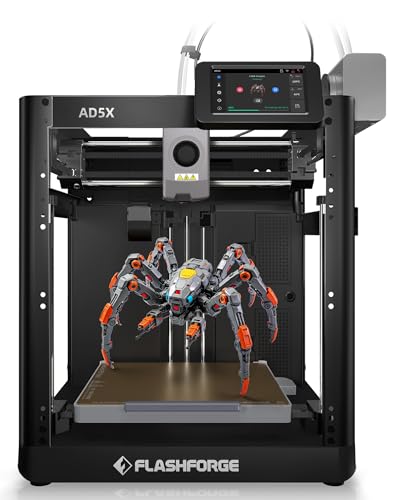 | Pro Multi‑Color | Build Volume: 220 × 220 × 220 mm | Nozzle Temperature Max: 300 °C | Filament Compatibility: PLA, PETG, TPU, carbon‑fiber composites (1.75 mm) | VIEW LATEST PRICE | Read Our Analysis |
| FLASHFORGE Adventurer 5M Pro 3D Printer (220³) | 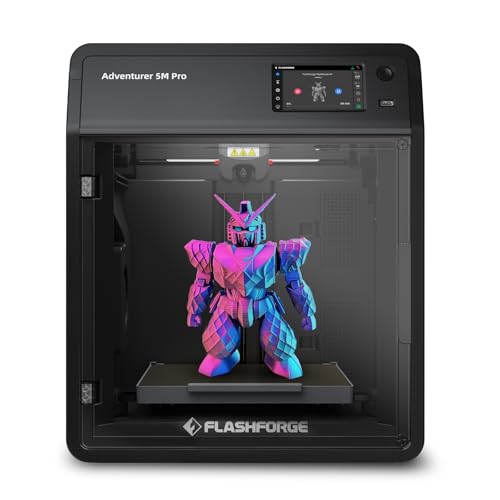 | Classroom Champion | Build Volume: 220 × 220 × 220 mm | Nozzle Temperature Max: 200 °C (heat‑up to 200 °C) | Filament Compatibility: PLA, PETG, TPU (standard 1.75 mm) | VIEW LATEST PRICE | Read Our Analysis |
More Details on Our Top Picks
Dynta 3D Printer Filament 250g 1.75mm PLA (Multiple Colors)
If you’re tired of filament jams on your Flashforge printer, the 1.75 mm diameter tolerance of this PLA keeps the extruder feeding smoothly. For anyone who wants consistent color results, the six 250 g spools—black, white, red, green, blue, and purple—are wound on a 53 mm universal narrow spool that fits most FDM machines, including the Adventurer 5M. You get low‑odor, biodegradable material from renewable plant resources, so your prints smell fresh and you’re being eco‑friendly.
What makes this PLA stand out is the easy‑to‑store vacuum‑sealed packaging with desiccant, which protects the filament from moisture that can cause bubbles or clogs. Print at 190–230 °C with a 45–60 °C heated bed for reliable results, and you’ll notice fewer hiccups during long jobs. The spools are compact enough for most printer compartments, but double‑check if your slot is under 53 mm to avoid fit issues.
Perfect for hobbyists who love experimenting with colors, this filament lets you switch hues without worrying about uneven feeding. You get six vibrant options without the hassle of ordering separate rolls. Store each spool in its sealed bag, and you’ll keep the material fresh for months.
- Build Volume:220 × 220 × 220 mm
- Nozzle Temperature Max:230 °C (typical PLA)
- Filament Compatibility:PLA (1.75 mm)
- Print Speed (Travel):Standard FDM speeds (≈60 mm/s)
- Touchscreen Interface:No touchscreen
- Auto‑Leveling:Manual leveling required
- Additional Feature:Vacuum‑sealed with desiccant
- Additional Feature:Mechanically wound spool
- Additional Feature:Renewable plant‑based material
AMOLEN Silk PLA 3D Filament Bundle 4x200g Dual Color
If you want eye‑catching, multi‑color prints without swapping filaments, the AMOLEN Silk PLA bundle gives you four 200‑gram spools that fit any 1.75 mm FDM printer. You’ll love the dual‑color silk finishes—Red/Gold, Blue/Green, and more—because the co‑extruded filament blends at merging points for a seamless rainbow effect. The material melts smoothly, so you won’t see bubbling or jamming, which keeps layer adhesion strong and warping low. For anyone who prints decorative objects or prototypes, this set offers 800 grams of reliable filament that’s easy to handle. You get vibrant colors without the hassle of post‑processing. The 24/7 support team can answer technical questions quickly. Perfect for hobbyists who need consistent results, the AMOLEN Silk PLA bundle makes colorful printing simple and enjoyable.
- Build Volume:220 × 220 × 220 mm
- Nozzle Temperature Max:230 °C (typical PLA)
- Filament Compatibility:PLA Silk (1.75 mm)
- Print Speed (Travel):Standard FDM speeds (≈60 mm/s)
- Touchscreen Interface:No touchscreen
- Auto‑Leveling:Manual leveling required
- Additional Feature:Silk dual‑color finish
- Additional Feature:Multi‑color change effect
- Additional Feature:24/7 technical support
Flashforge AD5X Multi-Color 3D Printer 600mm/s Auto-Leveling 300°C Extruder
If you need to crank out colorful prototypes fast, the AD5X lets you print four colors in one go without pausing. Its CoreXY frame keeps the build stable while the 220 × 220 × 220 mm volume gives you enough space for most classroom projects. You can melt high‑temperature filament up to 300 °C, so carbon‑fiber reinforced PLA works without a hitch.
For anyone who hates manual filament swaps, the Intelligent Filament System auto‑refills from up to 4 kg spools and switches colors via software. You’ll spend less time changing filaments and more time watching the part take shape. The one‑click auto‑leveling and vibration compensation keep the first reliable, even when you’re busy elsewhere.
What makes this multi‑color printer stand out is the 600 mm/s travel speed and 20 m/s² acceleration, cutting print time dramatically. You’ll see parts finish in a fraction of the usual time, freeing up the printer for the next job. The 4.3‑inch touchscreen and remote monitoring through Flash Maker keep you in the loop from anywhere.
You get a versatile machine that handles PLA, PETG, TPU, and composites, so you can tackle a wide range of projects. Perfect for small‑business owners and educators, this printer delivers speed, color flexibility, and reliability without demanding constant supervision.
- Build Volume:220 × 220 × 220 mm
- Nozzle Temperature Max:300 °C
- Filament Compatibility:PLA, PETG, TPU, carbon‑fiber composites (1.75 mm)
- Print Speed (Travel):Up to 600 mm/s
- Touchscreen Interface:4.3‑inch color touchscreen
- Auto‑Leveling:One‑click auto‑leveling
- Additional Feature:Intelligent Filament System (IFS)
- Additional Feature:Auto filament loading/unloading
- Additional Feature:Remote color selection via software
FLASHFORGE Adventurer 5M Pro 3D Printer (220³)
If you need a 3‑D printer that won’t spill hot plastic on the kitchen table, the Adventurer 5M Pro keeps everything sealed and safe. Its 220 × 220 × 220 mm build volume fits most school projects and hobby kits, while the metal frame holds the machine steady during long prints. You’ll love the fast heat‑up – 200 °C in about 35 seconds thanks to a 50 W heater – so you can start printing without a long wait.
For anyone who worries about uneven first layers, the one‑click auto‑leveling measures nozzle height and compensates for plate irregularities automatically. The flexible PEI steel plate lets you pop prints off easily, and swapping the nozzle takes just three seconds with no tools required. You’ll also appreciate the 4.3‑inch touchscreen that walks you through settings step by step.
What makes this printer stand out is the dual HEPA13 and activated‑carbon filtration. It captures 99 % of particles and VOCs, keeping the enclosed chamber clean for indoor use. Filament‑run‑out alerts and power‑loss recovery protect your jobs, so you don’t lose hours of work.
You get reliable, fast printing without sacrificing safety. The Adventurer 5M Pro solves the problem of noisy, exposed printers by sealing the build area and adding strong filtration. Perfect for teachers and families, this printer delivers consistent results while keeping the workspace safe.
- Build Volume:220 × 220 × 220 mm
- Nozzle Temperature Max:200 °C (heat‑up to 200 °C)
- Filament Compatibility:PLA, PETG, TPU (standard 1.75 mm)
- Print Speed (Travel):Up to 600 mm/s
- Touchscreen Interface:4.3‑inch touchscreen
- Auto‑Leveling:One‑click auto‑leveling
- Additional Feature:Enclosed build chamber
- Additional Feature:Dual HEPA13 & carbon filtration
- Additional Feature:Quick‑detachable nozzle (tool‑free)
Factors to Consider When Choosing a Flashforge 3D Printer
If you need to print larger parts or several pieces at once, start by checking the build volume. A bigger build area lets you tackle big projects without splitting them into multiple jobs. You’ll also appreciate the extra space when you’re printing for friends or a hobby group.
For anyone who experiments with different filaments, the nozzle temperature range matters. A wider temperature span supports everything from flexible TPU to high‑heat ABS, so you won’t be limited by material choice. The multi‑color filament system adds detail without the hassle of swapping spools manually.
What makes this Flashforge stand out is its auto‑leveling and calibration features. Reliable bed leveling saves you time and frustration, especially on the first few prints. Plus, the printer’s speed and acceleration settings let you crank up production while keeping quality in check.
You get consistent results without constant tinkering. The combination of fast printing and easy setup means you can focus on design, not maintenance.
Build Build Volume Capacity
If you need to print large parts without splitting them, look at the X × Y × Z dimensions each Flashforge model offers. For anyone who wants to create functional prototypes or full assemblies in one piece, a bigger envelope saves you time and post‑print glue. What makes this printer stand out is the ability to handle your biggest expected models, so you won’t have to compromise on design.
You get a larger build chamber without sacrificing print quality, as long as the frame stays rigid and the motion system stays precise. The product name solves the problem of limited print size by offering a spacious interior that keeps dimensional accuracy even on big parts. Perfect for hobbyists who love ambitious projects, this printer lets you tackle big jobs while keeping material consumption and print time in check.
Remember that a bigger build volume means you’ll use more filament and each print will take longer, so plan your material budget and schedule accordingly. Also, make sure your workspace can fit the printer’s footprint, door clearance, and ventilation needs. This way you avoid surprises and keep your printing workflow smooth.
Nozzle Temperature Range
If you want to experiment with many filaments, a wide nozzle temperature range is essential. For everyday PLA prints you’ll feel comfortable with 190‑230 °C, while PETG needs a bit more heat at 230‑250 °C. When you move to ABS, Nylon, or carbon‑fiber blends, aim for 250‑300 °C or higher.
For anyone who worries about hitting the right temperature, make sure the printer’s maximum exceeds the filament’s recommendation by at least 10‑20 °C. That extra buffer lets you fine‑tune the process and compensates for heat loss on long jobs.
What makes this hotend stand out is its stable control within ±1‑2 °C, which prevents under‑extrusion, stringing, and thermal degradation. If you plan fast or multi‑material prints, verify the hotend can heat quickly, cool rapidly, and sustain high flow at those elevated temperatures.
You get consistent performance without sacrificing speed. Pair the nozzle with the right material—hardened steel or ruby tips are perfect for abrasive filaments, keeping wear low and dimensions accurate.
Perfect for hobbyists who switch materials often, this setup gives you the flexibility you need while keeping your prints reliable.
Multi‑Color Filament System
If you want to print a model with multiple colors without stopping the job, a good multi‑color filament system lets you switch between two to four spools on the fly. For anyone who hates manual filament changes, look for a system that loads and unloads each spool automatically, which cuts down on color‑change streaks. What makes this setup stand out is the ability to plan shifts in the software while the printer alerts you before a spool runs out. You get smooth gradients or sharp color blocks without the hassle of swapping filaments yourself. The filament path length matters—longer routes add resistance and can slow timing, so shorter paths keep things snappy. Real‑time color selection helps you map out where each hue goes, and runout detection saves you from mid‑print surprises. Purge and wipe routines are essential to avoid cross‑contamination, but they do add a little waste and extra time. Adjust retraction, purge volume, and nozzle temperature for each color to keep the output clean and consistent. This system is perfect for hobbyists who want vibrant prints without constant supervision.
Auto‑Leveling and Calibration
If you’ve ever spent minutes tweaking the first layer, the auto‑leveling system on Flashforge printers takes that hassle away. It runs a probe that checks the nozzle‑to‑bed distance at many points and then creates a mesh map to flatten the surface. You’ll notice a tighter first layer on warped plates because the firmware adjusts the Z‑offset based on a high point count—think grids of 16 × 16 or more.
For anyone who switches between different build sheets, the printer stores separate profiles so you can re‑probe with a single click before each job. This means you spend less time calibrating and more time printing. The system can also handle multi‑nozzle setups, synchronizing each nozzle’s height automatically.
What makes this auto‑leveling stand out is the ability to do full mesh compensation instead of just a global Z‑offset. The fine measurement resolution gives you precise correction across the whole bed. You get consistent first‑layer adhesion without manual tweaking.
You get reliable prints without the guesswork. Just press a button, and the printer does the rest. It’s that simple.
Print Speed and Acceleration
If you need a printer that finishes large, low‑detail parts quickly, look at the travel speed. Higher millimeters‑per‑second numbers shave minutes off those long moves, but you’ll want to keep an eye on the surface finish. Too much speed without proper acceleration tuning can leave a rough texture.
For anyone who prints detailed models, acceleration is the hidden hero. It tells the head how fast it can reach its target speed, so short moves finish in a flash. When the value is set too high, vibrations and ringing may appear, especially if the frame, belts, and rails aren’t stiff enough.
What makes this Flashforge line stand out is the balance between speed and quality. A well‑tuned hotend and filament path keep extrusion steady even at peak speeds, preventing under‑extrusion. Adjust the firmware’s motion settings—acceleration, junction deviation, and jerk—along with slicer speeds for perimeters versus infill, and you’ll hit a sweet spot of dimensional accuracy and smooth surfaces.
You get consistent results without sacrificing detail. Mechanical factors like frame rigidity, belt tension, linear rail quality, and carriage weight define how far you can push the printer before ghosting or layer shift shows up. Keep those components tight and the printer will stay reliable even at higher speeds.
Filament Compatibility and Management
If you’re tired of filament jams because the printer can’t handle slight size variations, check that your Flashforge model supports the 1.75 mm or 2.85 mm diameter you plan to use and that the extruder tolerates a ±0.02 mm roundness tolerance. This little detail keeps extrusion smooth and prevents those annoying pauses mid‑print. Make sure the hotend and feeder match the material you love—PLA runs nicely at 190–230 °C, PETG needs 220–250 °C, and TPU requires a flexible‑filament‑compatible extruder.
For anyone who wants hassle‑free multi‑color projects, look for a printer that can juggle several spools, detect runout, and auto‑load or unload filament. Those features cut down on failed prints and let you switch colors without stopping the job. You’ll also want enough clearance in the spool housing so the coil spins freely and never binds.
What makes this printer stand out is its attention to filament storage. Keep your spools in moisture‑controlled containers like vacuum‑sealed bags or a dry‑box to stop hygroscopic plastics from soaking up water. Dry filament means stronger layers and fewer surface defects, so your prints stay crisp and reliable.
Enclosure and Filtration Features
If you’re printing with ABS or nylon, you’ll notice warping and weak layer adhesion without a stable temperature. An enclosed build chamber keeps the heat in, so your parts stay flat and strong. You get consistent quality without constant tweaking.
For anyone who worries about fumes, HEPA filters paired with activated carbon trap ultrafine particles and VOCs from heated plastics. The filtration system cleans the air, protecting you during long prints. You’ll breathe easier and keep your workspace safe.
What makes this printer stand out is the easy‑access design. Removable panels and tool‑free doors let you load filament and service the machine without exposing the whole chamber. You can maintain the right environment while staying on top of maintenance.
You get reliable temperature control without sacrificing ventilation. Built‑in fan speed controls let you balance fume extraction with heat retention, so you can fine‑tune performance. You’ll finish jobs faster and with fewer defects.
Frequently Asked Questions
Does Flashforge Support Metal Filament Printing?
No, Flashforge printers don’t support metal filament printing out of the box. Their extruders are designed for standard thermoplastics like PLA, ABS, and PETG, which melt at relatively low temperatures, whereas metal‑filled filaments require higher heat and a hardened nozzle to resist abrasion. If you want to print metal‑infused parts, you’d need a printer with a hardened steel or ruby nozzle, a heated enclosure, and a filament‑driven system that can handle the added wear.
Can the AD5X Print Flexible TPU Without Hardware Upgrades?
Yes, the AD5X can print flexible TPU without hardware upgrades, but you’ll need to adjust settings first. Use a slower print speed, typically 20‑30 mm/s, to let the filament flow smoothly, and increase the nozzle temperature to 220‑240 °C for better layer adhesion. Reduce retraction distance and speed to prevent stringing, and enable a cooling fan at low power to avoid warping. With these tweaks, the printer handles TPU reliably.
What Is the Warranty Period for Flashforge Filament?
Flashforge filament comes with a twelve‑month warranty, starting from the purchase date, and it covers material defects that affect print quality. You’ll need to keep the original receipt, as proof of purchase, and contact the seller within that period if the filament shows inconsistencies like uneven extrusion or unexpected brittleness. The warranty doesn’t include damage caused by improper storage, moisture exposure, or misuse, so you should follow the recommended humidity and temperature guidelines to maintain performance.
Are There Any Known Software Compatibility Issues With macOS?
You’ll find no major macOS compatibility problems with Flashforge’s standard software, but the slicer’s newest updates sometimes require the latest OS version, and older drivers may need a manual install. If you run into a “missing library” error, install the latest Xcode command‑line tools, then reinstall the slicer. Check the release notes for each version, because occasional USB‑serial conflicts can arise with older macOS builds.
How Does Ambient Temperature Affect Print Quality on the Adventurer 5M?
You’ll notice that ambient temperature influences the Adventurer 5M’s print quality by affecting filament flow and layer adhesion. When the room is too cold, the filament can stiffen, causing under‑extrusion and weak bonds between layers; when it’s too hot, the plastic may soften too quickly, leading to stringing and warped parts. Aim for a stable 20‑25 °C environment, use an enclosure if drafts occur, and let the printer warm up before starting a job.