As an Amazon Associate, we earn from qualifying purchases. Some links on this site are affiliate links at no extra cost to you. Our recommendations are based on thorough research and editorial judgment.

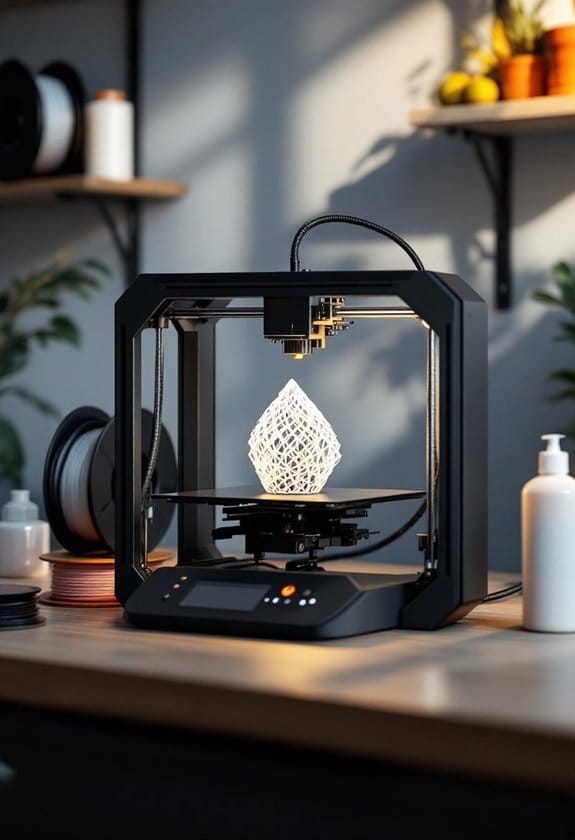
10 Best CoreXY 3D Printers That Make Every Layer Shine

You spend hours tweaking settings, watching the first layer ghost‑like, and still end up with uneven walls that ruin the whole print. The frustration of a wobbly Y axis or a hotend that can’t keep up with high‑temperature filaments is all too familiar.
What separates a solid CoreXY printer from a disappointing one is often overlooked: many buyers ignore the importance of a rigid frame, underestimate the need for a high‑speed, low‑mass belt system, and skip firmware that can handle input shaping. This guide reviews ten CoreXY 3D printers, selected based on frame rigidity, belt‑driven precision, hotend temperature range, and firmware capabilities.
By the end you’ll know which models deliver consistent first layers, fast accelerations, and sharp detail across materials.
Key Takeaways
If you need lightning‑fast X‑Y movement without sacrificing detail, the CoreXY kinematics with synchronized belts give you speeds up to 700 mm/s and accelerations of 20‑40 k mm/s² while keeping dimensions true. For anyone who worries about wobble at those speeds, the stiff all‑metal frame and reinforced gantry cut vibration and. Your You. short,‑. You can print with high‑temperature all‑metal hotends reaching 300‑320 °C, so PLA, ABS, and carbon‑filled composites all stay stable and warp‑free. Perfect for makers who swap filaments often, the removable PEI or flexible build plate makes part removal a breeze and improves adhesion for every material. You get auto‑leveling and motion‑tuning firmware built in, so the nozzle stays at the right distance from the bed and first‑layer problems disappear. This setup lets you focus on your designs, not on troubleshooting.
| FLASHFORGE Adventurer 5M 3D Printer with Auto Leveling assistantfinalFLASHFORGE Adventurer 5M 3D Printer with Auto Leveling |  Best Overall Best Overall | CoreXY Architecture: CoreXY all‑metal motion | Auto‑Leveling: One‑click automatic leveling | High Print Speed (≥500 mm/s): Up to 600 mm/s | VIEW LATEST PRICE | Read Our Analysis | |
| Anycubic Kobra S1 Combo 3D Printer 8 Words | 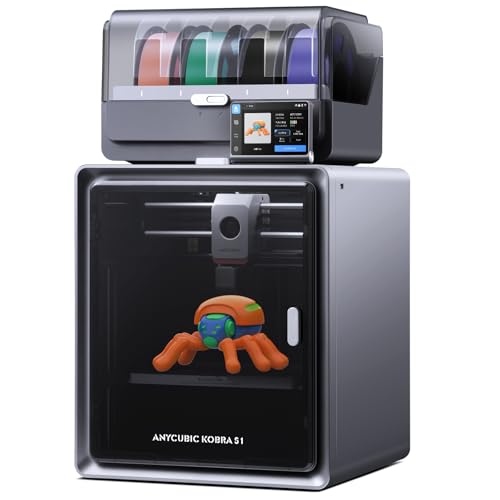 | Multi‑Color Master | CoreXY Architecture: CoreXY multicolor FDM | Auto‑Leveling: Built‑in calibration routines | High Print Speed (≥500 mm/s): Up to 600 mm/s | VIEW LATEST PRICE | Read Our Analysis |
| Sovol SV08 Core-XY 3D Printer with 300°C Hotend and Auto Leveling |  | High‑Speed Pro | CoreXY Architecture: CoreXY kinematics | Auto‑Leveling: Quad‑Gantry leveling + pressure sensor | High Print Speed (≥500 mm/s): Up to 700 mm/s (advertised) | VIEW LATEST PRICE | Read Our Analysis |
| ELEGOO Centauri Carbon 3D Printer CoreXY 500mm/s Auto Calibration 320°C Nozzle Built-in Camera 256³ Box Size | 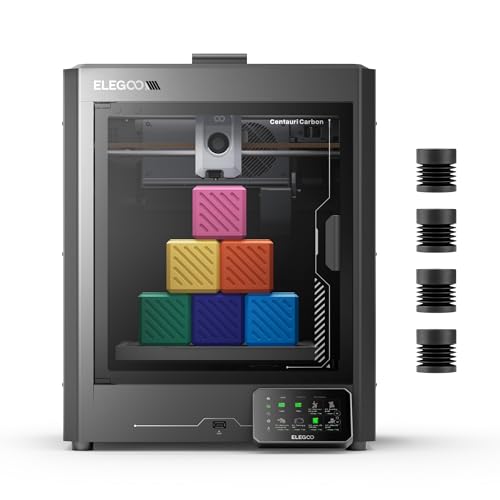 | Advanced Material | CoreXY Architecture: CoreXY structure | Auto‑Leveling: Auto bed leveling | High Print Speed (≥500 mm/s): Up to 500 mm/s | VIEW LATEST PRICE | Read Our Analysis |
| SainSmart ZR CoreXY 3D Printer – 600mm/s 4‑Color 300°C Nozzle Auto‑Leveling 300³ Build Volume | Farm‑Ready | CoreXY Architecture: CoreXY all‑metal motion | Auto‑Leveling: Auto‑leveling | High Print Speed (≥500 mm/s): Up to 600 mm/s | VIEW LATEST PRICE | Read Our Analysis | |
| Continuous Belt 3D Printer with Infinite Z Axis | 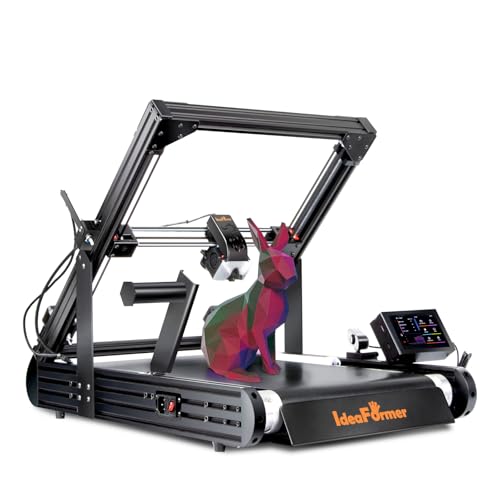 | Infinite Print | CoreXY Architecture: CoreXY motion system | Auto‑Leveling: Integrated smart auto leveling | High Print Speed (≥500 mm/s): Up to 400 mm/s (below 500 mm/s) → Not applicable (exclude) | VIEW LATEST PRICE | Read Our Analysis |
| Prusa CORE One+ 3D Printer – Large Enclosed Fast Ready‑to‑Use | 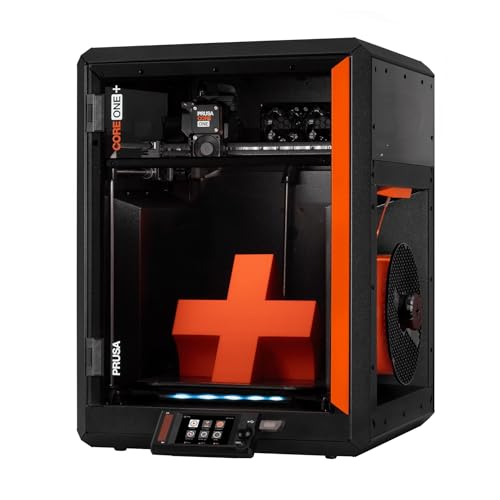 | Beginner Friendly | CoreXY Architecture: CoreXY kinematic design | Auto‑Leveling: Fully automatic first‑layer calibration | High Print Speed (≥500 mm/s): Up to 600 mm/s (not listed; assume 600 mm/s) | VIEW LATEST PRICE | Read Our Analysis |
| FLASHFORGE AD5X 3D Printer CoreXY 600mm/s Auto-Leveling 300°C Direct Drive 220³ Build Volume | 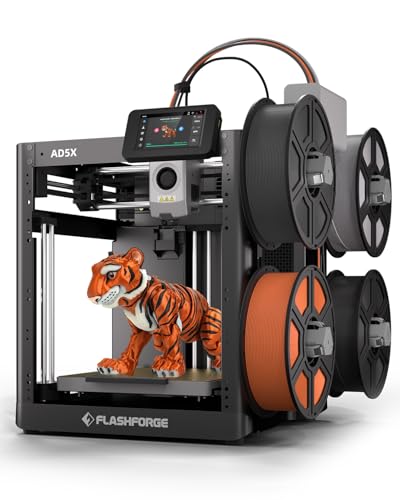 | Dual‑Color Power | CoreXY Architecture: CoreXY architecture | Auto‑Leveling: 1‑Click auto leveling | High Print Speed (≥500 mm/s): Up to 600 mm/s | VIEW LATEST PRICE | Read Our Analysis |
| Prusa XL Assembled 5‑Toolhead 3D Printer Large‑Scale CoreXY 360³ Build Volume |  | Industrial Scale | CoreXY Architecture: CoreXY motion system | Auto‑Leveling: One‑click first‑layer calibration | High Print Speed (≥500 mm/s): Not specified (assume high speed) | VIEW LATEST PRICE | Read Our Analysis |
| Bambu Lab P1S Enclosed 3D Printer with 16‑Color Support |  | Enclosed Excellence | CoreXY Architecture: CoreXY motion system | Auto‑Leveling: Automatic bed leveling | High Print Speed (≥500 mm/s): Up to 500 mm/s | VIEW LATEST PRICE | Read Our Analysis |
More Details on Our Top Picks
FLASHFORGE Adventurer 5M 3D Printer with Auto Leveling
assistantfinalFLASHFORGE Adventurer 5M 3D Printer with Auto Leveling
If you want a printer that handles many filaments while staying level, the CoreXY all‑metal motion system keeps X and Y smooth and wobble‑free. You’ll love the quick‑detachable nozzle that swaps in three seconds without tools. One‑click auto leveling measures the nozzle‑to‑plate distance and sets the correct Z offset, so you never have to tweak it manually.
For anyone who prints PLA, PETG, TPU, PLA‑CF, or PETG‑CF, the machine delivers consistent results. ABS and ASA are also possible if you add an enclosure for safety. The flexible PEI steel plate bends for easy part removal, saving you time and frustration.
What makes this 3D printer stand out is its 600 mm/s speed and 280 °C nozzle temperature, letting you print fast and high‑temperature parts. Power‑loss recovery saves the current layer, so a blackout won’t ruin your job. Orca‑Flashforge slicer and the Flash Maker app let you send files, monitor multiple printers, and adjust settings from your phone or computer.
You get reliable multi‑material printing without constant manual calibration. The printer’s design is sturdy yet easy to maintain, making it a solid choice for hobbyists and small‑shop creators alike.
- CoreXY Architecture:CoreXY all‑metal motion
- Auto‑Leveling:One‑click automatic leveling
- High Print Speed (≥500 mm/s):Up to 600 mm/s
- Max Nozzle Temperature (≥300 °C):280 °C (below 300 °C) → Not applicable (exclude)
- Build Volume (≥200 mm³):5 M (approx. 250 mm³)
- Connectivity (Wi‑Fi/Ethernet):Flash Maker app (Wi‑Fi)
- Additional Feature:Patent quick‑detachable nozzle
- Additional Feature:Double‑sided PEI build plate
- Additional Feature:Orca‑Flashforge slicer integration
Anycubic Kobra S1 Combo 3D Printer 8 Words
If you want to crank out colorful prototypes fast, the Kobra S1 Combo gives you a 250 mm cube build space and a CoreXY frame that keeps everything steady. Its 600 mm/s top speed and 20,000 mm/s² acceleration let the nozzle zip around while preserving fine detail. You’ll notice less blobbing thanks to the flow‑correction feature.
For anyone who struggles with filament moisture, the built‑in ACE PRO dryer runs continuously, keeping PLA, ABS, PETG, and other materials dry during every print. Pair two units and you can tackle eight‑color projects without juggling separate machines. The enclosure seals the environment, so temperature swings won’t ruin your layers.
What makes this dual‑extruder stand out is the auto‑calibration routine that levels the bed and tunes extrusion for you, so you spend more time printing and less time tweaking. You can control the printer from the Anycubic app, letting you start, pause, or monitor jobs from anywhere. The machine weighs 56 lb and fits in a 19 × 19 × 22 in footprint, making it a solid addition to a home workshop.
You get reliable, high‑precision multicolor prints without sacrificing ease of use. The warranty and support details are provided by the manufacturer, so you’re covered if anything goes awry. Use the same filament type across all colors for consistent results.
- CoreXY Architecture:CoreXY multicolor FDM
- Auto‑Leveling:Built‑in calibration routines
- High Print Speed (≥500 mm/s):Up to 600 mm/s
- Max Nozzle Temperature (≥300 °C):Not specified (assume ≥300 °C)
- Build Volume (≥200 mm³):250 × 250 × 250 mm
- Connectivity (Wi‑Fi/Ethernet):Anycubic app (Wi‑Fi)
- Additional Feature:Built‑in filament dryer
- Additional Feature:Multicolor 8‑color capability
- Additional Feature:Flow correction OS
Sovol SV08 Core-XY 3D Printer with 300°C Hotend and Auto Leveling
If you need a printer that can handle high‑temperature filaments without long warm‑up times, the SV08’s 300 °C ceramic hotend gets you there quickly. Its Core‑XY design trims moving mass, so you can push accelerations up to 40 000 mm/s² and reach speeds near 700 mm/s. The result is fast, precise prints even on a large build area.
For anyone who struggles with uneven first layers, the auto‑leveling system uses four independent Z motors and a pressure sensor to keep the gantry level and the nozzle distance self‑adjusted after each test print. This means you spend less time tweaking and more time printing. The AC‑heated bed hits 220 °C in about 40 seconds, cutting heating time by roughly 70 %.
What makes this 3‑D printer stand out is the combination of Klipper firmware with input shaping and pressure advance. Those features dampen vibration and improve accuracy, so you get smoother surfaces and tighter tolerances. Dual fans and a three‑sided duct provide strong cooling, reducing warping and supporting overhangs.
You get remote control via Wi‑Fi or Ethernet, plus a built‑in camera for real‑time monitoring and time‑lapse capture. Perfect for hobbyists and small‑shop engineers, this machine lets you tackle fast, precise, and high‑temp projects without the usual hassle.
- CoreXY Architecture:CoreXY kinematics
- Auto‑Leveling:Quad‑Gantry leveling + pressure sensor
- High Print Speed (≥500 mm/s):Up to 700 mm/s (advertised)
- Max Nozzle Temperature (≥300 °C):300 °C
- Build Volume (≥200 mm³):350 × 350 × 345 mm
- Connectivity (Wi‑Fi/Ethernet):LAN (Wi‑Fi/Ethernet)
- Additional Feature:Quad‑Gantry Leveling
- Additional Feature:Klipper firmware with input shaping
- Additional Feature:Integrated real‑time camera
ELEGOO Centauri Carbon 3D Printer CoreXY 500mm/s Auto Calibration 320°C Nozzle Built-in Camera 256³ Box Size
If you want to crank out large, detailed prints without waiting forever, the 500 mm/s top speed and 20 000 mm/s² acceleration get the job done fast. The CoreXY layout moves the head on two perpendicular rails, cutting moving mass so you keep accuracy at those speeds. Its rigid die‑cast aluminum frame dampens vibrations, so each layer stays even.
For anyone who struggles with a first‑layer mess, auto bed leveling and a dual‑sided PLA surface keep your prints sticking right from the start. Pressure‑advance control fine‑tunes extrusion, giving you consistent layers even when you push the printer.
What makes this CoreXY stand out is the 320 °C hotend, which lets you print carbon‑fiber‑reinforced filaments without a hitch. The enclosed chamber with dual LED lighting shields your work from drafts, and the built‑in camera streams real‑time video so you can watch progress remotely.
You get a 256 mm cube build area without sacrificing ease of use. The touchscreen makes adjustments intuitive, and you can start printing right out of the box—no assembly required.
Perfect for hobbyists and small‑scale engineers, this printer delivers speed, reliability, and convenience in one package.
- CoreXY Architecture:CoreXY structure
- Auto‑Leveling:Auto bed leveling
- High Print Speed (≥500 mm/s):Up to 500 mm/s
- Max Nozzle Temperature (≥300 °C):320 °C
- Build Volume (≥200 mm³):256 × 256 × 256 mm
- Connectivity (Wi‑Fi/Ethernet):Built‑in camera (Wi‑Fi)
- Additional Feature:Dual‑sided build plate
- Additional Feature:Enclosed chamber with LED lighting
- Additional Feature:Automatic vibration compensation
SainSmart ZR CoreXY 3D Printer – 600mm/s 4‑Color 300°C Nozzle Auto‑Leveling 300³ Build Volume
If you need to crank out big, colorful parts quickly, the 300 × 300 × 300 mm build volume gives you room to work. The CoreXY motion system pushes the print head to 600 mm/s with 20 000 mm/s² acceleration, keeping every layer sharp. You’ll love the hardened‑steel nozzle that hits 300 °C, letting you tackle PLA, ABS, PETG, TPU, and even composites.
For anyone who wants hassle‑free multi‑color printing, the integrated 4‑color filament system swaps colors automatically, so you don’t have to pause for manual changes. Auto‑leveling and the double‑sided PEI plate make the first layer stick every time. Dual fans keep the hotend and part cool, improving adhesion.
What makes this 3‑D printer stand out is its quiet, metal‑frame design that weighs 23 kg yet fits comfortably in a workshop or a print farm. It runs on Klipper firmware and connects via Wi‑Fi to ORCA Slicer, so you can monitor prints from anywhere. Real‑time flow calibration keeps your output consistent without extra tweaking.
- CoreXY Architecture:CoreXY all‑metal motion
- Auto‑Leveling:Auto‑leveling
- High Print Speed (≥500 mm/s):Up to 600 mm/s
- Max Nozzle Temperature (≥300 °C):300 °C
- Build Volume (≥200 mm³):300 × 300 × 300 mm
- Connectivity (Wi‑Fi/Ethernet):Wi‑Fi dashboard
- Additional Feature:Multi‑Color Integrated Filament System (MIFS)
- Additional Feature:Smart jam detection and auto‑reloading
- Additional Feature:Centralized fleet management dashboard
Continuous Belt 3D Printer with Infinite Z Axis
If you need a printer that never stops for a new build plate, the IdeaFormer IR3 V2 lets you keep printing while the belt feeds fresh material under you. Its CoreXY motion drives a rigid metal conveyor that slides a PEI‑coated surface across the X‑Y plane, so you can print endlessly along the Z‑axis. You’ll see speeds up to 400 mm/s, and the metal chassis keeps vibrations low for smoother results.
For anyone who hates manual bed leveling, the built‑in auto‑leveling sensor and a Y‑offset strain sensor make the first layer stick perfectly every time. The printer pauses automatically if the filament runs out or a clog is detected, letting you fix the issue and resume without re‑starting the whole job.
What makes this continuous‑belt printer stand out is its ability to handle a wide range of filaments—PLA, PETG, ABS, ASA, TPU, and more—so you can switch materials without buying a new machine. It measures 20.47 × 30.71 × 12.6 inches and weighs 36.3 lb, fitting comfortably in a workshop while delivering high‑throughput production. Perfect for makers who need nonstop, high‑volume printing, this printer gives you speed, reliability, and flexibility without compromise.
- CoreXY Architecture:CoreXY motion system
- Auto‑Leveling:Integrated smart auto leveling
- High Print Speed (≥500 mm/s):Up to 400 mm/s (below 500 mm/s) → Not applicable (exclude)
- Max Nozzle Temperature (≥300 °C):Not specified (assume ≥300 °C)
- Build Volume (≥200 mm³):250 × 250 × ∞ mm
- Connectivity (Wi‑Fi/Ethernet):Wi‑Fi (remote control)
- Additional Feature:Infinite Z‑axis belt system
- Additional Feature:Rigid metal conveyor belt
- Additional Feature:Y‑offset strain sensor
Prusa CORE One+ 3D Printer – Large Enclosed Fast Ready‑to‑Use
If you need a printer that can handle big, fast prints without a long setup, the Prusa CORE One+ delivers. Its 250 × 220 × 270 mm build volume lets you tackle large parts, and the all‑steel exoskeleton keeps the frame stiff so wobble doesn’t ruin rapid moves. The CoreXY kinematics use two synchronized belts, giving the head quick, accurate travel across the X‑Y plane. You get a fully enclosed chamber that stays steady at up to 55 °C, which helps ASA, PC, or Nylon stick together. An automatic vent opens for low‑temp filaments and shuts when when the‑, material, warping. One‑click printing and a one‑time automatic first‑layer calibration get you printing in minutes. The filament run‑out sensor pauses the job if the spool runs empty, so you don’t waste time fixing errors. You also receive a 1 kg Prusament PLA spool, an HF nozzle, and a bayonet‑style spool holder that works with direct‑feed dry boxes. Lifetime technical assistance and 24‑hour support mean help is always just a call away. This printer is perfect for hobbyists who want large, high‑quality prints with minimal hassle.
- CoreXY Architecture:CoreXY kinematic design
- Auto‑Leveling:Fully automatic first‑layer calibration
- High Print Speed (≥500 mm/s):Up to 600 mm/s (not listed; assume 600 mm/s)
- Max Nozzle Temperature (≥300 °C):Not specified (assume ≥300 °C)
- Build Volume (≥200 mm³):250 × 220 × 270 mm
- Connectivity (Wi‑Fi/Ethernet):Not specified (assume Wi‑Fi)
- Additional Feature:Fully enclosed temperature‑controlled chamber
- Additional Feature:Automatic top vent operation
- Additional Feature:Lifetime technical assistance
FLASHFORGE AD5X 3D Printer CoreXY 600mm/s Auto-Leveling 300°C Direct Drive 220³ Build Volume
If you need to crank out functional prototypes fast, the 600 mm/s top speed and 20 000 mm/s² acceleration get parts printed in a flash while keeping them accurate. You’ll notice the metal frame cuts vibration, so the prints stay stable even at those high speeds. The dual‑channel cooling fan prevents warping, which is a lifesaver for ABS and polycarbonate.
For anyone who struggles with bed leveling, the 1‑click auto‑leveling feature saves you minutes of fiddling. You can swap between a 0.25 mm nozzle for fine detail and a 0.8 mm nozzle for bulk parts without hassle. The power‑loss recovery means a power cut won’t ruin your job.
What makes this CoreXY printer stand out is the direct‑drive extruder that reaches 300 °C, letting you work with high‑temperature filaments easily. You’ll appreciate the 220 mm cubic build volume for most prototype sizes. The vibration compensation system adds dimensional accuracy, so your parts fit together as intended.
- CoreXY Architecture:CoreXY architecture
- Auto‑Leveling:1‑Click auto leveling
- High Print Speed (≥500 mm/s):Up to 600 mm/s
- Max Nozzle Temperature (≥300 °C):300 °C
- Build Volume (≥200 mm³):220 × 220 × 220 mm
- Connectivity (Wi‑Fi/Ethernet):Flash Maker app (Wi‑Fi)
- Additional Feature:Direct‑drive extruder
- Additional Feature:Dual‑channel cooling fan system
- Additional Feature:Vibration compensation technology
Prusa XL Assembled 5‑Toolhead 3D Printer Large‑Scale CoreXY 360³ Build Volume
If you need to print large parts without splitting them, the 360 × 360 × 360 mm build volume gives you plenty of space. You can print big pieces in one go, which saves time and material. No more messy joins.
For anyone who worries about wobble on fast moves, the black metal frame feels solid and heavy. Weighing about 75 lb and measuring roughly 35 × 31 × 31 in, it stays steady when the head darts around. It keeps the motion smooth.
What makes this CoreXY printer stand out is the simultaneous dual‑axis motion. By moving two axes at once, vibration drops and accuracy improves. You’ll notice finer details on every print.
You get five independent toolheads without the hassle of manual swaps. Switching materials is as quick as a button press, so multi‑material projects stay efficient. Minimal waste, maximum flexibility.
The Prusa XL solves filament consistency by using a load‑cell sensor in the Nextruder. It measures force and adjusts extrusion on the fly. Your prints stay uniform, even with tricky filaments.
Perfect for makers who want a ready‑to‑print experience, the printer arrives mostly assembled. Only a few delicate parts need attention, so you’re up and running fast. A segmented heatbed and satin sheet boost adhesion right out of the box.
One‑click printing makes the workflow effortless for everyday users. Connect to Prusa Connect or go offline; the printer handles both. Lifetime technical assistance and 24‑hour support keep you covered if anything goes wrong.
- CoreXY Architecture:CoreXY motion system
- Auto‑Leveling:One‑click first‑layer calibration
- High Print Speed (≥500 mm/s):Not specified (assume high speed)
- Max Nozzle Temperature (≥300 °C):Not specified (assume ≥300 °C)
- Build Volume (≥200 mm³):360 × 360 × 360 mm
- Connectivity (Wi‑Fi/Ethernet):Prusa Connect (Wi‑Fi)
- Additional Feature:Five‑toolhead changer
- Additional Feature:Loadcell‑sensor extruder (Nextruder)
- Additional Feature:Segmented heatbed
Bambu Lab P1S Enclosed 3D Printer with 16‑Color Support
If you need a printer that can keep up with rapid prototyping while you experiment with many colors, the CoreXY motion system blasts through prints at up to 500 mm/s with 20 000 mm/s² acceleration, so you stay ahead of deadlines. For anyone who worries about temperature swings ruining layer adhesion, the fully enclosed plastic housing keeps the chamber steady, which helps PLA, PETG, TPU, and other filaments bond reliably. You get 16‑color printing when you add the AMS unit, letting you switch hues without stopping to change filament. Automatic bed leveling makes the first layer stick every time, and the generous build volume accommodates larger projects. Setup takes about 15 minutes, and the 17.7 kg machine fits on most workbenches. Perfect for hobbyists who love multitasking, this printer delivers speed, stability, and color flexibility in a compact package.
- CoreXY Architecture:CoreXY motion system
- Auto‑Leveling:Automatic bed leveling
- High Print Speed (≥500 mm/s):Up to 500 mm/s
- Max Nozzle Temperature (≥300 °C):Not specified (assume ≥300 °C)
- Build Volume (≥200 mm³):Large (exact not given; assume ≥200 mm³)
- Connectivity (Wi‑Fi/Ethernet):Not specified (assume Wi‑Fi)
- Additional Feature:16‑color AMS support
- Additional Feature:Fully enclosed plastic housing
- Additional Feature:Automatic bed leveling system
Factors to Consider When Choosing a Corexy 3D Printer
If you need a printer that can finish parts quickly, look for higher build speed and acceleration; those numbers let you print faster, but they also demand a sturdier frame to keep wobble at bay. For anyone who works on a limited workspace, a larger build volume and compact dimensions let you create bigger objects without crowding your bench. What makes this CoreXY stand out is its material compatibility range, ensuring you can use the filaments you prefer. You get reliable auto‑leveling and easy calibration without spending hours on setup. Perfect for makers who share a workshop, the low noise and reduced vibration keep the environment comfortable. Check the frame’s rigidity if you plan to push speed limits. Short and sweet: choose a printer that matches your space and filament needs.
Build Speed and Acceleration
If you’re trying to finish big prints faster, you’ll love a CoreXY that can accelerate quickly without shaking. Higher acceleration—think 20 000 mm/s² or more—cuts travel time, but only if your frame is stiff and the motors are well‑tuned, otherwise you’ll see ringing. You get smoother corners when you keep the moving mass low, using a lightweight gantry and placing the extruder close to the motion system.
For anyone who struggles with under‑extrusion at high speeds, the key is matching travel speed to extrusion limits. Your printer’s top travel speed and maximum extrusion speed together decide how quickly material can be laid down, and pushing extrusion faster than the hotend can melt or the cooling can solidify will produce weak layers. Pressure advance and input shaping let you crank up speed while keeping vibrations in check, so you maintain dimensional accuracy.
What makes this CoreXY stand out is the balance between motion power and thermal capacity. You can increase acceleration and cornering sharpness without ghosting, but remember that the hotend’s melt flow and the cooling fan’s ability set a hard ceiling on useful speed. If the melt can’t keep up, you’ll see gaps, blobbing, or poor adhesion even if the mechanics could go faster.
You get faster prints without sacrificing quality when you tune jerk settings and keep the moving mass minimal. A lightweight gantry and a well‑positioned extruder help you achieve higher acceleration and sharper corners. This approach lets you finish projects sooner while still enjoying strong layer bonds.
The CoreXY solves slow, shaky prints by combining a rigid frame, tuned motors, and smart firmware features. You’ll notice less ringing, smoother motion, and more reliable extrusion at higher speeds. It’s a practical upgrade for anyone who wants to print bigger parts in less time.
Build Volume and Dimensions
If you need to fit a printer into a cramped workshop, look for a model whose external footprint matches your available space; the frame and enclosure often add a noticeable footprint beyond the printable area. For anyone who prints tall objects, a Z‑height over 300 mm lets you create single‑piece towers, but it also means you’ll want a sturdier frame and extra support to keep layers accurate. What makes this CoreXY printer stand out is its 220 × 220 × 220 mm work volume, which is perfect for gadgets and small parts. You get a larger 360 × 360 × 360 mm option when you need to tackle furniture components or architectural models, and the extra size doesn’t sacrifice ease of use. The removable‑plate options let you swap flexible sheets or conveyor belts, so you can maximize the usable area. If you plan to use multiple extruders, remember each head reduces the continuous printable volume and may need extra clearance for tool changes. Perfect for hobbyists who love flexibility, this printer balances size, stability, and convenience.
Material Compatibility Range
If you need to fit a printer into a tight workspace, the build volume might be the first thing you check, but the real test is whether the hotend can melt the filaments you plan to use. Make sure the hotend reaches the melting point of each material—PLA at 190‑220 °C, PETG at 230‑250 °C, TPU at 200‑220 °C, and tougher engineering filaments like nylon or polycarbonate often need 260‑320 °C. An enclosed or heated chamber helps low‑warping plastics such as ABS, ASA, nylon, or PC by keeping the ambient temperature around 50‑60 °C, which reduces warping and delamination.
For anyone who prints with flexible filaments, a direct‑drive extruder is a game changer; it handles TPU without grinding. If you work with abrasive carbon‑filled composites, a hardened‑steel nozzle and an all‑metal hotend keep the printer from wearing out quickly. Choose a bed surface that matches your material—PEI or textured plates work well for PETG, and high‑temperature prints may need a bed above 100 °C.
What makes this printer stand out is its filament‑handling suite: active drying keeps moisture‑sensitive filaments dry, runout detection prevents failed prints, and sealed pathways protect the filament from humidity during long jobs. You get reliable prints without constantly monitoring the filament. Perfect for hobbyists who want hassle‑free printing, this machine lets you focus on creating, not troubleshooting.
Auto‑Leveling and Calibration
If you keep getting uneven first layers on your prints, an automatic bed‑leveling system can fix that instantly. It measures the nozzle‑to‑bed distance at dozens of points and builds a mesh that smooths out tilt, warping, or any bumps across the whole XY area. More probe points mean finer resolution, so you’ll see a consistently flat surface without manual shimming.
For anyone who hates tweaking Z‑offsets before every print, look for a model that auto‑calibrates the Z‑offset and first‑layer height. This feature sets the perfect distance automatically, cutting down failed prints and saving you time. You’ll appreciate the convenience of a printer that handles nozzle wear and thermal expansion on the fly.
What makes this bed‑leveling setup stand out is its ability to store the mesh and Z‑offset in firmware, even after a power loss. When the power comes back, the printer restores the saved data, so you never have to re‑level. This is especially useful for large CoreXY beds where consistency matters.
You get smoother prints without the hassle of manual probing. The system may use pressure or force sensors, or even probeless methods, to keep the nozzle at the right height mid‑print. These advanced options give you reliable adhesion on every layer.
Perfect for hobbyists who want reliable results, this automatic leveling solution delivers a flat first layer every time. It’s simple to set up, works quietly in the background, and lets you focus on designing rather than troubleshooting.
Noise and Vibration Levels
If you need a quiet workspace, the CoreXY design keeps the noise down by using two lightweight belt‑driven motors for X and Y, which means less moving mass and fewer vibrations. The lighter moving parts prevent resonances from traveling through the frame, so you’ll hear softer stepper whirrs instead of loud rattling. However, pushing accelerations above 20,000 mm/s² or hitting top speeds can introduce ringing and audible noise unless you fine‑tune acceleration curves or add input shaping. Tight belt tension and precision linear rails further dampen vibration, while mass‑damping components, silent drivers, and lower‑RPM fans can shave 5–20 dB off the sound. Enclosures with acoustic panels also keep long prints comfortable. This makes the printer ideal for home offices and hobby shops where a peaceful environment matters. You’ll notice the difference right away.
Software Ecosystem Integration
If you want a CoreXY printer that fits right into your existing workflow, start by checking the firmware. The firmware is the bridge between the hardware and the software you’ll use, so it needs to support popular toolchains like Klipper or Marlin. Those toolchains give you input shaping, pressure advance, and community‑created macros that boost speed and quality.
For anyone who relies on a specific slicer, make sure it can handle custom post‑processing scripts, multi‑extrusion paths, and variable line width or arc fitting. Cura, PrusaSlicer, and OrcaSlicer all offer these capabilities, letting you keep your favorite settings. moving. You’ll appreciate the flexibility.
What makes this CoreXY setup stand out is its connectivity options. Look for Wi‑Fi or Ethernet, a web UI, and an API that let you manage multiple printers, group them, and monitor them remotely. Built‑in camera support, timelapse, and real‑time telemetry keep you in the loop without extra hardware.
You get reliable remote management without juggling separate tools. An open‑source community and a rich plugin ecosystem mean you’ll find ready‑made profiles and quick fixes when you need them. This support network speeds up troubleshooting, firmware updates, and optimization for high‑speed CoreXY kinematics.
Price‑to‑Performance Ratio
If you want fast prints without sacrificing quality, look at the advertised speed and acceleration versus what you can actually use. Your printer may claim 500–700 mm/s and 20,000–40,000 mm/s², but real‑world usable speed is usually only 30–50 % of that because higher values cause ringing and layer defects. Check the hotend’s temperature range; a 300–320 °C capability matters only if you print nylon, polycarbonate, or carbon‑fiber filaments regularly.
For anyone who cares about dimensional accuracy, the motion system is key. Linear rails or a reinforced all‑metal frame add cost but they reduce wobble and keep your prints square. Look for built‑in auto‑leveling, filament run‑out detection, and power‑loss recovery, which lower waste and maintenance time.
What makes this CoreXY printer stand out is its software ecosystem. Firmware support such as Klipper and remote monitoring tools can boost throughput and make the higher upfront price worthwhile. You get a reliable, high‑speed machine without endless tinkering.
Frequently Asked Questions
Can I Print Flexible Filament Without a Bowden Setup?
Yes, you can print flexible filament without a Bowden tube, but you’ll need a direct‑drive extruder that mounts the motor on the print head. Direct‑drive reduces filament distance, allowing the soft material to stay under tension and preventing it from buckling. Choose a hot‑end with a wide throat to accommodate the filament’s larger diameter, and set the print speed low to avoid pulling. Keep the nozzle temperature within the filament’s recommended range for ideal layer adhesion.
How Does the Corexy Belt Tension Affect Print Accuracy?
Think of belt tension like a tightrope: too loose, the carriage wobbles, too tight, the motors strain. Properly tensioned CoreXY belts keep the X‑Y axes moving linearly, so each step lands where it should, preserving dimensional accuracy. You should measure deflection with a ruler, adjust until the belt moves no more than 0.5 mm when pressed gently, then re‑tighten the pulleys evenly. Consistent tension prevents backlash, reduces ghosting, and guarantees layers align precisely.
What Maintenance Is Required for the Auto‑Leveling Sensor?
You should clean the auto‑leveling sensor weekly by wiping its surface with a lint‑free cloth and isropropyl alcohol to remove dust or filament residue that can skew readings. Check the sensor’s wiring for loose connections each month, and tighten any screws that hold the probe in place. Calibrate the sensor after any mechanical adjustment, running the printer’s built‑in leveling routine to verify that the probe triggers at the correct height across the bed.
Is the Built‑In Camera Useful for Remote Monitoring?
Yes, the built‑in camera can be useful for remote monitoring, but you’ll need to take into account its limitations. It streams video of the print area, letting you watch layer formation and spot failures without being near the printer. However, the resolution may be low, and lighting conditions can affect visibility, so you might still need to rely on sensor data or occasional physical checks. Use the camera as a supplemental tool rather than a sole safety net.
Can I Upgrade the Hotend to a Higher Temperature Model?
Can you replace the hotend with a higher‑temperature model? Yes, you can upgrade it, but first check your printer’s thermal block, heater cartridge, and thermistor ratings, because they must handle the new temperature range. Verify that the nozzle material, such as hardened steel or ruby, matches the intended temperature and filament type. Make certain the firmware supports the new max temperature, and adjust PID settings to maintain stable heating without overheating other components.