As an Amazon Associate, we earn from qualifying purchases. Some links on this site are affiliate links at no extra cost to you. Our recommendations are based on thorough research and editorial judgment.

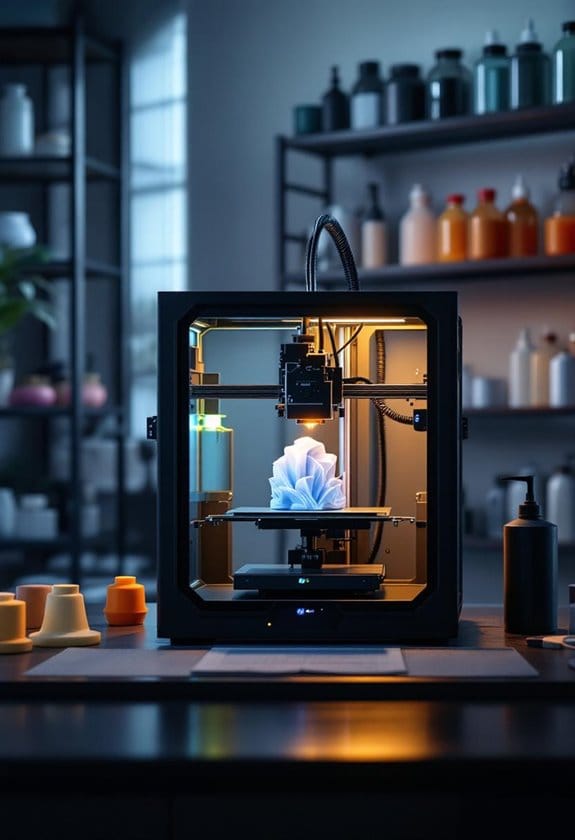
10 Best Ender 3D Printers That Hobbyists Can’t Live Without

You spend an evening tweaking settings, watching the filament jam just as the layer you’ve been waiting for finally appears, and wonder why the prints never match the crisp 3D‑D you saw online.
The frustration deepens when a cheap printer stalls mid‑print, leaving a half‑finished model and a wasted spool.
What really separates a reliable 3D printer from a disappointing one is a sturdy motion system, consistent hot‑end temperature, and a well‑designed filament feed—yet many hobbyists overlook these, opting for low‑cost frames, under‑powered heaters, or single‑gear drives that slip at speed.
This guide reviews the ten best Ender‑series printers, chosen based on speed, build volume, extrusion stability, and community support, and by the end you’ll know exactly which model fits your workflow and how each key feature impacts print quality.
Key Takeaways
If you want a printer that can keep up with fast‑moving projects, look for upgraded X‑axis ball‑bearing slides and a CoreXZ motion system. They let you hit speeds up to 500 mm/s while still laying down smooth layers. You’ll appreciate the extra speed for rapid prototypes.
For anyone who prints tough filaments like ABS, PETG, or TPU, a 60 W ceramic‑heater hotend that reaches 300 °C is a game‑changer. It melts those fast‑melting materials quickly so you don’t waste time waiting for the nozzle to heat up. Your prints will stay consistent even with demanding plastics.
What makes this printer stand out is a spacious, well‑heated build volume—think 300 × 300 × 330 mm—paired with an auto‑leveling probe such as a CR‑Touch. The large area lets you tackle big projects, and the probe guarantees a solid first layer every time. You’ll spend less time tweaking and more time printing.
You get reliable filament feeding without frequent jams thanks to a dual‑gear direct‑drive extruder and hardened or tri‑metal nozzles. These components handle abrasive filaments and keep your prints smooth. Your printer will stay dependable longer.
Perfect for hobbyists who want a sturdy machine, this model features a strong frame, vibration‑damping elements, and firmware that supports input shaping, pressure advance, and acceleration tuning. The solid construction reduces wobble, and the advanced firmware lets you fine‑tune performance. Your prints will stay accurate even at high speeds.
| Creality Ender 3 V3 KE 3D Printer with High Speed PLA |  | High‑Speed Pro | Build Volume: 220 × 220 × 240 mm | Filament Compatibility: PLA, PETG, ABS, TPU, ASA | Hotend / Nozzle Temperature Range: up to 300 °C | VIEW LATEST PRICE | Read Our Analysis |
| Creality 2kg Black & White PLA Filament Bundle |  | Filament Bundle | Build Volume: N/A (filament) | Filament Compatibility: PLA (black & white) | Hotend / Nozzle Temperature Range: N/A (filament) | VIEW LATEST PRICE | Read Our Analysis |
| Creality Ender 3 Heat Bed Sticker Set (3 pcs) |  | Bed Adhesion Kit | Build Volume: N/A (bed sticker) | Filament Compatibility: PLA, ABS, HIPS, others | Hotend / Nozzle Temperature Range: N/A (sticker) | VIEW LATEST PRICE | Read Our Analysis |
| Creality MK8 Ender 3 Nozzle Kit (24 pcs) | 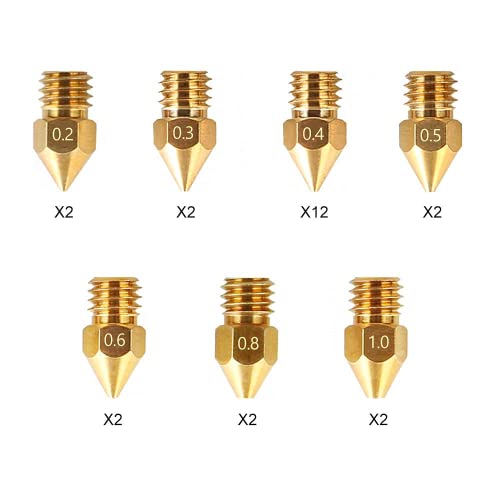 | Nozzle Variety | Build Volume: N/A (nozzle kit) | Filament Compatibility: PLA, ABS (1.75 mm) | Hotend / Nozzle Temperature Range: N/A (nozzle kit) | VIEW LATEST PRICE | Read Our Analysis |
| Creality Ender 3 3D Printer with Resume Printing | 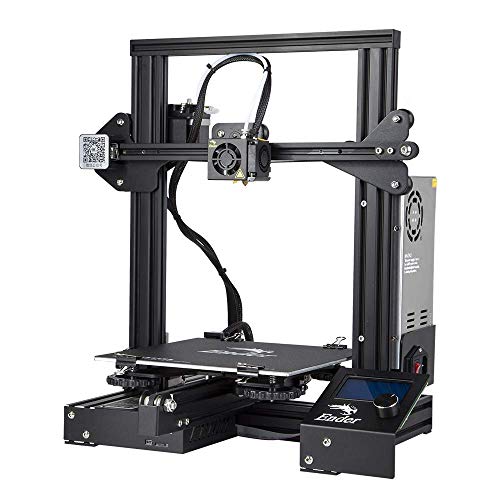 | Classic Reliable | Build Volume: 220 × 220 × 250 mm | Filament Compatibility: PLA, PETG, ABS, TPU, others | Hotend / Nozzle Temperature Range: not specified (standard Ender 3) | VIEW LATEST PRICE | Read Our Analysis |
| Creality Ender 5 Max 3D Printer with Large Build Volume |  | Large‑Build Power | Build Volume: 400 × 400 × 400 mm | Filament Compatibility: PLA, PETG, ABS, ASA, PA, others | Hotend / Nozzle Temperature Range: not specified (standard Ender 5 Max) | VIEW LATEST PRICE | Read Our Analysis |
| Bamboo Lab 3D Printer Bed Adhesive – 60ml Strong No‑Residue Glue |  | Strong Glue | Build Volume: N/A (adhesive) | Filament Compatibility: PLA, PETG, PET, ABS, ASA, TPU | Hotend / Nozzle Temperature Range: N/A (adhesive) | VIEW LATEST PRICE | Read Our Analysis |
| Creality Ender 3 V3 Plus 3D Printer – High‑Speed CoreXZ Auto‑Leveling Metal Build Large Print Size |  | CoreXZ Speed | Build Volume: 300 × 300 × 330 mm | Filament Compatibility: PLA, PETG, ABS, TPU, others | Hotend / Nozzle Temperature Range: tri‑metal nozzle, high‑temp (≈300 °C) | VIEW LATEST PRICE | Read Our Analysis |
| Creality PETG 3D Filament 1.75mm 1KG Black |  | PETG Tough | Build Volume: N/A (filament) | Filament Compatibility: PETG (black) | Hotend / Nozzle Temperature Range: 220‑250 °C (PETG) | VIEW LATEST PRICE | Read Our Analysis |
| Creality Ender 3 3D Printer with Resume Printing | Resume Printing | Build Volume: 220 × 220 × 250 mm | Filament Compatibility: PLA, PETG, ABS, TPU, others | Hotend / Nozzle Temperature Range: not specified (standard Ender 3) | VIEW LATEST PRICE | Read Our Analysis |
More Details on Our Top Picks
Creality Ender 3 V3 KE 3D Printer with High Speed PLA
If you’re tired of slow prints that waste your weekend, the upgraded X‑axis ball‑bearing slide keeps vibrations low so you can push the machine to 500 mm/s without losing quality. You’ll see smoother motion and fewer ghost lines, which means your hobby projects finish faster. The printer handles it.
PETG, ABS, TPU, and ASA with its direct‑drive extruder, so you don’t have to switch tools for different filaments. You also get a 60 W ceramic heater hotend that reaches 300 °C, melting filament quickly for those high‑speed runs. The CR Touch sensor auto‑levels the bed, eliminating the guesswork of manual leveling. Wi‑Fi connectivity lets you start prints from your phone, and power‑failure recovery saves you from ruined jobs. With two 1 kg hyper‑PLA spools included, you can test those fast settings right out of the box. Perfect for makers who want speed without compromise, this printer delivers reliable results and a user‑friendly experience.
- Build Volume:220 × 220 × 240 mm
- Filament Compatibility:PLA, PETG, ABS, TPU, ASA
- Hotend / Nozzle Temperature Range:up to 300 °C
- Auto‑Leveling / Bed Calibration:CR‑Touch automatic bed leveling
- Connectivity / Control Interface:Touch UI, Wi‑Fi, USB, phone control
- Weight (Item):17.2 lb (7.8 kg)
- Additional Feature:500 mm/s top speed
- Additional Feature:60 W ceramic heater
- Additional Feature:Dual 1 kg filament spools
Creality 2kg Black & White PLA Filament Bundle
If you’re tired of swapping filaments and dealing with tangled spools, this 2 kg Black & White PLA bundle will keep you printing smoothly. You get two 1 kg spools—one black, one white—so you can switch colors without a hassle. The filament’s 1.75 mm diameter stays within a tight tolerance, preventing clogs and giving consistent layers.
For anyone who prints daily on an Ender‑style printer, the renewable starch‑based PLA offers a budget‑friendly alternative to petroleum plastics. It degrades slower, so your prints last longer. The design reduces tangling, letting you load the filament quickly and keep printing without interruptions.
What makes this PLA bundle stand out is its toughness and strong inter‑layer bonding, which helps overhangs hold shape and functional parts resist breakage. You’ll notice smoother prints on 99 % of FDM/FFF machines with heated beds. Perfect for hobbyists, this material lets you focus on creativity, not filament headaches.
- Build Volume:N/A (filament)
- Filament Compatibility:PLA (black & white)
- Hotend / Nozzle Temperature Range:N/A (filament)
- Auto‑Leveling / Bed Calibration:N/A (filament)
- Connectivity / Control Interface:N/A (filament)
- Weight (Item):5.5 lb (2.5 kg)
- Additional Feature:Renewable plant‑based material
- Additional Feature:0.02 mm dimensional tolerance
- Additional Feature:Anti‑tangle spool design
Creality Ender 3 Heat Bed Sticker Set (3 pcs)
If you’re tired of prints peeling off the bed, the 3‑piece Heat Bed Sticker Set gives you a reliable surface that sticks when you need it and releases when you’re done. For anyone who prints PLA, ABS, or HIPS on a Creality Ender 3, the 235 mm × 235 mm sheets cover the metal hot bed perfectly and stay thin enough—just 0.3 inches—to keep temperature control intact. You’ll notice fewer bubbles and less warping because the single‑sheet design eliminates the uneven tension you get with tape. What makes this sticker set stand out is the black aluminum surface that adds a subtle texture, helping filaments adhere without making removal a nightmare. You get a reusable solution that you can swap between prints, saving you money on disposable tape. Perfect for hobbyists who want consistent results, the installation takes only a few minutes: clean the bed, align the sheet, and press it down to ban air pockets. The stickers work on all listed Ender models and even other FDM printers, so you can keep your build surface in great shape across your whole workshop. This simple upgrade reduces failed prints, saves you time, and extends the life of your printer’s bed.
- Build Volume:N/A (bed sticker)
- Filament Compatibility:PLA, ABS, HIPS, others
- Hotend / Nozzle Temperature Range:N/A (sticker)
- Auto‑Leveling / Bed Calibration:N/A (sticker)
- Connectivity / Control Interface:N/A (sticker)
- Weight (Item):0.1 lb (0.13 kg)
- Additional Feature:0.3 in thickness
- Additional Feature:Aluminum construction
- Additional Feature:Reusable adhesive sheets
Creality MK8 Ender 3 Nozzle Kit (24 pcs)
If you want to experiment with layer height and flow rates without buying a new nozzle each time, this 24‑piece kit gives you the flexibility you need. It includes brass nozzles from 0.2 mm up to 1.0 mm, with most at 0.4 mm—a sweet spot for speed and detail. Brass conducts heat quickly, so you get fast temperature reach and steady heat, which helps cut down on oozing.
For anyone who prints with PLA or ABS and worries about clogs, the rounded chamfer at the tip reduces resistance and keeps the filament flowing smoothly. You’ll still need to recalibrate the nozzle‑to‑plate gap after each swap, but the engraved size on each part makes identification a breeze. The kit fits any MK8 extruder, so it works with your Ender 3, CR‑10, MakerBot, RepRap, or Prusa i3. It also comes with a one‑year warranty and lifetime technical support.
What makes this nozzle set stand out is the simple, interchangeable design that lets you switch sizes on the fly. You get a reliable brass nozzle that reaches temperature fast and stays stable, without the hassle of buying separate parts. Keep the kit away from children and store it dry to avoid corrosion.
- Build Volume:N/A (nozzle kit)
- Filament Compatibility:PLA, ABS (1.75 mm)
- Hotend / Nozzle Temperature Range:N/A (nozzle kit)
- Auto‑Leveling / Bed Calibration:N/A (nozzle kit)
- Connectivity / Control Interface:N/A (nozzle kit)
- Weight (Item):0.047 lb (60 g)
- Additional Feature:24‑piece size variety
- Additional Feature:Brass copper‑alloy material
- Additional Feature:Engraved nozzle diameters
Creality Ender 3 3D Printer with Resume Printing
If you hate losing a print when the power flickers, the Ender‑3’s resume‑printing feature saves your work and picks up right where it stopped. You won’t have to scrap a half‑finished model; the printer detects the outage, records the last position, and restores it as soon as electricity returns. This means you can keep printing without constant supervision.
For anyone who wants a decent build size without breaking the bank, the 220 × 220 × 250 mm volume lets you tackle larger parts or multiple smaller ones in one go. You’ll appreciate the ±0.1 mm nozzle accuracy that brings fine detail to your prototypes, molds, and small‑batch projects. The heated acrylic bed reaches 110 °C in about five minutes, so ABS and PETG stay flat and warp‑free.
What makes this 3‑D printer stand out is the V‑Slot rail system that delivers smooth, stable motion for every layer. You’ll notice fewer vibrations and a steadier print surface, which translates into cleaner results. The advanced extruder design reduces clogs, keeping filament flow consistent and your workflow uninterrupted.
You get reliable performance without the hassle of frequent maintenance. The Ender‑3’s sturdy frame and easy‑to‑replace parts mean you spend more time printing and less time troubleshooting. It’s a solid choice for hobbyists who need a dependable machine that just works.
- Build Volume:220 × 220 × 250 mm
- Filament Compatibility:PLA, PETG, ABS, TPU, others
- Hotend / Nozzle Temperature Range:not specified (standard Ender 3)
- Auto‑Leveling / Bed Calibration:No auto‑leveling (manual)
- Connectivity / Control Interface:SD card, USB (no Wi‑Fi)
- Weight (Item):15.4 lb (7 kg)
- Additional Feature:V‑Slot rail system
- Additional Feature:110 °C rapid‑heat bed
- Additional Feature:Power‑failure recovery
Creality Ender 5 Max 3D Printer with Large Build Volume
If you need to print big parts without breaking them into pieces, the 400 × 400 × 400 mm build volume gives you room to work in one go. The die‑cast aluminum frame and X‑axis linear rail keep vibrations low, so even tall prints stay accurate. You’ll appreciate the steady motion.
For you long‑ gear ‑
screw 700 mm/s speed and a dual‑gear direct‑drive extruder that feeds filament smoothly, reducing clogs. The 1000 W heated bed reaches temperature fast and sticks well to PLA, PETG, ABS, ASA, PA, and more. Automatic 64‑point leveling and Z‑offset calibration give you a reliable first layer every time.
For anyone who runs a small studio or a print farm, WLAN support lets you manage multiple printers from your phone. The tri‑color status indicator shows progress at a glance, so you always know what’s happening. This printer delivers large‑scale capability without sacrificing stability.
- Build Volume:400 × 400 × 400 mm
- Filament Compatibility:PLA, PETG, ABS, ASA, PA, others
- Hotend / Nozzle Temperature Range:not specified (standard Ender 5 Max)
- Auto‑Leveling / Bed Calibration:64‑point automatic leveling
- Connectivity / Control Interface:WLAN multi‑printer control
- Weight (Item):66.9 lb (30 kg)
- Additional Feature:400 mm³ build cube
- Additional Feature:Die‑cast aluminum frame
- Additional Feature:64‑point auto‑leveling
Bamboo Lab 3D Printer Bed Adhesive – 60ml Strong No‑Residue Glue
If you keep losing the first layer on your Ender, this 60 ml tube of bamboo‑lab adhesive gives you a reliable, no‑residue grip. You’ll notice the green liquid spreads easily when you press the applicator head, forming a thin film that bonds to glass, PEI, BuildTak, aluminum, or any other surface you choose. It works with PLA, PETG, ABS, ASA, TPU, and even flexible filaments, so switching materials doesn’t mean changing glue.
For anyone who prints at high speed or temperature, the medium‑viscosity formula lets you use just a few drops per job, letting the tube last many sessions. You reapply before every print to keep adhesion consistent, and because it’s water‑soluble you can wipe the plate clean with a wet rag afterward—no residue left behind. The odorless, safe composition means you won’t notice any fumes while it cures.
What makes this bed adhesive stand out is its strong bond without the mess of traditional glue sticks. You get a tough grip that reduces warping and improves first‑layer success across all your Ender projects. It’s a small, 3.2‑oz tube that fits comfortably on any workbench, ready whenever you need it.
- Build Volume:N/A (adhesive)
- Filament Compatibility:PLA, PETG, PET, ABS, ASA, TPU
- Hotend / Nozzle Temperature Range:N/A (adhesive)
- Auto‑Leveling / Bed Calibration:N/A (adhesive)
- Connectivity / Control Interface:N/A (adhesive)
- Weight (Item):0.2 lb (3.2 oz)
- Additional Feature:Water‑soluble removal
- Additional Feature:Multi‑surface compatibility
- Additional Feature:Odorless formulation
Creality Ender 3 V3 Plus 3D Printer – High‑Speed CoreXZ Auto‑Leveling Metal Build Large Print Size
If you’re tired of constantly tweaking your printer to keep prints straight, the metal frame of this machine gives you a solid, vibration‑free foundation. The 300 × 300 × 330 mm build volume lets you tackle bigger projects without needing a second printer. You’ll notice the difference right away.
For anyone who wants to push speed without sacrificing quality, the CoreXZ motion system with dual Y‑axis motors can sprint up to 600 mm/s and accelerate at 20 000 mm/s². The pre‑tensioned XZ belts stay tight, so you skip the endless belt‑tightening routine. No more manual leveling.
What makes this 3D printer stand out is its one‑tap auto‑calibration that handles Z‑offset, bed leveling, and input‑shaping in a single press. You simply press a button and the printer does the heavy lifting, freeing you to focus on design. It’s that easy.
You get reliable filament handling without frequent jams because the direct‑drive extruder is reinforced with a bolster spring and ball plunger. The tri‑metal nozzle resists wear, meaning you can print a variety of materials longer often changing parts. Your prints stay consistent.
Perfect for hobbyists who love fast, high‑quality results, this printer delivers speed and stability while keeping maintenance low. The combination of a sturdy metal build, high‑speed CoreXZ, and auto‑calibration makes it a hassle‑free addition to any workshop. Enjoy smoother, quicker prints.
- Build Volume:300 × 300 × 330 mm
- Filament Compatibility:PLA, PETG, ABS, TPU, others
- Hotend / Nozzle Temperature Range:tri‑metal nozzle, high‑temp (≈300 °C)
- Auto‑Leveling / Bed Calibration:One‑tap auto calibration (auto‑leveling)
- Connectivity / Control Interface:Touch UI, Wi‑Fi, USB, phone control
- Weight (Item):30.9 lb (14 kg)
- Additional Feature:CoreXZ motion architecture
- Additional Feature:20,000 mm/s² acceleration
- Additional Feature:Pre‑tensioned XZ belts
Creality PETG 3D Filament 1.75mm 1KG Black
If you’re tired of filament jamming on your Ender 3, this PETG’s 1.75 mm diameter and tight ±0.03 mm tolerance keep the feed smooth and the extrusion consistent. The vacuum‑sealed 1 kg spool stays dry, so you avoid bubbles and clogs that ruin a print. Its CR‑PETG blend gives you the ease of PLA with the strength of ABS, delivering a tough, odorless material that resists warping and cracking.
For anyone who wants a reliable color without fuss, the black filament rolls out cleanly and stays tangle‑free, so you spend less time untangling and more time printing. Print at 220–250 °C with a 70–80 °C heated bed and you’ll see a glossy, clear finish that looks professional. The precise dimensions mean steady feed on any 1.75 mm FDM printer, especially Creality Ender models.
What makes this PETG stand out is the balance of durability and ease of use. You get a material that handles functional parts and decorative prints alike, without the headache of moisture‑related issues. It’s a solid match for hobbyists who need consistent results and a hassle‑free experience.
- Build Volume:N/A (filament)
- Filament Compatibility:PETG (black)
- Hotend / Nozzle Temperature Range:220‑250 °C (PETG)
- Auto‑Leveling / Bed Calibration:N/A (filament)
- Connectivity / Control Interface:N/A (filament)
- Weight (Item):2.2 lb (1 kg)
- Additional Feature:Moisture‑proof vacuum seal
- Additional Feature:Glossy optical finish
- Additional Feature:Toughness‑enhanced polymer
Creality Ender 3 3D Printer with Resume Printing
If you worry about power outages ruining a print, the Ender 3’s resume‑printing feature saves the current layer and picks up right where you left off. You won’t lose filament or waste time re‑starting a job. The aluminum frame keeps the printer steady, and the V‑shaped rails with low‑friction POM wheels cut down vibration and noise.
For anyone who wants a fast‑heating bed, the heated platform reaches 100 °C in about five minutes, so you can start printing sooner. The safety‑protected power supply lets you select the correct voltage, keeping the machine protected. You’ll have the whole printer assembled in roughly two hours.
What makes this 3D printer stand out is its open‑source design, which means you can tweak hardware or firmware to suit your projects. You can print from an SD card or a connected computer, giving you flexibility in how you work. Creality backs the unit with warranty support if any components fail.
- Build Volume:220 × 220 × 250 mm
- Filament Compatibility:PLA, PETG, ABS, TPU, others
- Hotend / Nozzle Temperature Range:not specified (standard Ender 3)
- Auto‑Leveling / Bed Calibration:No auto‑leveling (manual)
- Connectivity / Control Interface:SD card, USB (no Wi‑Fi)
- Weight (Item):15.4 lb (7 kg)
- Additional Feature:V‑shaped rail VOM wheels
- Additional Feature:Open‑source design
- Additional Feature:Partial pre‑assembly kit
Factors to Consider When Choosing an Ender 3D Printer
If you need to print larger parts or several items at once, start by checking the build volume. A bigger space lets you tackle big projects without re‑printing, while a compact footprint fits snugly on a crowded desk. You’ll notice the difference right away.
For anyone who hates long print times, look at the printer’s speed capability. Faster motion can cut hours off a job, but keep an eye on quality because speed alone isn’t enough. The bed‑leveling system is the next thing to consider.
What makes this 3D printer stand out is its leveling routine. An automatic or assisted system gets the first layer right every time, so you spend less time tweaking and more time creating. A reliable first layer means fewer failed prints.
You get a wide filament compatibility range without sacrificing ease of use. Being able to switch between PLA, PETG, TPU, or even flexible filaments expands your project ideas. The user interface and connectivity options keep things smooth.
Perfect for hobbyists who want a hassle‑free experience, this printer offers a clear screen and Wi‑Fi or USB control. You can start, pause, or monitor prints from your phone, making the workflow feel modern and dependable. Enjoy a smoother, more reliable operation.
Print Build Volume
If you need to print a single, large object without cutting it up, a spacious build volume is essential. You’ll want the printer’s X, Y, and Z dimensions to be at least as big as your biggest design, so a 220 × 220 × 240 mm machine works for most hobby projects, while a 400 × 400 × 400 mm model lets you tackle bigger prototypes or batch‑print several parts at once. Larger machines need a sturdier frame and dual Z leadscrews or linear rails to keep wobble and heat gradients in check.
For anyone who prints tall or wide parts, a bigger heated bed means longer warm‑up times and higher power draw, but it also reduces the risk of warping. You should plan for longer print jobs and keep extra filament on hand.
What makes this printer stand out is the balance between size and stability—its robust construction handles the extra load without sacrificing print quality. You get a larger build space without compromising on accuracy, so you can finish projects faster and with fewer post‑processing steps.
You get the freedom to print bigger models or multiple pieces in one go, and you won’t have to worry about the printer shaking or the bed heating unevenly. This translates into smoother surfaces and less wasted material.
Perfect for makers who love ambitious designs, this printer’s generous volume lets you bring your most complex ideas to life without splitting them into smaller chunks. The trade‑off is a slightly higher energy consumption, but the payoff is obvious: bigger, better prints with less hassle.
Print Speed Capability
If you’re trying to finish a big print before dinner, cranking up the speed can shave hours off the job. For anyone who’s frustrated by long wait times, the printer’s ability to hit several hundred mm/s means you’ll see parts pop out much faster. However, you’ll need to dial in acceleration and jerk settings so the layers stay smooth and you don’t end up with wobbly walls.
What makes this 3D printer stand out is its stiff chassis and good vibration damping, which keep ringing and artifacts at bay even when you push the motion hard. You’ll also appreciate a hotend and extruder that can keep up with the filament flow, because without enough torque or heat you’ll see under‑extrusion and weak adhesion.
You get smoother prints without sacrificing accuracy by tweaking layer height, temperature, and fan speed, and by enabling firmware features like input shaping or pressure advance. Short tip: keep acceleration values high enough to avoid long ramps, but not so high that the frame shakes. This balance lets you enjoy faster builds while maintaining quality.
Bed Leveling System
If you’re tired of spending ages tweaking the first layer on your Ender printer, a solid bed‑leveling system can save you time and frustration. You’ll get consistent adhesion without the guesswork of manual screws and feeler gauges. The sensor’s precision matters: capacitive or inductive probes can be fooled by tape or paint, while a BLTouch‑style contact probe gives reliable readings every time.
For anyone who wants hassle‑free prints, choose a system that lets the firmware store a mesh map and Z‑offset automatically. You’ll keep the same first‑layer height even after a power loss or nozzle swap. Just make sure your slicer sends the proper probe commands and that you’ve set the deployment height and safe homing in the settings.
What makes this bed‑leveling setup stand out is its ability to probe a 3×3 grid up to 64 points, creating a smooth compensation surface. You’ll notice smoother layers and fewer print failures. The process is quick, and you won’t need to constantly re‑level after each print.
You get reliable first‑layer adhesion without the trial‑and‑error of manual leveling. It’s perfect for hobbyists who want to print more often with confidence. Just follow the firmware’s mesh‑data storage steps, and you’re ready to print.
Filament Compatibility Range
If you’re just getting started with a new printer, you’ll want to make sure the filament diameter matches the machine—most hobbyists use 1.75 mm because the extruder, hotend, and firmware are all calibrated for that size. A mismatch can cause feeding jams or uneven extrusion, so double‑check before you load anything.
For anyone who prints high‑temp plastics, the hotend’s maximum temperature matters. Many Ender models hit around 300 °C, letting you handle ABS, PETG, nylon, and ASA without overheating. The bed should also reach 70–110 °C, because a warm surface improves adhesion for warp‑prone materials.
What makes this printer stand out is its flexible extruder options. If you plan to use TPU or TPE, a direct‑drive system shortens the filament path and reduces buckling, giving you smoother prints.
You get reliable performance with abrasive filaments too. Look for hardened steel nozzles or be ready to upgrade, since ordinary brass nozzles wear quickly with carbon‑fiber or metal‑filled materials.
Perfect for makers who need dimensional stability, an enclosed build area and solid bed‑adhesion methods keep temperature‑sensitive parts accurate. This combination helps you avoid warping and maintain tight tolerances.
User Interface & Connectivity
If you want to start prints without digging through endless menus, the touchscreen UI gives you a live preview and lets you pick files, tweak settings, and watch progress at a glance. For anyone who values flexibility, the printer accepts Wi‑Fi, USB, and SD cards, so you can load jobs whichever way is most convenient. You get remote control without sacrificing security; built‑in Wi‑Fi or Ethernet lets you start prints, update firmware, and manage multiple machines, but you should lock down the network to keep strangers out. Sensors shown on the screen—filament run‑out, power‑failure resume, bed‑leveling status—alert you instantly when something goes wrong. The companion app adds a live camera feed and telemetry, so you can see temperatures, progress, and ETA from your phone. Perfect for tinkerers, the UI also offers advanced controls like tunable acceleration, jerk, flow overrides, and quick G‑code entry for on‑the‑fly tweaks. This makes it easy to fine‑tune prints without a steep learning curve.
Assembly Complexity Level
If you want a printer that’s ready to go straight out of the box, choose a fully assembled model. It arrives with belt tension, Z‑axis calibration and rail alignment already set, so you can start printing within minutes. No extra tools needed.
For anyone who enjoys a bit of hands‑on assembly but doesn’t want to start from scratch, a semi‑assembled kit is a good middle ground. You’ll get a pre‑built frame, then simply mount the extruder, install the bed and run a quick firmware update. The process takes a couple of hours.
What makes this printer type stand out is the level of automation it offers. Automatic bed leveling and plug‑and‑play extruders cut down manual steps dramatically. Clear documentation guides you through the remaining setup.
You get a full‑kit experience without the endless hassle of tightening every bolt. Full kits require you to tension belts, calibrate the Z‑axis, flash the board and tune stepper currents, which can take several hours and need tools. Community guides are there to help if something goes wrong.
Reliability & Support Options
If you’ve ever been frustrated by a print that suddenly shifts or stops, you’ll want a machine whose motion system—rails, belts, or lead screws—has a reputation for steady uptime and low wear. Strong components keep the print head moving smoothly, so you avoid those annoying layer shifts and failed prints. You’ll notice the difference right away.
For anyone who worries about downtime, make sure replacement parts like nozzles, heated beds, extruders, and thermistors are easy to find from the maker or third‑party sellers. Quick access to spares means you get back to printing faster. It’s a simple but vital safety net.
What makes this printer stand out is its fault‑tolerant features: filament run‑out detection, power‑failure resume, and automatic bed leveling. These tools let you finish long jobs without having to start over. You’ll appreciate the peace of mind they bring.
You get a supportive ecosystem without hunting for answers. Look for active forums, clear documentation, regular firmware updates, and responsive technical help. When something goes wrong, you’ll have people to turn to.
Perfect for the DIY enthusiast, this printer’s warranty length, return policy, and coverage scope give you recourse if hardware or software issues arise. You’ll feel confident knowing you’re covered.
Frequently Asked Questions
Can I Print With Flexible TPU on These Ender Models?
You can print TPU on most Ender models if you adjust a few settings. For example, a hobbyist upgraded an Ender 3 V2 with a direct‑drive extruder, then printed a flexible phone case without layer delamination. Use a 0.4 mm nozzle, lower the print speed to 20–30 mm/s, and keep the bed temperature around 50–60 °C. Increase retraction distance slightly, and enable a cooling fan at low speed to avoid warping.
How Do I Upgrade the Stock Extruder to a Direct‑Drive System?
You replace the stock extruder by installing a direct‑drive unit, first removing the Bowden tube and mounting screws, then detaching the existing extruder carriage from the X‑axis. Next, attach the new direct‑drive motor and gear housing using the provided brackets, ensuring the motor shaft aligns with the filament path. After securing the carriage, reconnect the wiring to the control board, calibrate the steps‑per‑mm, and test extrusion to verify smooth feeding.
What’s the Best Way to Reduce Ghosting on High‑Speed Prints?
You reduce ghosting by tightening the printer’s frame, increasing acceleration and jerk limits cautiously, and adding a motion damping system like vibration‑isolating feet. First, check all screws and bolts; any looseness lets the printer vibrate, causing ghosting. Next, lower the print speed or enable jerk‑controlled acceleration in your slicer, which smooths direction changes. Finally, consider installing a damped belt or a silicone pad under the printer to absorb residual vibrations.
Do These Printers Support Filament Run‑Out Sensors Out of the Box?
You’ll find most Ender models ship without built‑in filament run‑out sensors, so you’ll need to add one yourself if you want that protection. The basic V2 and V2 Pro lack the sensor, while the newer 3 Pro includes a plug‑and‑play module you can enable in firmware. Sensors work by detecting the presence of filament with a mechanical switch or optical beam; when the beam breaks, the printer pauses. Installing a sensor usually involves mounting a small bracket, wiring to the board’s sensor header, and flashing a firmware profile that tells the printer how to react when the filament disappears. This upgrade prevents wasted prints and saves material.
Is It Safe to Use a Heated Enclosure With the Ender 3 V3 Plus?
Yes, you can safely use a heated enclosure with the Ender 3 V3 Plus if you follow a few precautions. The printer’s firmware limits temperature spikes, so the enclosure should stay below the filament’s glass‑transition point, typically around 60–70 °C for PLA and 100 °C for ABS. Make sure proper ventilation to avoid excess heat buildup, and use a reliable power source that can handle the added load without tripping circuits.