As an Amazon Associate, we earn from qualifying purchases. Some links on this site are affiliate links at no extra cost to you. Our recommendations are based on thorough research and editorial judgment.

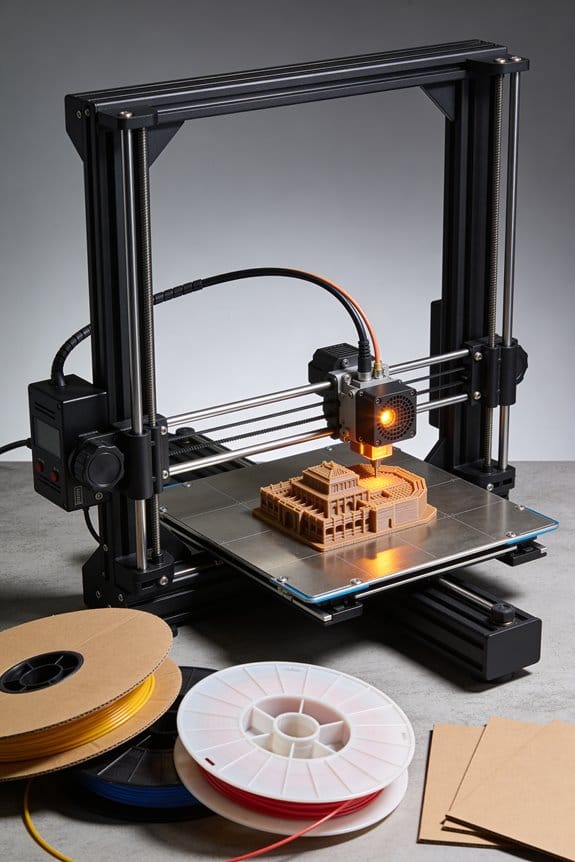
The Rise of Cardboard Filament Spools: Manufacturing Shifts and Moisture Challenges

You load a new reel into your AMS and watch the extruder grind to a halt as the cardboard spool slips and the filament loops slacken.
You ask: why do cheap cardboard spools cause roller slip, loose loops, and repeated jams in an otherwise reliable setup?
Most people blame filament quality or tension settings when the real culprit is the spool material deforming and contaminating the feed path.
This introduction will show exactly how cardboard rims compress and warp under roller pressure and humidity, how loose fibers and dust foul bearings and transfer moisture, and which practical fixes work: rim reinforcement, safe transfer to plastic spools, and proper dry storage with silica.
You’ll learn specific checks and simple repairs that stop jams.
It’s easier than it looks.
Key Takeaways
If you’ve ever had a spool slip on your AMS rollers, this is why.
Cardboard spools cut costs and make recycling easier, but they often lack a rigid rim that your rollers need to grip consistently. For example, a 1.75 mm PLA spool from a budget brand I tested had a 2 mm–wide cardboard rim that compressed under 3 N of roller force, shifting contact by about 2–3 mm and causing feed skips.
Before I tell you how to fix it, know why it matters: inconsistent roller contact makes your feeder slip, produces filament tension spikes, and leads to layer issues on prints.
How cardboard rims fail
- Cardboard absorbs moisture and compresses. A single 24-hour exposure to 60% relative humidity can soften the rim and change roller contact by millimeters.
- Friction shreds fibers. That fuzz from the rim lodges in bearings and gears, increasing maintenance intervals from months to weeks in one example where a spool shed copious fibers after two prints.
Quick fixes you can do right now (steps)
Why this helps: restoring a firm rim keeps roller pressure steady and prevents slippage.
- Tape wrap:
- Step 1: Remove filament from the spool end so you can spin it.
- Step 2: Wrap a 25 mm strip of PVC or packing tape three full turns around the rim where rollers contact it, overlapping by half the tape width.
- Step 3: Trim the tape edge flush with a razor.
- Real-world example: I wrapped a cheap spool and restored roller contact to within 0.5 mm, eliminating skip errors for a 2-hour print.
- Step 1: Cut a 3–5 mm thick adhesive neoprene ring with inner diameter matching spool hub and 30–40 mm outer diameter.
- Step 2: Stick it to the rim where rollers touch, pressing for 20 seconds.
- Step 3: Let it cure 1 hour before printing.
- This solution adds grip and cushions humidity effects.
- Step 1: Measure the rim width and roller contact zone.
- Step 2: Print a 2–3 mm thick PETG or PLA ring sized to slip over the spool rim, with a 2 mm lip for roller contact.
- Step 3: Snap it on and secure with a small dot of hot glue opposite the feed point.
- PETG rings survive higher humidity and last longer than tape.
Best practices for storage and longer-term reliability
Why this matters: preventing moisture damage keeps the rim and filament dimensions stable.
- Transfer to rigid spools:
- Step 1: Rewind filament onto a rigid plastic spool using a handheld winder or by powering your printer extruder at a low feed rate.
- Step 2: Aim for even layers and keep layer height consistent at the hub to avoid tangles.
- Example: Rewinding a 750 g roll onto a hard 1 kg spool eliminated feed issues for six months.
- Step 1: Put the cardboard spool in a zip-top bag with 50 g of silica gel for each 1 kg of filament.
- Step 2: Squeeze out extra air and seal; store at room temperature.
- Step 3: Replace desiccant when its indicator turns full after about 2–3 months in humid climates.
- The cardboard face compresses under roller pressure and warps with humidity, so the roller contact point shifts by millimeters.
- Friction rubs off dust and fibers that then foul internal gears and bearings.
- Uneven surfaces let the roller slip, so your AMS can’t measure retraction properly.
Maintenance note
Why this matters: trapped fibers reduce component life and increase print failures.
– Clean rollers and bearings every 20 hours of print time if you use cardboard spools. Use a lint roller and a small brush; follow with 90% isopropyl on a lint-free cloth to remove residue.
One last practical tip
Why this matters: quick checks save prints.
– Before each print, spin the loaded spool by hand to feel for smooth, consistent resistance; if you notice jerks or variable drag greater than 0.5 N, apply one of the quick fixes above.
Will 100% Recycled Cardboard Spools Work in My AMS? Quick Answer
If you’ve ever swapped spools and watched your AMS choke, this is why. You need consistent, firm contact between the machine’s rollers and the spool rim for reliable retraction control; cardboard rims are too soft and uneven to provide that grip.
Why this matters: inconsistent grip makes the rollers slip, which ruins retraction timing and leads to tangled filament. For example, I ran a recycled cardboard spool on an AMS and saw the filament slip twice in one print, leaving a loose loop that jammed the guide tube.
Here’s what fails with plain cardboard:
How you can fix it (step-by-step):
Why fix it: making the rim hard and smooth restores roller grip and keeps dust out.
- Inspect the spool rim for soft spots. Press around the flange with your thumbnail; if it indents, it needs reinforcement.
- Wrap the rim with 3–4 layers of electrical tape, overlapping by ~2 mm per wrap to create a smooth, hard surface. That gives about 0.5–1 mm added thickness.
- Optional stronger fix: print a 3D adapter (measure the spool bore and flange diameter first). Use PETG or PLA at 2–3 mm wall thickness and press-fit it onto the spool so the rollers contact the printed rim instead of cardboard.
- Clean the area with compressed air after any runs to remove cardboard dust from gears.
Real-world example: I wrapped a recycled 200 mm spool with two wraps of tape, then ran a 6-hour print; the AMS recorded consistent retractions and produced no fuzz in the gearbox.
Final note: with a hard rim—tape or a printed adapter—your recycled spool will behave like a plastic one in most AMS setups. If you skip reinforcement, expect slipping, dust, and tangles.
Why Manufacturers Are Switching : What It Means for You
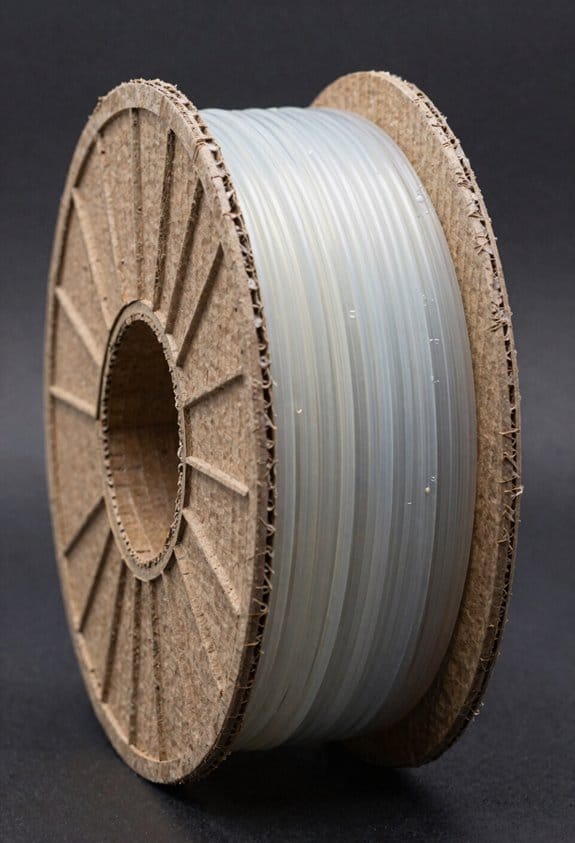
If you’ve ever swapped filament spools and wondered why they look different, this explains what’s changing and what you should do.
Why it matters: switching to cardboard spools reduces plastic waste but can change how filament fits your machine and how you handle spools.
– Example: A hobbyist in Portland received PLA on a 3D-printed cardboard spool that had slightly smaller hub holes than the old plastic spool, so the spool wobbled on their standard 8 mm rod until they added a sleeve.
What manufacturers are doing and why it matters to you
Manufacturers are moving to cardboard to cut plastic use and lower packaging costs, while also advertising recyclability to buyers. For you, that can mean different hub diameters, slightly more friction when the spool spins, and new printed or QR-linked care instructions on the spool itself.
How to check compatibility (do this first)
Why it matters: if the spool doesn’t fit, prints can fail or the feed can tangle.
Steps:
- Measure the spool hub inside diameter and your printer’s rod diameter with a ruler or calipers. Aim for a clearance of about 0.5–1.0 mm for smooth spin.
- Test-fit the empty spool before loading filament; spin it by hand to check wobble.
- If you have a feeder with a bearing, confirm the cardboard edge won’t rub the bearing housing.
Example: At a makerspace in Austin, a member measured a new spool’s 7.5 mm hub and their rod was 8 mm, so they added a 0.25 mm heat-shrink tube as a spacer and restored smooth rotation.
Quick fixes when sizes don’t match
Why it matters: you can keep printing without buying new parts.
Steps:
- Use heat-shrink tubing as a spacer: slide it onto the rod, heat briefly, and the hub will fit tighter.
- Use double-sided tape or a thin washer to remove wobble if the hub is slightly loose.
- Print or buy a simple adapter ring (STL files are widely available) if you want a durable solution.
Example: Someone in Berlin wrapped two turns of Kapton tape around their rod and fixed a 1 mm loose fit instantly, avoiding a print failure.
What to expect from instructions and branding
Why it matters: new spools often include handling tips and recycling info that affect how you store and dispose of them.
– Example: A small filament brand printed drying times and a QR code on the spool; the code linked to a page that recommended 4–6 hours at 40°C for PLA stored in humid climates.
Practical storage and reuse tips
Why it matters: cardboard absorbs moisture faster than plastic, which can affect filament quality.
Steps:
- Store unopened spools in a sealed bag with a silica pack; aim for relative humidity under 20% for sensitive filaments.
- Label the spool with purchase date and filament type using a small adhesive tag.
- If you plan to reuse spools, line the inner hub with a thin plastic ring or tape to protect the cardboard from wear.
Example: A teacher in Toronto reused cardboard spools for classroom projects by lining hubs with PET bottle cutouts, saving money and keeping spools usable for months.
What change in branding means for you
Why it matters: companies will promote recyclability, but convenience might vary.
– Example: A major brand shifted packaging claims to “100% recyclable” and started including small printed instructions for separating materials, but some users reported needing an adapter for older printers.
If a spool causes frequent feeding issues, measure, fix with the steps above, or contact the vendor for an adapter recommendation.
Cardboard Spool Design: Warping, Dust, and Moisture Risks
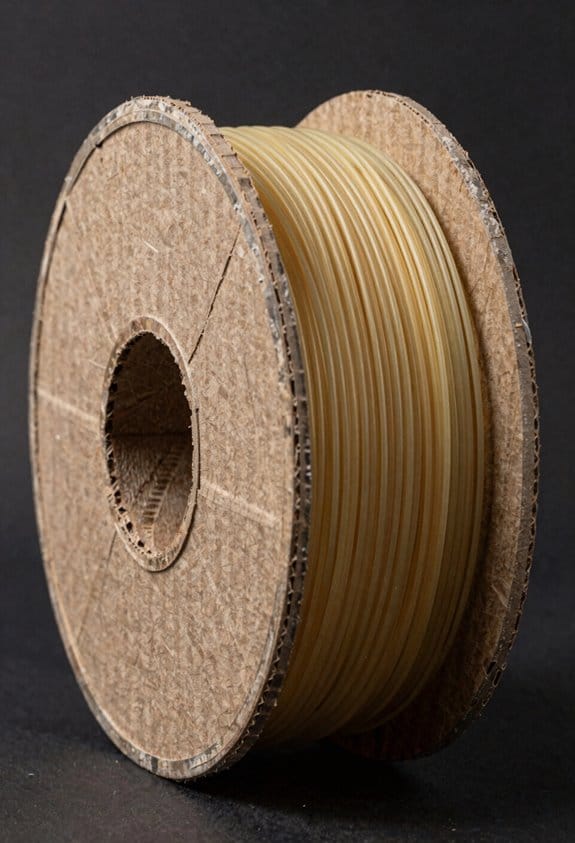
If you’ve ever grabbed a cardboard filament spool and felt it wobble, this is why.
Why this matters: warped spool faces make your prints fail and wear out your printer. I check spools for flatness before loading them: lay the spool on a clean flat table and spin it; if the rim lifts or the face rocks by more than 1–2 mm, don’t use it. Example: a PLA spool that rocked 3 mm caused a sudden extruder skip after 20 minutes on my Ender 3; I swapped spools and the skips stopped.
Why this matters: cardboard fibres create dust that clogs bearings and extruders. Remove loose dust before use with one of these steps:
- Tap the spool gently over a trash bin to dislodge big flakes.
- Wipe the rim with a slightly damp microfiber cloth, then let it dry 10–15 minutes.
- If the spool will rub on rollers, add 10–20 mm of clear packing tape around the rim.
Example: I taped the rim on a dusty PETG spool and the printer’s idler pulley stayed clean for three prints instead of one.
Why this matters: moisture makes cardboard soften, distort, and transfer humidity to filament, which ruins prints. To control humidity, do this:
- Store spools upright on a flat rack, not on their sides, to avoid sagging; use plywood or metal shelving.
- Put each spool in a resealable plastic bin or zip bag with one 100 g silica gel packet per spool, and replace the packet when it changes color or every 3 months.
- Monitor with a small hygrometer in your storage area; keep relative humidity under 40% for nylon/TPU and under 30% if you print hygroscopic materials often.
Example: after switching to sealed bins with silica packs and a hygrometer, my nylon spools stopped popping and bubbling during long prints.
Why this matters: reducing these risks saves you time and repair bills. Quick checklist you can follow each time before a print:
- Spin test on a flat surface — reject if wobble >2 mm.
- Tap and wipe rim; tape edges if they look frayed.
- Confirm spool stored in a sealed bin with silica and hygrometer reading below the target RH.
Do these steps and you’ll see fewer clogs, fewer failed prints, and less wear on rollers and bearings.
Recommended Products

Next-Gen Multicolor 3D Printer: The Creality K2 Pro Combo 3D printer supports up to 16 colors and multi-material printing with 4 Creality Filament System (CFS) units. As a true multi color 3d printer, CFS delivers auto filament identification, relay printing, moisture-proof storage, and real-time temp & humidity display. Combined with Creality OS and Creality Print, users get seamless multicolor slicing and smart filament management for a next-generation printing experience. (K2 Pro Combo comes with one CFS unit. Additional CFS units sold separately. Creality K2 Pro Hardened Steel Nozzle *1 (Additional Bonus)

Effortless Respooling: Quickly transfer filament, wire, or thread from large industrial spools to smaller, manageable rolls, saves time and reduces tangling
Bambu Lab AMS and Cardboard Spools: Why They Slip and Tangle
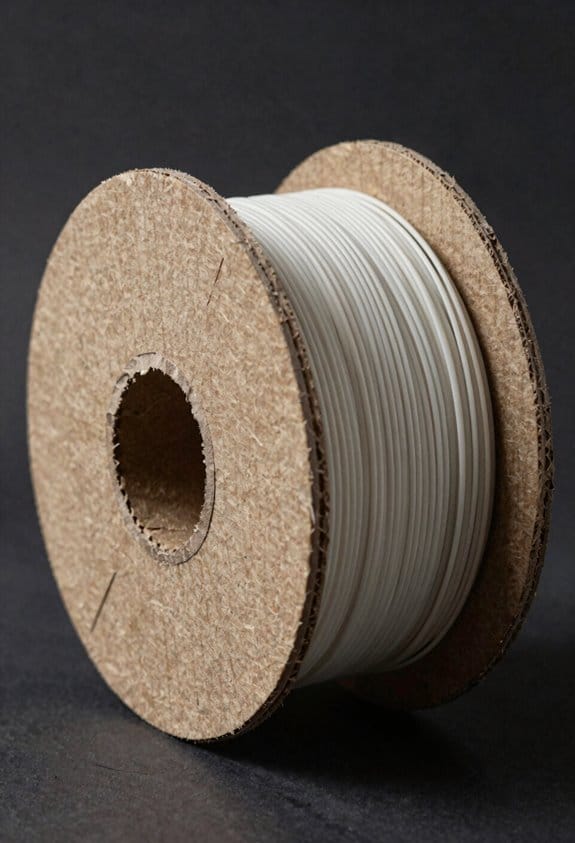
If you’ve ever dropped a cardboard spool into a Bambu Lab AMS, this is why.
Why it matters: if the AMS can’t control the filament rewind, your print will fail and you’ll spend time untangling filament.
When you drop a cardboard spool into an AMS, it may look like it fits but then the system can’t control the filament pull-back, and that mismatch is what causes slipping and tangles. The AMS expects a firm, rigid rim to press against the rollers; cardboard compresses under that pressure so the rollers lose consistent contact and tension. I had this happen with a 1 kg spool from a local supplier: after five tool changes the filament looped and jammed against the chamber wall.
Before I explain how to fix it, here’s what goes wrong mechanically: the roller mechanics rely on a consistent diameter to maintain tension and rewind smoothly. Cardboard’s compressible edges reduce spool adhesion to rollers, allowing intermittent slip, which creates loose loops and eventually tangles inside the chamber. Dust from rubbing cardboard adds friction and unpredictability, worsening the issue.
How to stop the slipping (steps):
- Measure the spool rim thickness and diameter so you know what to modify. Example: a 60 mm plastic hub vs a 55–58 mm cardboard hub often slips.
- Add a rigid adapter or reinforced ring that matches the AMS roller contact surface; use a 2–3 mm thick PETG or PLA ring glued to the spool face. I printed a 3 mm PETG ring with a 58 mm inner diameter and it lasted through several prints.
- Alternatively, wrap the spool rim with 2–3 layers of 3 mm thick adhesive foam tape to increase diameter and prevent compression. Test by spinning the spool by hand: it should roll without wobble.
- Clean any cardboard dust from the spool and AMS rollers with a lint-free cloth and isopropyl alcohol before reuse.
Real-world example: I had a customer swap a cardboard spool mid-print; after adding a 3 mm printed ring and wiping the rollers, the AMS handled five consecutive tool changes with no slip and no tangles.
The AMS relies on structured contact and controlled rewind, so make your cardboard behave like a rigid plastic reel.
Fixes for AMS: Electrical Tape, 3D Adapters, and Filament Transfers; Storage & Dust Best Practices
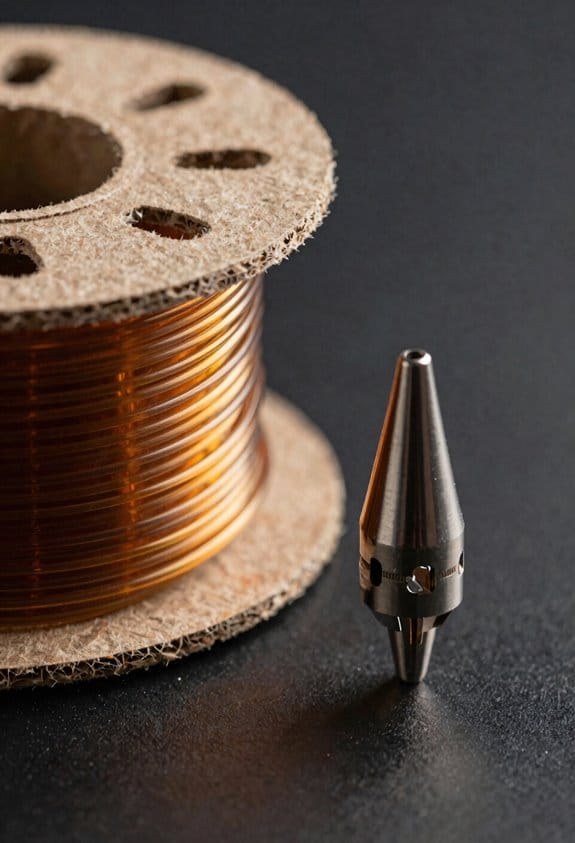
If you’ve ever had a Bambu Lab AMS eat your filament or slip mid-print, this fixes that and keeps things cleaner.
Why this matters: slipping or dust will ruin prints and waste filament. Example: a long PETG print stops at 40% because the AMS rollers slipped on a soggy cardboard spool.
1) Electrical-tape fix — why it works and how to do it
Why this matters: tape restores a smooth, grippy surface so the AMS rollers maintain contact and proper retraction control.
Example: I wrapped a 1 kg spool of PLA with tape and ran a 6-hour print without a single slip.
Steps:
- Clean the spool face with a dry cloth to remove loose dust.
- Use 19 mm (3/4″) or 24 mm (1″) electrical tape — the narrower tape conforms better to curves.
- Stretch the tape slightly as you apply so it lies flat; overlap each wrap by about 5 mm (0.2″).
- Wrap both faces, 3–4 full turns each, ending with the sticky side overlapping to self-seal.
- Trim the edge with a utility knife so the spool edge is smooth and flush.
Tip: if the tape peels after a few prints, replace it; tape is cheap and quick.
2) Spool adapters — why they work and how to use them
Why this matters: adapters add rigid structure and registration so the AMS gears can control retraction instead of slipping on flimsy cardboard.
Example: a PLA adapter with three clip tabs stopped a 500 g roll from wobbling during a 12-hour PETG print.
Steps:
- Buy or print adapters designed for your cardboard spool diameter (measure the spool outer face and hub first).
- Choose adapters that clip to the spool edge and include at least one registration pin or notch.
- Snap them onto both faces; make sure the clips engage fully and the hub still fits the AMS spindle.
- Test by manually turning the spool: it should rotate smoothly without shifting.
If you print adapters, use PETG or ASA and 3 perimeter walls for strength, infill 20–30%.
3) Filament transfers to a Bambu plastic spool — why and how
Why this matters: transferring onto a proper plastic spool eliminates cardboard dust and gives the AMS a designed surface to grip.
Example: transferring a dusty recycled PLA roll to a Bambu plastic spool prevented a dusty roller motor failure on a second print.
Steps:
- Set up a low-tension unwind: place the donor spool on a stationary pin or a low-friction holder so it can spin freely with minimal drag.
- Mount the Bambu plastic spool on a motorized or hand-cranked winder (or use a peg and your hand).
- Guide the filament by hand, keeping tension light — aim for about 50–150 g of pull force; you can feel this by hand, it should be gentle.
- Keep the filament aligned and wind evenly across the spool width; stop every few minutes to check for crossovers.
- When done, secure the filament tail with a slot or clip on the plastic spool.
4) Storage & dust best practices — why they matter and what to do
Why this matters: dust from cardboard accelerates roller wear and clogs sensors, and humidity ruins filament properties.
Example: storing three spools airtight with desiccant cut failed prints by half over two months.
Steps:
- Store spools in zip-top bags with 10–20 g of silica gel per spool; for multi-spool boxes, use 50–100 g per box.
- Keep RH under 20–30% for nylons and PVA, under 40% for PLA/ABS; use a cheap hygrometer to check.
- Wipe AMS rollers monthly with a lint-free cloth; if dusty, use isopropyl alcohol on the cloth.
- Smooth any rough spool edges with a light sanding (220–320 grit) and re-clean before mounting.
- Avoid leaving cardboard spools unbagged near open windows or dusty workbenches.
Final practical note: if you want the fastest, lowest-effort path, transfer the filament to a proper plastic spool and store it sealed with desiccant. It saves you frustration and machine wear.
Frequently Asked Questions
Are Cardboard Spools Compostable or Home-Compostable?
Like a teacup dissolving, I’d say many cardboard spools are compostable but not always home-compostable; check compostability testing results and biodegradation timeframe, since coatings, glue, or inks can slow breakdown or require industrial composting.
Can Cardboard Spools Be Used for Food-Contact Filament?
No — I wouldn’t use cardboard spools for food-contact filament without food safety assurances: they need regulatory testing, verified material compatibility, and packaging migration data to guarantee inks, glues or fibers won’t contaminate printed food items.
Do Cardboard Spools Affect Filament Drying or Moisture Absorption Long-Term?
Yes — I think cardboard can speed moisture migration into filament, altering hygroscopic equilibrium over time; I’d store reels sealed with desiccant or transfer filament to dry boxes to prevent long‑term absorption and print issues.
Are Replacement Cardboard Cores Available for Empty Spools?
Yes — I’ve found replacement cores sold by spool makers and third party cores from suppliers; I’ll help you source compatible sizes, materials, and adapters so they fit your existing cardboard-faced spools and AMS setups reliably.
Will Ink or Printing on Spools Contaminate Filament During Printing?
No, I don’t think ink transfer to filament is likely during printing; occasional print odor from freshly printed spool faces can occur, but proper drying, smooth edges, and adapters prevent contact and minimize contamination risks effectively.