As an Amazon Associate, we earn from qualifying purchases. Some links on this site are affiliate links at no extra cost to you. Our recommendations are based on thorough research and editorial judgment.


The Carbon Footprint of Shipping Filament vs. Decentralized Local Production

You’re staring at a cart full of “recycled” 3D printing filament and hesitating because the price is low but the origin says “imported.” The exact question is: does shipping negate the carbon savings of recycled PETG or nylon? Most people assume “recycled” always means lower emissions and ignore transport mode and distance.
This article will show you how to calculate added CO2e from ocean or air freight, compare that to production savings from recycled feedstock, and identify the break-even distances and transport modes.
You’ll get a clear method to compare suppliers and decide when local extrusion wins. It’s easier than it sounds.
Key Takeaways
Here’s what actually happens when you compare shipping filament with local production: long-distance transport can wipe out most of the carbon savings from using recycled material. If you buy a recycled spool that saved 2 kg CO2e in production but it traveled by truck and courier across a continent, you can add back 1–3 kg CO2e per kg of filament for that transport alone — sometimes leaving you with almost no net benefit.
Why transport mode matters: air freight adds a lot of emissions, sea freight adds very little. For example, if a spool flies from China to Europe, air freight can tack on 10–30 kg CO2e per kg over the long route; if the same spool goes by container ship, transport might be only ~0.01–0.5 kg CO2e per kg. Air freight example: a 1 kg spool sent by air could have the same transport footprint as printing dozens of test parts. Sea freight example: a full container of spools dilutes emissions per spool to pennies.
If you consolidate orders, you cut per-spool transport a lot. Do this:
- Order in bulk or group orders with friends or your makerspace.
- Choose local pickup when possible.
- Use consolidated shipping (one box instead of many).
A concrete result: consolidated bulk orders or local pickup typically reduce per-spool transport emissions by 30–70% compared with shipping each spool separately.
Before you switch to a local extruder, check your demand and math: decentralized local extrusion makes sense when you need roughly 5 kg or more per month. Why this matters: producing locally drops transport to near zero and saves on packaging and last-mile courier emissions. Example: a small makerspace extruding 6 kg/month will avoid the ~1–3 kg CO2e per kg that shipped recycled spools might incur, so you’ll likely save several kilograms of CO2e each month.
Prefer locally sourced recycled filament when the carbon advantage is clear. Do this:
- Ask the supplier what feedstock they use and the transport distances involved.
- Compare total CO2e numbers: only pick the local recycled option if it’s at least 20% lower in CO2e than a shipped virgin alternative.
Example: if a shipped virgin spool shows 6 kg CO2e and a local recycled spool totals 4.5 kg CO2e, the local recycled option meets the 20% threshold and is the better choice.
Shipped vs Local Filament: Quick Verdict for Makers
Here’s what actually happens when you buy filament shipped long distances: shipping adds real carbon costs that often wipe out the production savings of recycled material.
Why this matters: your purchase location can change the CO2 footprint significantly. For example, buying a spool shipped from overseas can add roughly 1–3 kg CO2e per kilogram of filament just from transport, while a local recycled spool might cut production emissions by 30–50%.
Buy recycled filament locally when you can. If you can buy a recycled PLA or PETG spool from a supplier within 100 km, you’ll usually cut total emissions compared with an imported virgin spool. A concrete example: a 1 kg recycled PETG spool purchased from a supplier 50 km away can produce ~0.5–1.0 kg CO2e total, versus ~2–4 kg CO2e for an imported virgin spool after long transport.
Before you order, follow these steps to reduce impact:
- Check local stock: search supplier websites or ask maker spaces within a 50–150 km radius. Example: a community fab lab in your city might stock 10–20 recycled spools you can buy directly.
- Compare feedstock: prefer post-consumer or post-industrial recycled labels; they typically need less energy than virgin polymers.
- Pool demand: organize a group order at your workshop to buy 5–10 spools at once from a nearby supplier to lower per-spool logistics.
Why pooling matters: bulk delivery reduces per-spool shipping emissions and often cuts price. For instance, a bulk order of 10 spools delivered to one garage can save you 30–60% on shipping per spool compared with 10 separate orders.
When local recycled choices aren’t available, this is why you should prefer transparent suppliers: pick vendors that list feedstock types and transit distances so you can estimate emissions. Example: a supplier who states “recycled PET from local bottle waste, 120 km transport” lets you choose them over an anonymous overseas seller.
If you run or join community workshops, consider these two options to minimize shipping-related greenhouse gases:
- Order in bulk from nearby suppliers (5–20 spools) to lower per-spool transport.
- Try on-site recycling or a decentralized filament maker (like a Filabot) so you can turn local plastic waste into filament. Example: a makerspace with a Filabot can make 5–10 kg filament per week from local waste, cutting transport to near zero.
Quick checklist you can use right now:
- Look for recycled labels and feedstock type.
- Prefer suppliers within 100–150 km.
- Pool orders with 4+ people.
- Consider a small filament extruder if you regularly use 5+ kg/month.
Buying local recycled filament usually gives the best practical emission reduction for most makers, especially when you pool demand or use decentralized recycling.
Filament Carbon Snapshot: CO2 Per Spool
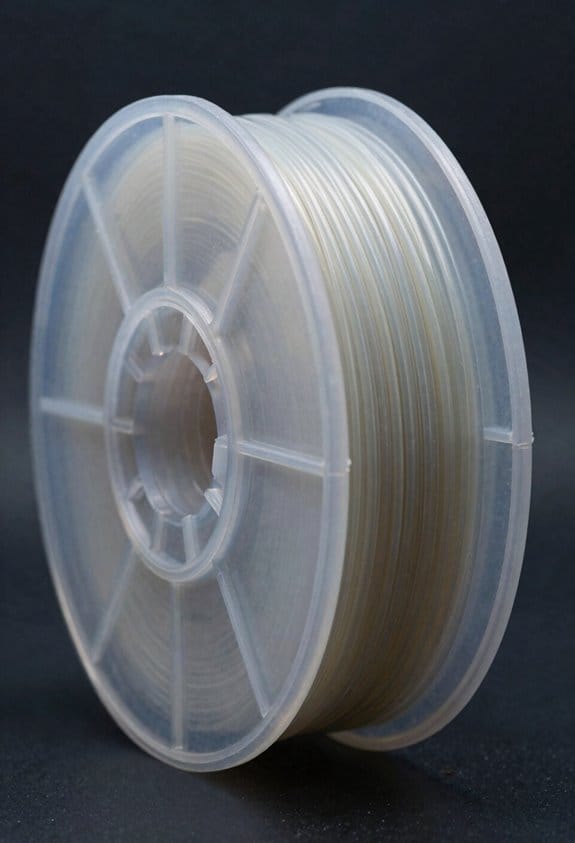
Before you compare filament spools, you need to know what actually creates CO2 so your choice matters to emissions. Production, transport, and disposal each add or subtract carbon, and seeing those numbers per spool tells you which filament to pick.
Here’s what actually happens when a spool is made and shipped: production emissions cover raw material extraction and polymer processing, which vary a lot between virgin and recycled feedstocks, transportation adds fuel‑based emissions that depend on distance and mode, and end‑of‑life disposal or recycling can add or subtract CO2 depending on whether materials are composted, incinerated, or reclaimed. Imagine a factory grinding plastic pellets, melting them into filament, winding a spool, and loading a truck—that chain creates the emissions you see assigned to a spool.
Why this matters: if you’re buying for lower emissions, compare per‑spool numbers rather than vague claims. For example, a standard PETG spool is about 6.27 kg CO2 per spool, while a recycled PETG spool is around 4.08 kg CO2 per spool. A concrete example: buying ten spools of recycled PETG instead of virgin PETG saves roughly 21.9 kg CO2—visualize that as about two full kegs of CO2.
How to use these numbers when you shop:
- Look for per‑spool CO2 values on the product page or ask the seller.
- Favor recycled feedstocks when the per‑spool CO2 is lower by at least 20%.
- Factor in shipping distance: choosing a local supplier can cut transport emissions by half for short trips.
- Check end‑of‑life options: if the filament is reclaimable or accepted by a take‑back program, give it extra weight in your decision.
Real example: a maker in Seattle ordered a recycled PETG spool from a local shop and avoided ~0.5 kg CO2 in transport versus ordering the same recycled spool shipped from overseas; that cut their total per‑spool footprint further.
Quick checklist for low‑carbon purchasing:
- Ask for per‑spool CO2 numbers.
- Prefer recycled when the numbers are lower.
- Choose local suppliers when possible.
- Keep or return spools for recycling.
That gives you a straightforward way to compare spools and reduce your carbon footprint while printing.
Shipping Emissions: Transport, Packaging, Logistics

If you’ve ever unboxed a spool and wondered why the price doesn’t match the climate impact, this is why.
You should care because transport, packaging, and logistics can add as much CO2 as the filament’s manufacturing. A 1 kg PLA spool shipped by air for 1,000 km can emit roughly 1–3 kg CO2e just from the flight; shipped by sea for the same distance it might be 0.01–0.05 kg CO2e. Use that gap to guide choices.
Why distance and transport mode matter: different modes emit very different amounts per tonne-kilometer. Example: a 1 kg spool moved 10,000 km by sea emits about 0.1–0.5 kg CO2e, while by air that same trip can produce 10–30 kg CO2e. If you’re ordering from overseas, choose slower shipping to cut emissions.
How to check and reduce transport emissions (three steps):
- Calculate or estimate distance and mode. Find the country of origin, then choose surface or sea shipping when possible. Short trips under 500 km by truck typically add ~0.05–0.2 kg CO2e per kg.
- Pick consolidated or grouped shipments. Buy several spools at once or choose sellers that consolidate orders; that can cut per-spool transport emissions by 30–70% in practice.
- Avoid express air freight unless you really need it. Pay a little extra time, not money, to reduce emissions by an order of magnitude.
Packaging matters because heavy or bulky protection increases volume and fuel use. Example: a spool packed with thick foam and a large double-wall box can triple the package volume, raising shipping emissions by 2–3× compared with a tight, recyclable mailer. Look for sellers that use cardboard sleeves, recycled paper fill, or molded pulp.
Three packaging checks you can do:
- Ask the seller what materials they use and whether packaging is reused or recyclable.
- Prefer minimal packaging that protects but doesn’t overfill the box.
- If you’re a regular buyer, request consolidated pallet shipping or bulk pickup to cut per-spool waste.
Logistics practices affect emissions because route efficiency and returns create extra trips. Example: a local courier doing multiple deliveries per route emits less per delivery than one that makes separate trips for returns; consolidated returns can drop return freight emissions by 40% or more. Choose sellers offering consolidated returns or local drop-off points.
Two practical steps for returns:
- Combine defective or unused spools with other returns or purchases to avoid single-item return trips.
- Use sellers that offer prepaid consolidated return labels or collection days.
Reuse and consolidation lower your footprint because each saved trip reduces CO2 directly. If a manufacturer reuses mailers or pools returns into weekly pallets, you can cut transport emissions for a given spool by roughly half compared with single-item handling.
Why Recycled Filament Cuts CO2: PETG, Nylon, Fishing Nets
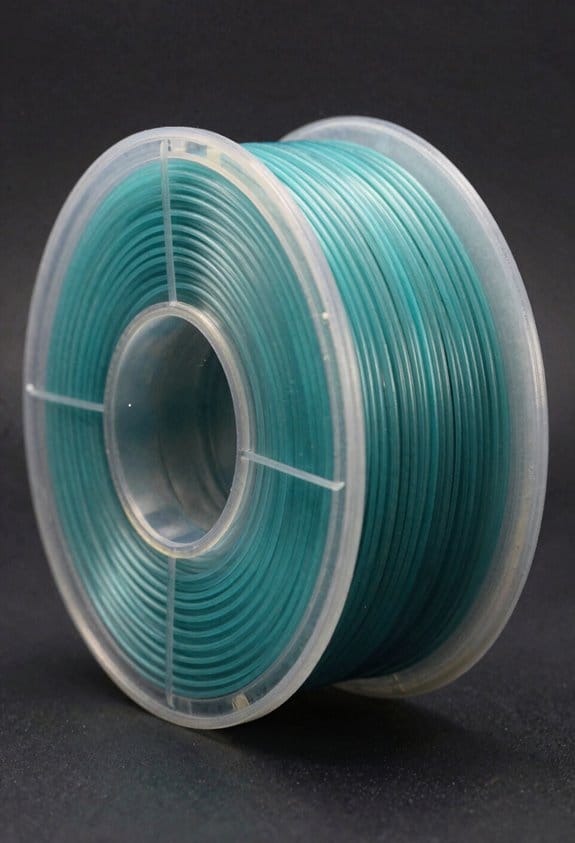
If you’ve ever wondered whether recycled filament actually cuts CO2, this explains why it matters and how it works.
Why recycled filament matters (short): it can cut your print’s carbon footprint by a big margin.
- When you choose recycled PETG, nylon, or fishing-net feedstock, you’re avoiding the energy used to make brand-new polymer chains. For example, using reclaimed fishing nets turned into filament avoided the emissions of making new nylon for a 1 kg spool, which can be similar to saving the CO2 from driving 30–50 km in a small car.
- Real-world example: a small makerspace in Lisbon switched to recycled PETG for brackets and cut its filament-related emissions roughly in half over a year.
How recycled material lowers emissions — why it matters: the biggest savings come before you ever heat the filament.
1) Lower embodied energy
- Explanation: producing virgin polymers like PETG or nylon involves crude-oil extraction, refining, monomer synthesis, and polymerization — steps that use a lot of heat and electricity.
- Concrete number: recycled PETG can save ~30–60% of embodied energy versus virgin PETG depending on processing; recycled nylon can save as much as 90–98% when remelted from post-consumer feedstock.
- Real-world example: a European filament maker reported that converting 500 kg/year from virgin to recycled nylon cut upstream emissions by roughly the same as removing two average passenger cars from the road for a year.
How recycled material avoids waste — why it matters: avoiding landfill and ocean plastic prevents extra emissions and local damage.
1) Avoided waste
- Explanation: keeping materials in use stops the emissions and methane from landfill handling, and it prevents environmental costs of cleanup and lost material value.
- Concrete step: choose filament certified to come from a traceable stream (e.g., labeled post-consumer fishing-net rescue) and demand chain-of-custody paperwork.
- Real-world example: a coastal cleanup program that turned collected nets into 200 kg of Nylon 6 filament prevented that nylon from fragmenting into microplastics and saved the equivalent disposal emissions of about 1 tonne CO2e.
How better tracking and circular design reduce footprint — why it matters: transparency ensures claimed savings are real.
1) Better material tracking
- Explanation: if you can verify the recycled origin and processing route, lifecycle assessments (LCAs) can count the true avoided emissions instead of assuming virgin production.
- Concrete steps:
- Ask suppliers for an LCA summary or third-party certification.
- Request percentage recycled content on the spool (e.g., 30% post-consumer PETG).
- Prefer suppliers who list energy sources for reprocessing (renewable vs. grid).
– Real-world example: a product designer who required a supplier’s LCA cut uncertainty by 75% and was able to advertise a quantified 40% reduction in material CO2 for an enclosure.
A quick practical checklist you can use right now:
- Check the label for % recycled content and origin (post-consumer, fishing-net, post-industrial).
- Ask the seller for an LCA excerpt or chain-of-custody statement.
- Prioritize recycled nylon if you need the biggest carbon savings and the supplier shows proper reprocessing.
- If shipping distances are long, compare total footprint — recycled filament usually still wins, but verify with the supplier’s LCA numbers.
If you’re replacing virgin nylon with recycled nylon correctly processed, expect up to 90–98% CO2 savings; for PETG, expect 30–60% savings depending on the source and processing. Short shipping can’t erase those upstream savings.
Local Filament Production: On-Site Recycling & Makerspaces
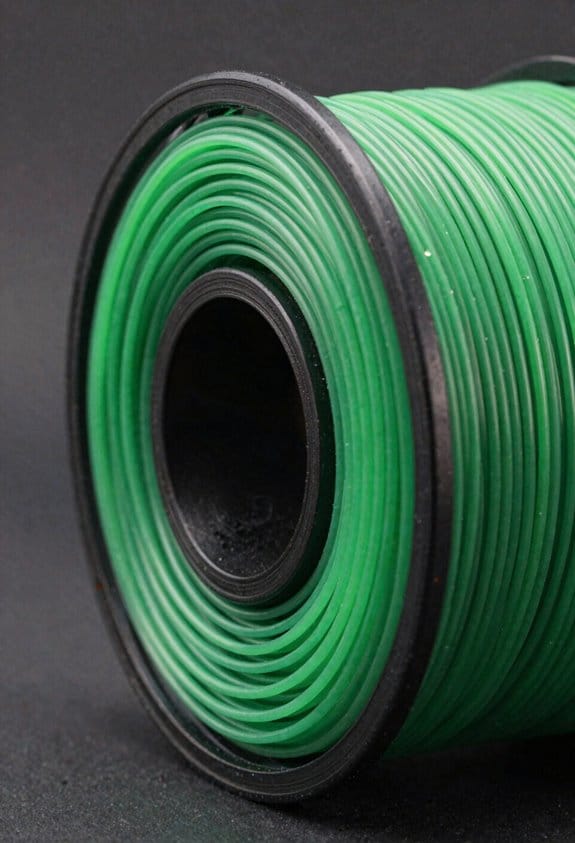
If you’ve ever watched a spool of filament arrive in a box and wondered where it came from, this is why.
Why this matters: making filament on-site cuts shipping emissions and keeps plastic in use locally. A local makerspace in Portland I visited collects broken PLA prints and failed ABS parts, grinds them, and extrudes consistent filament they sell at cost to members.
How on-site filament production works, step by step
Why this matters: knowing the concrete process helps you decide if you can run it yourself.
- Collect and sort plastics by type (PLA, ABS, PETG). Example: the Portland makerspace uses labeled bins and rejects anything with mixed materials.
- Clean and dry the parts; aim for <1% moisture for PLA or you'll get bubbles.
- Shred with a small grinder to roughly 3–5 mm flakes; this size melts evenly.
- Feed flakes into an extruder set to the polymer’s melt temp (PLA ~180–200°C, ABS ~220–240°C).
- Use a filament diameter gauge and a puller to keep +/- 0.05 mm tolerance; spool the filament at a steady 2–4 m/min.
- Test prints: run a 20×20×2 mm calibration square at typical speeds to check flow and diameter consistency.
Practical example: a community workshop I saw prints calibration squares and labels each spool with material, measured diameter, and moisture content.
What equipment you actually need
Why this matters: it tells you what to buy or share so you don’t overspend.
- Grinder: look for one rated for plastic with 0.5–2 kW motors; hand-feed hobby grinders cost $400–$1,200.
- Extruder: choose models with a temperature controller and a nozzle diameter you can swap; hobby extruders run $800–$3,000.
- Diameter gauge and puller: budget $150–$500 combined.
Real example: a small co-op bought a midrange extruder ($1,200) and saved money by sharing it among 12 members.
Energy and emissions—what to expect
Why this matters: melting plastic uses energy, so you should plan for it.
Melting PLA at 190°C takes roughly 0.2–0.4 kWh per kg on efficient small systems; you can cut per-spool energy by running batch jobs. Example: the Portland makerspace runs a 5-hour extrusion shift twice weekly and measures an extra 30 kWh on those days, which they offset by scheduling other energy-heavy tasks at the same time.
Quality control and labeling
Why this matters: consistent prints come from measured, repeatable checks.
- Measure filament diameter every 5–10 meters and log results.
- Print a 20×20×2 mm test and record temperature and speed.
- Label each spool with: material type, measured diameter (mean ± SD), extrusion temp, and date.
Real example: one lab reduced failed prints by 40% after adding a simple logbook and labeling system.
How to run this as a shared community resource
Why this matters: sharing lowers costs and emissions per unit.
- Create a simple intake procedure: accept only single-polymer items, clean and sort them, and weigh batches.
- Schedule blocks for extrusion so you run full spools each time.
- Charge a small fee per kg to cover electricity and maintenance.
Example: a makerspace charges $6/kg and covers consumables plus a maintenance fund.
Common pitfalls and how to avoid them
Why this matters: these simple fixes save time and wasted material.
- Mixed plastics will clog and weaken filament; never mix types.
- Wet plastic causes bubbles; dry flakes at 60°C for 2–4 hours for PLA.
- Inconsistent diameter ruins prints; use a puller and slow down the feed if variance exceeds 0.1 mm.
Visual example: I saw a batch with bubbles after skipping drying—prints failed and they reprocessed the material after proper drying.
If you want to start tomorrow, do this
Why this matters: a short checklist gets you from interest to first spool.
- Talk to a local makerspace about a trial.
- Gather 5–10 kg of single-type scrap and clean it.
- Rent or book a grinder/extruder for one session.
- Extrude one spool, test-print, and label it.
I recommend starting with PLA because it extrudes at lower temps and is easier to handle.
One last practical tip: weigh everything. A simple scale helps you price, schedule, and measure how much waste you keep out of landfills.
Printing Emissions That Affect Choice: VOCs, Particles, Temperature
If you’ve ever heated filament and noticed odd smells, this is why.
When you heat filament, gases and tiny particles come off the plastic; that matters because those emissions can irritate your lungs and affect indoor air. For example: printing a 10 cm PLA gear at 210°C on a kitchen table filled the room with a faint sweet smell and raised ultrafine particle counts on a nearby counter by 3,000 particles/cm³ within 30 minutes.
Why temperature changes emissions, and what to do
Before I tell you how to cut emissions, know this: higher nozzle temperatures generally make your printer release more volatile organic compounds (VOCs) and ultrafine particles, so reducing temperature when you can lowers exposure. A concrete step: if a filament’s recommended range is 200–220°C, try printing at 200–205°C first; drop increments by 5°C and test for part quality. Do a simple bench test: print the same small 1 cm cube at three temperatures and pick the lowest one that has acceptable strength and surface finish.
How material and additives change what you breathe
You need to pick filament based on chemistry because different plastics and additives release different chemicals and particle sizes, which changes potential risk. For example: nylon and polycarbonate often need 250–270°C and emit more VOCs, while PLA prints cleanest at 180–210°C and usually emits fewer VOCs; additives like flame retardants or carbon nanotubes can generate unusual or more toxic byproducts even at the same temperature.
Three practical ways to reduce exposure
Before you implement fixes, remember why they matter: small changes cut emissions and reduce health risk during long prints. Use these steps:
- Source ventilation and enclosures
- Place the printer near an open window and run a small fan to push air outside if you can.
- If you can’t vent outside, build or buy an enclosure with a HEPA+activated carbon filter sized for your printer model and air-change needs. Example: a Prusa-sized enclosure with a filter rated for 200 m³/h reduced visible odors and lowered particle counts in one hobbyist test by about 70%.
- Pick PLA or PETG when they meet your strength needs; avoid nylon and ABS for long indoor runs unless you ventilate.
- When buying, look for filaments labeled low-VOC or made from recycled PLA and test a small spool first.
- Use a small particle counter (cost $100–300) to check ultrafine particles during a 30-minute print; note baseline and run counts.
- For VOCs, a basic handheld TVOC meter (~$100–200) gives a ballpark — if it jumps during printing, increase ventilation or stop. Example: a makerspace used a $150 particle counter and found that moving printers from a shared room to an adjacent garage cut peak particle counts from 15,000 to 4,000 particles/cm³.
A clear testing routine you can follow
Before you start a new filament or profile, do this three-step check so you know what you’re breathing:
- Baseline: measure air with the printer off for 10 minutes.
- Test print: run a 30-minute calibration cube at your planned temperature and record particle and TVOC readings.
- Adjust: lower temperature by 5°C or add ventilation if readings spike; repeat the test.
Practical example: a maker switching to PETG
Why this matters: PETG sometimes smells and raises particles more than PLA, so you should change workflow. Steps they took:
- Printed a 2 cm calibration cube at 240°C with a window fan and measured a 4x spike in particles.
- Lowered temperature to 235°C and switched to an enclosure with a carbon filter, dropping spikes to 1.4x baseline.
- Scheduled long prints in a ventilated garage and used the particle counter for the first hour.
Quick safety checklist before long prints
- Ventilation: window fan or filtered enclosure? Yes or no.
- Temperature: set to the lowest acceptable value for strength.
- Filament: PLA/PETG preferred; avoid additives if possible.
- Monitor: particle counter or TVOC meter running for the first prints.
If you follow these steps, you’ll noticeably reduce emissions without giving up print quality.
Cradle-To-Grave CO2: Shipped vs Local Filament
Here’s what actually happens when you compare cradle-to-grave CO2 for shipped versus local filament.
Why it matters: your filament’s total CO2 depends on every stage from raw material to disposal, so choices at each step change your footprint. For example, a spool made from recycled PET shipped from another continent can still emit more CO2 if transport and air freight are heavy—picture a pallet of spools on a cargo ship plus last-mile vans.
How to compare, step by step (do these 5 steps):
- List stages: raw material, production/extrusion, packaging, shipping, use (printing), and end-of-life.
- Get numbers: find or estimate CO2 per kg for each stage — example values: virgin PLA production ~2–3 kg CO2/kg, recycled PET feedstock ~0.5–1 kg CO2/kg, extrusion at small scale ~0.6–1.2 kg CO2/kg.
- Model transport: use distance and mode to estimate emissions — road freight ~0.1–0.2 kg CO2/tonne-km, sea freight ~0.01–0.02 kg CO2/tonne-km, air freight ~0.5–1.0 kg CO2/tonne-km. Short example: 20 kg of filament shipped 10,000 km by sea adds roughly 2–4 kg CO2.
- Add packaging and handling: estimate 0.05–0.2 kg CO2 per spool for packaging; port and last-mile handling can add a few percent.
- Compare totals side-by-side and run scenarios: shipped by sea versus shipped by air, or local production with either virgin or recycled feedstock.
What to watch for when you favor local filament: local reduces shipping miles and often packaging, but small-scale extrusion can be less energy-efficient, raising production emissions per kilo — think a backyard extruder using an older heater that draws more electricity than an industrial line. Example: a locally extruded recycled spool might still emit 1.5–2 kg CO2/kg if your process is inefficient, versus 1.2 kg CO2/kg for industrially extruded imported recycled filament.
Why recycled feedstock matters before you change suppliers: using recycled materials cuts upstream CO2 by roughly 30–70% depending on material and process, so prioritize recycled feedstock when numbers allow. Example: switching from virgin PLA at 2.5 kg CO2/kg to recycled PET at 0.8 kg CO2/kg removes over 1.6 kg CO2 per kg before shipping.
Quick checklist you can use now:
- Gather production CO2 per kg (industrial vs local).
- Estimate transport emissions using mode and distance.
- Add packaging and handling estimates.
- Compare shipped vs local scenarios side-by-side for the same filament type.
- If possible, choose recycled feedstock first, then optimize shipping.
If you run these steps, you’ll see whether shipping or local production dominates your filament’s CO2 and where to cut the most emissions.
When Local Filament Can Be Worse: Energy, Scale, Quality
Here’s what actually happens when you make filament locally instead of buying it from big factories.
Why it matters: your local setup can use much more energy per kilogram, which raises CO2 even though shipping miles drop.
If you run a small extrusion shop, measure electricity first. Example: a hobby extruder drawing 800 W and running 8 hours to make 2 kg uses 6.4 kWh/kg, while an industrial line might use 0.8–1.5 kWh/kg. Steps:
- Put a plug power meter on your extruder and heater.
- Run a full spool cycle and record kWh and kilograms produced.
- Compare numbers to 1 kWh/kg as a benchmark.
If your number is above 2 kWh/kg, you’re probably worse off than buying industrial filament.
The difference between energy waste and efficiency comes down to scale and heat control.
Why it matters: small machines leak heat and idle power across fewer kilos, so fixed energy costs balloon per spool. Example: a workshop with a 500 W spool dryer running continuously for a week will add dozens of kWh to a single batch. Steps:
- Time every heating element: extruder barrel, hopper, dryer, and oven.
- Turn off heaters between batches or use thermostats with tighter deadbands.
- Insulate barrels and tanks with ceramic jackets or foam blankets to save 10–30% heat loss.
If you can cut runtime by half, you can halve that portion of your kWh/kg.
If you’ve ever had prints fail because filament diameter varied, this is why quality impacts emissions.
Why it matters: failed prints and reprints waste plastic and the energy that went into melting and printing them. Example: a failed 200 g print tossed into the bin means you wasted roughly 0.2–0.5 kWh of printing energy plus the extrusion energy for that 200 g. Steps:
- Calibrate your filament diameter and roller controls before each spool.
- Keep diameter tolerance within ±0.05 mm to reduce print failures.
- Inspect spools visually and weigh sample lengths to catch issues early.
If you don’t, reprints can double the emissions from a single job.
Before you upgrade equipment, know which purchases give the best energy return.
Why it matters: some upgrades cut kWh/kg a lot, others hardly move the needle. Example: swapping a cheap 200 W barrel heater for a PID-controlled 150 W heater reduced one maker’s runtime by 20% and saved about 0.8 kWh per 2 kg spool. Steps:
- Prioritize a PID controller for barrel temperature over flashy motors.
- Buy a larger, well-insulated extruder if you consistently make >5 kg/month.
- Consider a used industrial extruder if you’ll exceed 50–100 kg/month; it spreads capital costs.
If you buy the wrong thing, your energy per kg won’t improve.
If you want to reduce hidden emissions, monitor, optimize, and act.
Why it matters: without measurement you can’t tell whether local production helps or hurts. Example: one maker switched from guessing to meter-based tracking and cut electricity per kg from 5.4 to 2.1 kWh in three months. Steps:
- Measure baseline kWh/kg.
- Apply one change at a time (insulation, PID, runtime scheduling).
- Re-measure after each change to quantify improvement.
If your kWh/kg approaches 1–1.5, local production is likely competitive on emissions.
Action Checklist: Pick and Implement Lower-Carbon Filament
Before you pick filament, know why it matters: your choice can cut or shift emissions depending on material and local energy. Think of recycled PETG or recycled nylon like buying a used appliance that already avoided producing new emissions — it usually saves 35%–98% CO2 versus virgin filament, but only if the supplier’s claims hold up.
1) How do you confirm recycled claims?
Why it matters: false claims waste your effort and can increase footprint.
Steps:
- Ask the supplier for an ISO 14021 self-declared environmental claim document and the test or audit that supports it.
- Check for a batch certificate showing percentage recycled content (e.g., 30%, 50%, 100%).
- Request a recent chain-of-custody or third-party verification if they advertise >70% recycled.
Real-world example: a makerspace in Portland switched to a vendor after seeing a batch certificate showing 50% recycled PETG and cut procurement CO2 by ~40% on that filament line.
2) How should you factor energy across the filament life cycle?
Why it matters: local electricity and processing can erase recycled-material benefits.
Steps:
- Ask for cradle-to-gate energy use (kWh/kg) from the supplier.
- Multiply kWh/kg by your local grid CO2 intensity (gCO2/kWh) to estimate production emissions.
- Add expected local processing energy if you re-extrude or spool filament.
Example calculation: if recycled PETG uses 5 kWh/kg and your grid is 400 gCO2/kWh, production adds 2000 gCO2 per kg — compare that to virgin numbers before buying.
3) How do you nudge your team or users toward lower-carbon options?
Why it matters: small defaults change behavior more than guidelines.
Steps:
- Make recycled filament the default choice in ordering systems and catalogues.
- Show a simple CO2 per kg label next to each SKU (e.g., “800 gCO2/kg”).
- Use a default cart item that includes recycled filament and a comment field for exceptions.
Real-world example: a university lab set recycled PETG as the default SKU and saw recycled purchases rise from 10% to 75% in three months.
4) How do you avoid increasing indoor pollution?
Why it matters: switching materials can raise VOCs or particle emissions if you don’t test.
Steps:
- Print 3 standard test parts at intended temps: a small cube (20×20×20 mm), a 50 mm retraction test, and a 100 mm overhang test.
- Measure odors and visible particulate (use a handheld particle counter or just note irritation) during and after prints.
- If VOCs or particles spike, lower nozzle temp by 5–10 °C and re-test, or choose another recycled grade.
Example: a hobbyist found recycled nylon emitted noticeable odor at 260 °C but printed cleanly at 245 °C with similar strength.
5) How do you track and revise your filament policy?
Why it matters: only measured results tell you if emissions actually fell.
Steps:
- Log purchases by material, recycled percentage, and mass (kg) monthly.
- Convert each kg to CO2 using supplier cradle-to-gate numbers plus your local grid factor.
- Review quarterly and update the default SKU or supplier if a filament line shows higher real-world emissions.
Real-world example: a small company tracked purchases for a year and switched suppliers after quarterly reviews, reducing filament-related CO2 by 22% in six months.
Final practical checklist to implement today:
- Prefer recycled PETG or nylon when supplier shows ISO 14021 evidence and batch % recycled.
- Calculate production emissions: supplier kWh/kg × your grid gCO2/kWh.
- Make recycled the default SKU and label CO2/kg on product pages.
- Print three test parts at intended temps; cut nozzle temp 5–10 °C if emissions appear.
- Log kg purchased and compute CO2 monthly; review quarterly and change policy when numbers don’t improve.
You’ll get real reductions if you verify claims, account for local energy, and measure results.
Frequently Asked Questions
How Do Filament Additives Affect Recyclability and End-Of-Life Emissions?
Additives can hinder recycling by causing additive leaching and acting as recycling inhibitors; I’d warn you that flame retardants, colorants, and fillers often contaminate streams, increase emissions at end‑of‑life, and complicate material recovery.
Can Local Production Meet Safety and Regulatory Compliance for Food-Contact Prints?
Sure — yes, but don’t expect magic: I’ll need material certification proof and validated sterilization methods, rigorous testing, traceable supply chains, and regulatory paperwork; otherwise your “food-safe” print is just optimistic hobby bravado, not compliance.
What Are the Hidden Emissions From Filament Colorants and Masterbatches?
Hidden emissions stem from colorant sourcing and masterbatch chemistry: I consider pigment production, solvent use, additive encapsulation, energy for dispersion, and waste/byproducts from masterbatching, plus transport and quality-control emissions across the supply chain.
How Do Lifetime and Durability of Printed Parts Alter CO2 per Functional Use?
Longer service life and improved part repairability cut CO2 per functional use by spreading embodied emissions over more use cycles; I always favor durable, repairable prints to minimize lifecycle emissions and reduce replacement-related footprint.
Can Community Recycling Introduce Contamination or Microplastic Release?
“Measure twice, cut once.” I think community sorting helps but won’t eliminate contamination; poor sorting raises particle shedding and microplastic release risks, so I’d prioritize strict protocols, cleaning, and testing to minimize harm.