As an Amazon Associate, we earn from qualifying purchases. Some links on this site are affiliate links at no extra cost to you. Our recommendations are based on thorough research and editorial judgment.

10 Best Carbon Fiber Filaments That Supercharge Your 3D Prints

You’ve spent hours tweaking a drone frame only to watch it flex under a light breeze, or you’ve printed a bracket that snaps the first time you tighten a bolt. Those moments of wasted filament and broken parts are all too common for makers who need real strength without excess weight.
The difference between a reliable carbon‑fiber filament and a disappointing one often boils down to overlooked factors: insufficient carbon content, incompatible nozzle material, and ignoring the filament’s moisture sensitivity.
This guide ranks ten carbon‑fiber filaments, selected for stiffness, tensile strength, dimensional stability, and ease of printing, and explains the exact nozzle, temperature, and storage settings you’ll need to get the most out of each.
By the end, you’ll know which filament fits your drone, automotive, or prototype project and how to avoid the usual pitfalls.
Key Takeaways
If you need a filament that’s easy to print yet gives you extra stiffness, start with PLA‑CF. It lets you produce rigid parts without fiddling with high temperatures, and it’s perfect for hobby projects where you want quick results. The material works well on a standard 0.4 mm nozzle, but a 0.6 mm hardened steel nozzle will last longer.
For anyone who prints functional components that must survive heat, PETG‑CF is the answer. Its heat‑resistant rigidity means you won’t see warping when the part warms up, and it still prints smoothly on most printers. Use a stainless‑steel nozzle of at least 0.4 mm to keep the abrasive fibers from wearing it down.
What makes this nylon‑based option stand out is its combination of strength and low shrinkage. Nylon‑CF lets you create high‑strength parts that stay true to dimension, ideal for mechanical gears or brackets. A hardened steel nozzle of 0.6 mm gives you consistent extrusion and protects the tip.
You get tough ABS‑CF performance without the usual brittleness. This filament handles high‑strength functional parts while keeping warping to a minimum, so you can print large, sturdy pieces. Pair it with a 0.4 mm or larger stainless‑steel nozzle for best results.
The perfect choice for designers who love color is the dark‑grey or black variant. It hides layer lines and gives a professional look to functional prints, while still delivering the carbon‑fiber reinforcement you need. Just make sure the spool size matches the length of your project.
Keep your filament dry by storing it in a desiccant container, and you’ll avoid jams caused by moisture. Regularly check your nozzle tolerance—keep it within ±0.02 mm—to maintain smooth extrusion. If the nozzle shows signs of wear, replace it before print quality drops.
| SUNLU Carbon Fiber PLA 1.75mm Filament 1KG (Black) | 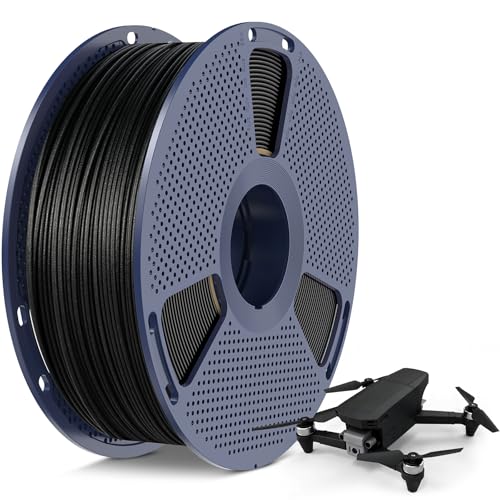 | Best Overall | Material Type: PLA‑CF | Diameter: 1.75 mm | Carbon Fiber Content: 15 % CF | VIEW LATEST PRICE | Read Our Analysis |
| AMOLEN Carbon Fiber PLA Filament 1.75mm Multicolor 200g×4 Spools | 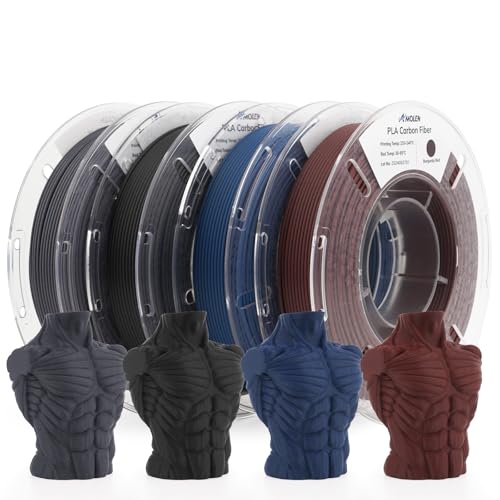 | Value Bundle | Material Type: PLA‑CF | Diameter: 1.75 mm | Carbon Fiber Content: 15 % CF | VIEW LATEST PRICE | Read Our Analysis |
| VOXELAB PETG Carbon Fiber 3D Filament 1kg Black | 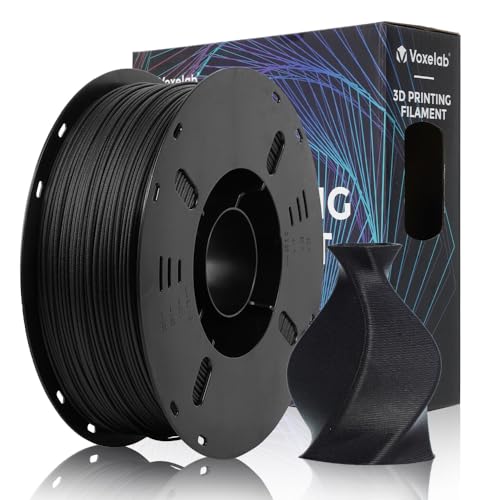 | Premium PETG | Material Type: PETG‑CF | Diameter: 1.75 mm | Carbon Fiber Content: CF‑reinforced (percentage not specified) | VIEW LATEST PRICE | Read Our Analysis |
| FLASHFORGE Carbon Fiber PETG Filament 1.75mm Black 1kg | 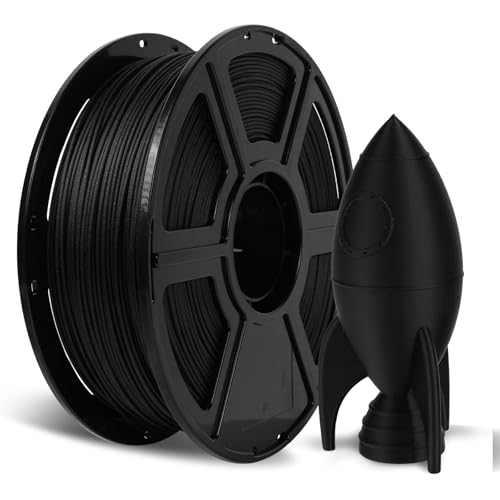 | High-Strength PETG | Material Type: PETG‑CF | Diameter: 1.75 mm | Carbon Fiber Content: CF‑reinforced (percentage not specified) | VIEW LATEST PRICE | Read Our Analysis |
| TINMORRY Carbon Fiber PETG Filament 1.75mm 1kg Black | 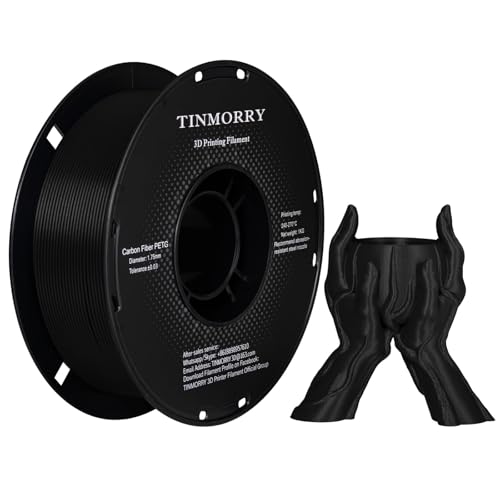 | Heat-Resistant PETG | Material Type: PETG‑CF | Diameter: 1.75 mm | Carbon Fiber Content: 15 % CF | VIEW LATEST PRICE | Read Our Analysis |
| LANDU Carbon Fiber PLA Filament 1.75mm Black 1KG | 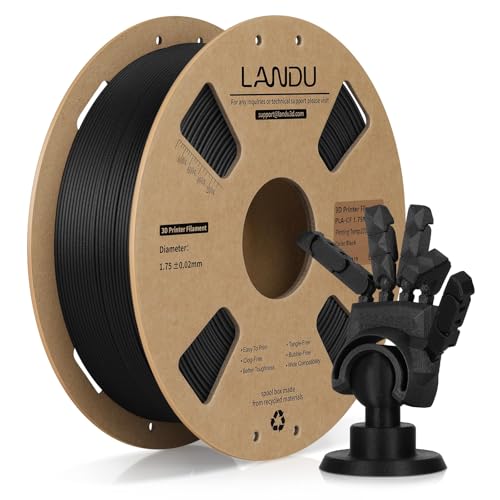 | Easy-Print PLA | Material Type: PLA‑CF | Diameter: 1.75 mm | Carbon Fiber Content: 15 % CF | VIEW LATEST PRICE | Read Our Analysis |
| SainSmart 1.75mm Carbon Fiber Nylon Filament 1KG Spool | 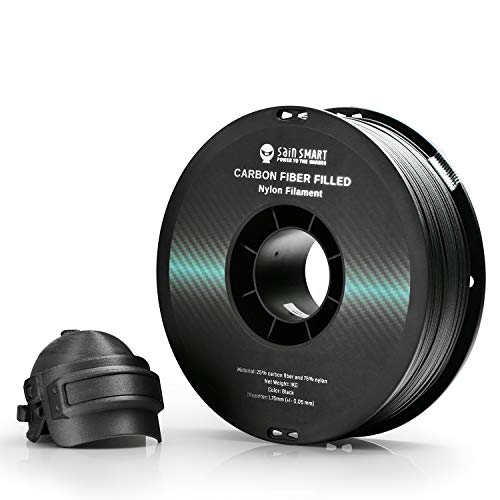 | Industrial Nylon | Material Type: Nylon‑CF (ePA‑CF) | Diameter: 1.75 mm | Carbon Fiber Content: 20 % CF | VIEW LATEST PRICE | Read Our Analysis |
| ZIRO CF-PLA Filament 1.75mm Military Green 0.8kg | 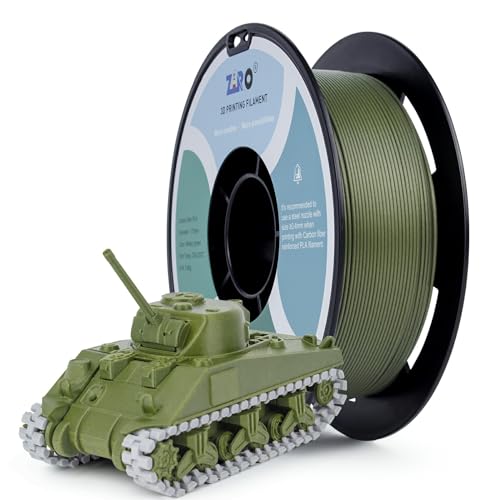 | Colorful PLA | Material Type: PLA‑CF | Diameter: 1.75 mm | Carbon Fiber Content: 15 % CF | VIEW LATEST PRICE | Read Our Analysis |
| Polymaker Fiberon PA612-CF Carbon Fiber Nylon Filament 0.5kg |  | High-Performance Nylon | Material Type: Nylon‑CF (PA612‑CF) | Diameter: 1.75 mm | Carbon Fiber Content: CF‑reinforced (percentage not specified) | VIEW LATEST PRICE | Read Our Analysis |
| Siraya Tech Fibreheart ABS-CF 3D Filament (1KG Black) | 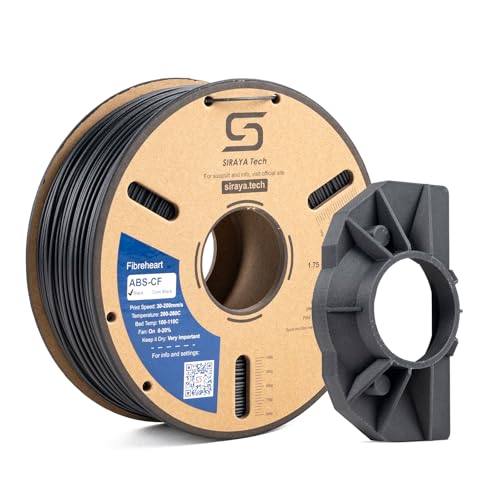 | Tough ABS | Material Type: ABS‑CF | Diameter: 1.75 mm | Carbon Fiber Content: 10 % CF | VIEW LATEST PRICE | Read Our Analysis |
More Details on Our Top Picks
Recommended Products

Superior Mechanical Properties - Reinforced with carbon fiber, ELEGOO PLA-CF delivers exceptional strength and rigidity, making it ideal for producing highly durable, impact-resistant functional components.
①【10% Carbon Fiber PETG】SUNLU PETG-CF filament features a 10% carbon fiber filling, which imparts excellent strength and rigidity to the printed objects. It's well-suited for printing a diverse range of industrial applications such as frames, drones, tools, automotive parts.
【Stiff & Strong & Heat Resistant】 - SUNLU PA6-CF nylon filament 1.75mm is made of 80% PA and 20% Carbon Fibers. The carbon fiber reinforcement really provides significantly improved stiffness, strength and heat resistance with outstanding layer adhesion.
SUNLU Carbon Fiber PLA 1.75mm Filament 1KG (Black)
If you want a filament that stays strong without making your prints heavy, the SUNLU Carbon Fiber PLA 1.75 mm does the trick. It’s perfect for functional parts that need a bit of extra stiffness, like drone frames or custom brackets. The 15 % carbon fiber gives you a noticeable boost in tensile strength while keeping the material light enough for most desktop printers.
For anyone who’s tired of warping on tall prints, the recommended nozzle temperature of 190 °C to 230 °C paired with a 60 °C–80 °C heated bed keeps the layer adhesion solid. You’ll notice fewer stringing issues thanks to the tight ±0.02 mm diameter tolerance, and the matte black finish adds a sleek, frosted look to your final piece. The vacuum‑packed 1 kg spool protects the filament from moisture, so you can store it longer without worrying about degradation.
What makes this filament stand out is how easy it is to print with standard support settings; the reinforced layers hold together well, making support removal a breeze. You get a strong, lightweight material without the brittleness that other carbon‑filled filaments sometimes have. Perfect for hobbyists who want reliable, high‑quality prints without constant nozzle clogs.
- Material Type:PLA‑CF
- Diameter:1.75 mm
- Carbon Fiber Content:15 % CF
- Spool Weight:1 kg
- Recommended Nozzle Type:Hardened steel (≥0.4 mm)
- Print Temperature Range:190–230 °C
- Additional Feature:Frosted matte texture
- Additional Feature:Vacuum‑packed with desiccant
- Additional Feature:Easy support removal
Recommended Products
【More Powerful Physical and Mechanical Properties】Perfect balance of strength, adhesion and speed, Creality Hyper PLA-CF possesses 30% higher mechanical properties than PLA in terms of flexural strength, flexural modulus, and impact strength.

High Print Quality: Low shrinkage, Solve the problem of warping and blistering, improve the print quality. Uniform line diameter, pure color. High quality filament creates delicate artistic work
【Carbon Fiber PLA Filament – High Strength & Rigidity】 Engineered with carbon fiber reinforcement, this PLA-CF filament delivers exceptional strength, stiffness, and impact resistance for demanding applications. Ideal for printing functional parts like brackets, gears, drone frames, and automotive components, it combines the ease of PLA with the mechanical performance of engineering materials.
AMOLEN Carbon Fiber PLA Filament 1.75mm Multicolor 200g×4 Spools
If you need lightweight, strong parts for drones or detailed model joints, this filament delivers exactly that. It blends PLA with 15 % US‑sourced carbon fiber, so each 1.75 mm strand is stiffer and lighter than ordinary PLA, cutting down on warping and shrinkage. You get four 200 g spools in black, dark grey, sapphire blue, and burgundy red, giving you 800 g of matte‑finish material for all your projects.
For anyone who prints functional prototypes, the 190‑220 °C temperature range and optional 0‑60 °C bed keep prints stable. The CCD‑controlled diameter tolerance of ±0.02 mm means the filament feeds smoothly, reducing jams and tangles. Set a 0.15 mm layer height for fine detail, and you’ll see strong layer adhesion with minimal post‑processing.
What makes this carbon‑fiber PLA stand out is its vacuum‑sealed packaging that keeps moisture out, plus intelligent winding that prevents clogs. You’ll notice the self‑supporting design makes support removal a breeze. This bundle offers consistent performance for demanding assemblies, so you can focus on building rather than troubleshooting.
- Material Type:PLA‑CF
- Diameter:1.75 mm
- Carbon Fiber Content:15 % CF
- Spool Weight:0.8 kg (4 × 200 g)
- Recommended Nozzle Type:Hardened steel (≥0.4 mm)
- Print Temperature Range:190–220 °C
- Additional Feature:Self‑supporting design
- Additional Feature:Multi‑color bundle
- Additional Feature:Pre‑dried, vacuum‑sealed
Recommended Products
ECO-FRIENDLY CARBON FIBER PLA FILAMENT - AICOPYTO PLA-CF filament contains 15% premium carbon fiber, giving your prints serious structural muscle. Parts stay rigid under load, resist deformation better than standard PLA, and handle real-world impacts without cracking. Perfect for functional parts like drone frames, jigs, brackets, and mechanical components
UP to 300MM/S HIGH-SPEED PRINTING - The Creality Carbon Fiber Filament 1.75mm can print at a speed of up to 300 mm per second without compromising the printing effect. In addition, it can support high-speed and normal-speed printing at the same time, and the printing effect is very delicate
【Matte Texture】Anycubic PLA-CF Filament features a unique matte texture, delivering a premium texture without extra sandblasting or polishing—ideal for printing display pieces such as figurines, architectural, and mechanical prototypes.
VOXELAB PETG Carbon Fiber 3D Filament 1kg Black
If you need parts that stay stiff under heat and stress, this PETG carbon‑fiber filament delivers exactly that. It’s perfect for hobbyists printing functional prototypes and for engineers tackling aerospace components. The 1.75 mm diameter and 1 kg spool give you consistent tolerances, and the carbon fibers boost rigidity and heat resistance. You’ll notice the black finish looks professional and sleek.
For anyone who prints on a standard printer, the filament works well, but the fibers are abrasive. Use a steel nozzle at least 0.6 mm wide to avoid clogs. This simple tip keeps your prints smooth and your printer happy.
What makes this carbon‑fiber PETG stand out is its blend of impact resistance from the PETG matrix and the added stiffness from the fibers. You get strong, lightweight parts without sacrificing dimensional accuracy. The material stays stable at higher temperatures, so your prototypes hold their shape longer.
You get a reliable, high‑quality filament without the hassle of frequent nozzle changes. The 1 kg spool means fewer interruptions, and the ±0.02 mm tolerance helps you hit precise measurements every time.
Perfect for cosplay props, functional prototypes, or any project demanding durability, this black PETG filament gives you a professional look and the performance you need. Your prints will feel solid, and the sleek color adds a polished finish.
- Material Type:PETG‑CF
- Diameter:1.75 mm
- Carbon Fiber Content:CF‑reinforced (percentage not specified)
- Spool Weight:1 kg
- Recommended Nozzle Type:Abrasion‑resistant steel (≥0.6 mm)
- Print Temperature Range:230–250 °C (typical PETG‑CF)
- Additional Feature:Abrasion‑resistant steel nozzle needed
- Additional Feature:Professional‑looking surface finish
- Additional Feature:High heat resistance
Recommended Products
1️⃣【Carbon Fiber Reinforced PETG】IEMAI matte black PETG-CF filament is infused with 20% chopped carbon fiber. Compared to ordinary PETG, it greatly improves stiffness, structural strength, and load stability. Perfect for functional parts, brackets, fixtures, housings, and mechanical components
Recommend printing temperature 240℃-270℃, build platform 75℃-90℃; 1st to 3rd layer, turn off cooling fan, If your 3D printer is Bambu P1P or X1, we recommend the nozzle temperature above 260 degrees.
【10% Carbon Fiber Reinforced PETG】- SUNLU PETG-CF infused with 10% carbon fiber, PETG-CF filament delivers significantly enhanced tough and rigidity compared to standard PETG. It is perfectly suited for demanding functional prototypes and end-use parts, such as drone frames, automotive components, tools, and industrial fixtures.
FLASHFORGE Carbon Fiber PETG Filament 1.75mm Black 1kg
If you need parts that won’t warp under the heat of a car engine or a 3‑D printer, this carbon‑fiber PETG filament is a solid choice. The 1.75 mm black filament blends the easy‑to‑print nature of PETG with reinforced fibers, giving you higher tensile strength and added rigidity. You’ll see less deformation and smoother surfaces straight out of the printer.
For anyone who builds gears, bearings, or sliders that face constant friction, the extra wear resistance makes a big difference. The fibers boost heat resistance so your prints stay dimensionally stable even at elevated temperatures. You’ll appreciate the reliable performance on load‑bearing projects.
What makes this filament stand out is the 1 kg spool that delivers plenty of material for multiple prints, and the 4.7‑average rating shows that other users trust its consistency. You get strong, heat‑resistant parts without sacrificing printability. Perfect for hobbyists and engineers alike, this material lets you focus on design rather than worrying about breakage.
- Material Type:PETG‑CF
- Diameter:1.75 mm
- Carbon Fiber Content:CF‑reinforced (percentage not specified)
- Spool Weight:1 kg
- Recommended Nozzle Type:Abrasion‑resistant steel (≥0.6 mm)
- Print Temperature Range:230–250 °C (typical PETG‑CF)
- Additional Feature:Superior wear resistance
- Additional Feature:High‑friction part suitability
- Additional Feature:Reduced warping
Recommended Products
【Premium Carbon Fiber PETG Filament】FLASHFORGE PETG-CF is created by incorporating carbon fiber reinforcement, resulting in improved material strength and temperature resistance while maintaining the impact resistance characteristic of PETG.
Outstanding Mechanical Properties - ELEGOO PETG-CF filament is made from a combination of PETG and carbon fibers. Carbon Fiber adds strength to the material, making it ideal for printing functional parts and outdoor items.
Enhanced Strength and Rigidity: The carbon fiber content in PETG-CF substantially increases the mechanical strength and rigidity of printed parts, making it perfect for load-bearing and high-strength applications.
TINMORRY Carbon Fiber PETG Filament 1.75mm 1kg Black
If you need a filament that stays stiff while staying light, the TINMORRY carbon‑fiber PETG does the trick. It blends PETG with 15 % short‑cut carbon fibers, giving you parts that are tougher and lighter than regular PETG. Print at 240‑270 °C, but aim for above 260 °C on Bambu machines, and keep the bed between 75‑90 °C.
For anyone who worries about nozzle wear, a steel nozzle of at least 0.4 mm is a must—brass will wear out fast. Turn the fan off for the first three layers, then dial it back to avoid over‑cooling. Store the spool dry, sealed, and under 20 % humidity to keep moisture out.
What makes this filament stand out is its ability to handle speeds up to 300 mm/s, so you can print functional pieces like drone brackets or racing components without slowing down. You get strong, lightweight prints without sacrificing ease of use. Perfect for hobbyists who want professional‑grade parts, this filament delivers the performance you need.
- Material Type:PETG‑CF
- Diameter:1.75 mm
- Carbon Fiber Content:15 % CF
- Spool Weight:1 kg
- Recommended Nozzle Type:Hardened steel (≥0.4 mm)
- Print Temperature Range:240–270 °C
- Additional Feature:Up to 300 mm/s printing
- Additional Feature:Bambu‑optimized profile
- Additional Feature:High‑speed performance
LANDU Carbon Fiber PLA Filament 1.75mm Black 1KG
If you need parts that stay rigid under stress, this carbon‑fiber PLA gives you that extra stiffness while still printing as easily as regular PLA. It’s perfect for brackets, gears, or drone frames that would otherwise flex or crack. The matte black finish looks professional and the 1 kg cardboard spool is convenient for larger projects.
For anyone who hates warping, the carbon‑fiber reinforcement reduces shrinkage and layer delamination. You’ll see fewer bubbles and clogs when you store the vacuum‑sealed spool in a dry place. Print with a hardened steel nozzle of at least 0.4 mm, set the hot end to 210‑230 °C, and keep the heated bed at 50‑60 °C for reliable adhesion.
What makes this filament stand out is the balance of strength and ease of use. You get tougher, more impact‑resistant prints without switching to a completely new material system. The 1.75 mm diameter works with most desktop printers, so you don’t need to upgrade your hardware.
You get a professional look without sacrificing the friendly handling you love about PLA. The carbon‑fiber content boosts tensile strength, so your functional prints hold up longer. The spool’s vacuum seal keeps moisture out, preventing unwanted print defects.
The LANDU Carbon Fiber PLA solves bending and impact issues by adding reinforced fibers that keep your prints stiff. You’ll appreciate the consistent performance whether you’re prototyping a new gadget or printing a custom drone frame. The matte black color adds a sleek aesthetic, making your projects look polished straight out of the printer.
Perfect for makers who demand durability, this filament lets you tackle demanding applications while still enjoying the low‑warping, low‑odor benefits of PLA. You’ll notice the difference in strength without needing a specialized printer setup. Store it properly, and you’ll have a reliable supply for all your high‑performance prints.
- Material Type:PLA‑CF
- Diameter:1.75 mm
- Carbon Fiber Content:15 % CF
- Spool Weight:1 kg
- Recommended Nozzle Type:Hardened steel (≥0.4 mm)
- Print Temperature Range:210–230 °C
- Additional Feature:Pre‑dried 24 hours
- Additional Feature:Tangle‑free winding
- Additional Feature:Hardened steel nozzle recommended
SainSmart 1.75mm Carbon Fiber Nylon Filament 1KG Spool
If you need parts that stay stiff and won’t warp under heat, this carbon‑fiber‑filled nylon is a solid choice. You’ll get a blend of 80 % nylon and 20 % carbon fiber that gives you extra rigidity and dimensional stability. Print at 260‑290 °C and keep the bed between 45‑80 °C for best results.
For anyone who prints functional prototypes or small‑scale production parts, the material’s low shrinkage helps you avoid warping. An enclosure keeps the ambient temperature steady, which improves layer adhesion. Use a stainless‑steel or hardened‑alloy nozzle because the carbon fibers are abrasive.
What makes this filament stand out is the smooth, high‑quality finish it delivers. You can trust it for demanding projects like prosthetics, medical devices, or intricate costume pieces. It’s tough enough for heavy‑duty use without sacrificing detail.
You get strong, heat‑resistant parts without the hassle of frequent nozzle changes. The material’s stiffness means you spend less time fixing warped prints. It’s perfect for hobbyists and small manufacturers alike.
- Material Type:Nylon‑CF (ePA‑CF)
- Diameter:1.75 mm
- Carbon Fiber Content:20 % CF
- Spool Weight:1 kg
- Recommended Nozzle Type:Stainless/ hardened alloy
- Print Temperature Range:260–290 °C
- Additional Feature:20% carbon fiber reinforcement
- Additional Feature:Enclosure recommended for printing
- Additional Feature:Stainless steel or hardened nozzle
ZIRO CF-PLA Filament 1.75mm Military Green 0.8kg
If you need lightweight, stiff parts for a drone frame, ZIRO’s carbon‑fiber PLA is the answer. It gives you the rigidity of carbon fiber while staying as easy to print as regular PLA. You’ll love the military‑green look and the 1.75 mm diameter that fits most FDM printers.
For anyone who worries about warping or fumes, this filament prints cleanly at 200‑220 °C with a 50‑60 °C bed. Use a hardened 0.4 mm nozzle and you’ll avoid clogs. The spool is mechanically wound and vacuum‑sealed after 24 hours of drying, so moisture stays out.
What makes this filament stand out is the 15 % carbon‑fiber content, which lifts stiffness and strength without sacrificing reliability. You get precise parts thanks to ±0.03 mm dimensional accuracy. A resealable bag, a 5 m cleaning filament, and a 5 m random sample are included for troubleshooting.
You get a reliable, rigid material without the hassle of specialty printers. Print at 30‑70 mm/s and watch the parts hold up under load. ZIRO’s customer service is ready to help if you have any questions.
- Material Type:PLA‑CF
- Diameter:1.75 mm
- Carbon Fiber Content:15 % CF
- Spool Weight:0.8 kg
- Recommended Nozzle Type:Hardened steel (≥0.4 mm)
- Print Temperature Range:200–220 °C
- Additional Feature:Includes cleaning filament
- Additional Feature:Mechanical wire winding
- Additional Feature:Free reseal bag
Polymaker Fiberon PA612-CF Carbon Fiber Nylon Filament 0.5kg
If you need a nylon filament that won’t soak up moisture, Polymaker’s Fiberon PA612‑CF gives you a low‑moisture material that stays stable in humid workshops. For anyone who prints functional parts, the carbon‑fiber reinforcement adds stiffness and cuts warping, so you get strong, dimensionally accurate pieces every time. You get a 0.75 mm black filament on a 0.5 kg spool, sealed with a desiccant to keep moisture out, and the recycled cardboard core protects it from dust and deformation.
What makes this carbon‑fiber nylon stand out is its ability to handle high print speeds without jamming, letting you finish projects faster. The nylon base delivers superior mechanical properties compared with PA12, while the fibers boost rigidity for demanding applications like automotive brackets or industrial tooling. You’ll notice solid first‑layer adhesion, and the filament runs smoothly through the extruder even at elevated temperatures.
Perfect for hobbyists and engineers, this filament helps you create high‑performance parts without the hassle of frequent clogs. The spool is carefully wrapped to avoid tangles, and you can guide the filament through a fixed hole after printing to keep it neat. Use it for any project that needs strength, stability, and a reliable, low‑maintenance printing experience.
- Material Type:Nylon‑CF (PA612‑CF)
- Diameter:1.75 mm
- Carbon Fiber Content:CF‑reinforced (percentage not specified)
- Spool Weight:0.5 kg
- Recommended Nozzle Type:Hardened steel (≥0.4 mm)
- Print Temperature Range:250–270 °C (PA612‑CF)
- Additional Feature:Lower moisture absorption
- Additional Feature:Recycled cardboard spool
- Additional Feature:High‑speed printing optimized
Siraya Tech Fibreheart ABS-CF 3D Filament (1KG Black)
If you need parts that stay rigid under heat but still print quickly, this filament delivers. The 10 % chopped carbon fibers act like tiny reinforcement rods, giving you extra stiffness and impact resistance without making the material hard to extrude. You’ll appreciate the low odor and the reliable 1.75 mm diameter that keeps flow steady on most desktop printers.
For anyone who prints tall or intricate objects, dimensional stability matters, and the carbon‑reinforced ABS keeps warping to a minimum. The material handles heat, chemicals, and weight well, making it a solid choice for industrial, automotive, aerospace, or hobby projects. You get consistent performance without the usual trade‑offs of brittle filaments.
What makes this ABS‑CF filament stand out is its balance of strength and flexibility. The 1 kg spool gives you enough material for multiple prints, and the manufacturer backs it with a warranty and a 30‑day return policy. You’ll notice the filament stays flexible enough for rapid extrusion while still delivering strong, heat‑resistant parts.
- Material Type:ABS‑CF
- Diameter:1.75 mm
- Carbon Fiber Content:10 % CF
- Spool Weight:1 kg
- Recommended Nozzle Type:Hardened steel (≥0.4 mm)
- Print Temperature Range:240–260 °C (ABS‑CF)
- Additional Feature:Low odor ABS
- Additional Feature:10% chopped fiber
- Additional Feature:Exceptional impact resistance


Factors to Consider When Choosing Carbon Fiber Filament
If you’re looking for a filament that can hold up under load, check the material blend first. The mix of polymer and carbon fiber decides how stiff or flexible your print will be, and you’ll feel the difference in strength. Pick the right ratio for your project.
For anyone who wants reliable printing without constant nozzle changes, match the filament’s temperature and wear tolerance to your printer. High‑heat filaments can soften the base plastic, while the abrasive fibers will chew through regular brass nozzles. Use a hardened steel or ruby nozzle if you can.
What makes this carbon‑fiber filament stand out is its dimensional accuracy. You’ll notice less shrinkage and warping, so your parts fit together perfectly. Expect tight tolerances for functional prototypes.
Material Composition Details
If you want a filament that won’t melt in a hot garage, start by checking the polymer matrix. For anyone who prints with a standard desktop printer, a PLA‑based matrix means lower temperatures and forgiving extrusion, while PETG gives you better heat and chemical resistance. You get tougher parts with ABS or nylon, but you’ll need higher temps and a bit more care.
What makes this carbon‑fiber filament stand out is the fiber loading. The chopped carbon fibers, usually ten to twenty percent by weight, add stiffness, but they also wear down a regular nozzle faster. Choose a hardened steel or stainless‑steel nozzle if you plan to push the fiber content up.
You get consistent results without nasty surprises when you keep the filament dry. For nylon or PETG blends, moisture causes bubbling and weak prints, so store the spool in a vacuum‑sealed bag or a container with desiccant. Proper storage preserves the material’s performance and keeps your prints solid.
Mechanical Strength Requirements
If you need a 3‑D‑printed part that can actually hold up under load, the carbon‑fiber‑reinforced filament is your go‑to. You’ll want to set a clear tensile‑strength target and a stiffness goal, because the short chopped fibers at 10‑20 % will lift both numbers—but you have to know how much lift you need. For anyone who prints functional prototypes, start with a base polymer that matches the job: PLA is easy to print but can feel brittle under stress, while PETG and nylon give you the impact resistance and heat tolerance you’ll need for load‑bearing pieces. You get better layer adhesion when you crank up the nozzle temperature and let the part cool more slowly, especially in the direction the load travels. Short fibers make the material tougher, so keep an eye on elongation‑at‑break and impact resistance to avoid sudden snaps. You can boost strength‑to‑weight performance by choosing filaments with higher fiber content, thicker walls, and orienting the infill so the fibers line up with the main stresses. Perfect for hobbyists who want reliable, lightweight parts, this approach lets you print parts that actually stand up to real‑world demands.
Print Temperature Compatibility
If you’re printing with carbon‑fiber filaments, you’ll need a nozzle temperature that satisfies both the polymer and the fibers. For PLA blends, aim for a hot end between 190 °C and 230 °C; PETG‑carbon mixes work best around 240 °C to 270 °C; ABS‑carbon composites prefer roughly 230 °C to 260 °C. The heated bed should match the polymer’s needs—50 °C–65 °C for PLA, 70 °C–90 °C for PETG, and a higher setting for ABS—to keep warping low and first‑layer adhesion strong.
For anyone who switches material families, you’ll have to re‑tune nozzle, retraction, and cooling settings because the carbon filler changes thermal conductivity and solidification speed. Using a larger‑diameter or hardened nozzle (≥0.4 mm) helps maintain flow and prevents clogs at these higher temperatures. Keep temperatures inside the manufacturer’s window; too low leads to under‑extrusion and weak layers, while too high degrades the matrix and releases more particles. This approach gives you reliable prints without constant jams.
Nozzle Wear Considerations
If you print with carbon‑fiber‑filled filaments, brass nozzles wear out fast because the tiny fibers grind the metal like sandpaper. Switching to a hardened steel, stainless steel, or coated nozzle stops that abrasion and keeps your extrusion smooth. You’ll notice fewer clogs and more consistent prints.
For anyone who wants to avoid frequent nozzle changes, choose a larger diameter—at least 0.4 mm, preferably 0.6 mm. The extra space lets the fibers pass without forcing the metal edges, reducing the chance of a jam. It’s a simple upgrade that pays off quickly.
What makes a hardened nozzle stand out is its durability. The tougher material resists the abrasive wear that enlarges the opening and degrades quality. You’ll keep a spare on hand and log your printing hours so you replace it before problems appear.
You get reliable performance without sacrificing print detail. When you go back to non‑abrasive filaments, just purge the line or swap to a clean nozzle to avoid leftover fibers scratching the new material. A sacrificial nozzle for heavy carbon‑fiber jobs protects your primary hardware and extends its lifespan.
Dimensional Accuracy Tolerances
If you’re printing parts that need tight tolerances, the carbon‑fiber filament’s diameter consistency is key. For anyone who has struggled with uneven extrusion, look for a tolerance around ±0.02–±0.03 mm on 1.75 mm stock; it keeps the flow steady and prevents warping. What makes this filament stand out is its low variance, which means you can trust each layer to stay on dimension.
You get smoother prints without constant tweaking. Measure the spool at several spots, calculate the average and standard deviation, then compare those numbers to your printer’s acceptable window. If the filament feels a bit thicker or stiffer than plain polymer, adjust the extrusion multiplier and retraction settings accordingly.
Perfect for hobbyists building interlocking mechanisms, choose a brand that publishes its variance data. Fine‑tune nozzle flow and slicer parameters to compensate for any measured offset, and you’ll see high‑precision results without the hassle of constant trial‑and‑error. This approach saves you time and material, letting you focus on design rather than debugging.
Moisture Sensitivity Management
If you’re printing with carbon‑fiber filament and notice bubbles or weak layers, the culprit is usually moisture. Your filament’s polymer matrix sucks up water from the air and turns it into steam when it’s extruded, which makes the part brittle. Nylon‑based blends are especially thirsty, so they need stricter drying than PLA or PETG.
For anyone who wants reliable, strong prints, keep the filament’s moisture below 20 % RH and follow the manufacturer’s drying schedule. Dry the spool in an oven or dedicated dryer at the right temperature—PLA around 40–60 °C, PETG 60–70 °C, nylon 70–90 °C—for several hours. Avoid overheating, which can warp the spool.
What makes this moisture‑control routine stand out is the simple storage trick: vacuum‑sealed bags or airtight containers with silica gel keep the filament dry between prints. A cheap hygrometer lets you check humidity at a glance. When you print, keep the filament in a dry box or attach an in‑line dryer to limit exposure, especially for long jobs or humid environments. This approach saves you from failed prints and costly material waste.
Frequently Asked Questions
How Does Carbon Fiber Affect Filament Brittleness?
Carbon fiber makes filament less brittle because the tiny fibers act like reinforcing bars, distributing stress across the material instead of allowing cracks to concentrate. You’ll notice a higher impact resistance, so the printed part can absorb shocks without snapping. However, if the fiber content is too high, the matrix can become rigid, and the filament may still fracture under sharp bends. Aim for a balanced blend—enough fiber for strength, but enough polymer for flexibility.
Can I Print Carbon Fiber Filament on a Non‑Heated Bed?
You can’t reliably print carbon‑fiber filament on a non‑heated bed because the material needs consistent heat to stick and avoid warping. The carbon fibers increase stiffness, so the filament contracts more as it cools, and without a heated surface the first layers may lift or crack. If you try it, use a strong adhesive like a glue stick, keep the nozzle temperature at the upper range, and expect limited success.
What Nozzle Size Is Optimal for Carbon Fiber Composites?
You might think a larger nozzle will help, but the ideal size for carbon‑fiber composites is 0.4 mm. This diameter balances flow and wear: it’s wide enough to let the abrasive fibers pass without jamming, yet small enough to keep detail. A 0.4 mm nozzle reduces pressure spikes that can cause nozzle wear, and it works well with typical layer heights of 0.2–0.3 mm, giving consistent strength and surface finish.
Do Carbon Fiber Filaments Require Special Post‑Processing?
Yes, you’ll need special post‑processing for carbon‑fiber filaments. First, sand the surface with fine grit to remove rough spots, because the fibers make the print harder and more abrasive. Then, use a solvent‑compatible filler if you want to hide layer lines, but avoid acetone on carbon‑filled nylon. Finally, consider a UV‑cured coating to protect the fibers from moisture and wear, ensuring a smoother, longer‑lasting part.
Are Carbon Fiber Filaments Compatible With All 3D Printer Brands?
You’ll find that most carbon‑fiber filaments work with any FDM printer that can handle standard thermoplastics, but you must check nozzle size, temperature range, and extruder strength. A hardened steel or ruby nozzle resists wear, while a direct‑drive extruder prevents filament buckling. Some low‑cost printers lack enough torque for the stiffer material, so you may need to upgrade. Verify the filament’s recommended settings before printing to avoid jams or poor surface finish.