As an Amazon Associate, we earn from qualifying purchases. Some links on this site are affiliate links at no extra cost to you. Our recommendations are based on thorough research and editorial judgment.

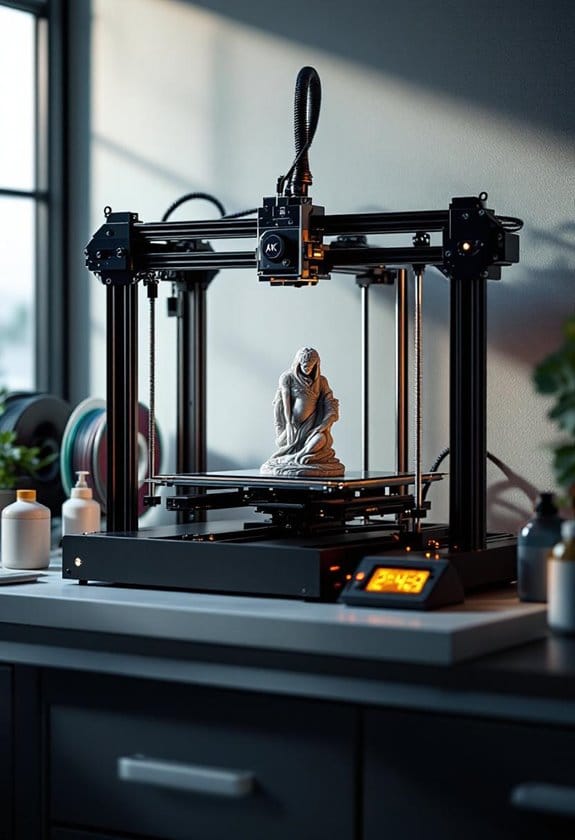
9 Best Multi‑Color 3D Printers That Bring Every Project to Life

You’re staring at a half‑finished prototype, the colors misaligned and the layers wobbling, and you realize the printer you trusted can’t keep up with the detail you need. The frustration of swapping filaments mid‑print or watching a model warp under uneven motion is all too familiar.
What separates a reliable multi‑color 3D printer from a disappointment is not just raw speed, but how well it synchronizes motion precision, filament management, and stability. Buyers often overlook the impact of input‑shaping on vibration, assume dual‑extruder means true color mixing, or ignore the importance of a robust CoreXY frame.
This guide reviews nine standout multi‑color 3D printers, selected based on speed, motion accuracy, filament handling, and build reliability. By the end you’ll know which models deliver true multi‑color capability, how their specs compare, and which one fits your workflow best.
Key Takeaways
If you want to print vivid objects without stopping to swap filaments, look for a printer that has a native multi‑color or multi‑material system—think 16‑color K2 Combo, 4‑color CANVAS on Centauri, or AMS on P1S. This lets your designs flow smoothly from one hue to the next, so you spend more time creating and less time troubleshooting. No extra hassle.
For anyone who needs fast results, prioritize a machine that can sprint at up to 600 mm/s while a vibration‑compensation or CoreXY design keeps every detail crisp. The high‑speed motion means you finish projects in hours instead of days. Speed matters.
What makes this class of 3D printers stand out is the direct‑drive extruder paired with a hotend that reaches 350 °C. That combination handles everything from flexible TPU to abrasive composites without slipping. You’ll get reliable extrusion across the board.
You get consistent filament handling without waste thanks to automatic detection, smart jam prevention, and built‑in purge‑block generation. The printer knows when a spool runs out, stops the jam before it starts, and cleans the nozzle on the fly. Less material lost.
The [product name] solves monitoring headaches by offering a camera feed, instant alerts, and remote pause/resume control. You can watch each layer form from your phone and intervene the things go off‑track. Stay in control.
| Creality K2 Combo 3D Printer with Multicolor Printing | 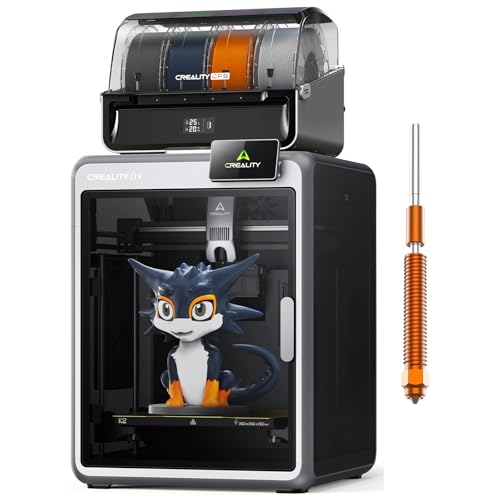 | Best Overall | Build Volume: 260 × 260 × 260 mm | Max Print Speed: 600 mm/s | Multi‑Color Capability: Up to 16 colors (CFS system) | VIEW LATEST PRICE | Read Our Analysis |
| FLASHFORGE AD5X 3D Printer High-Speed CoreXY Auto-Leveling | 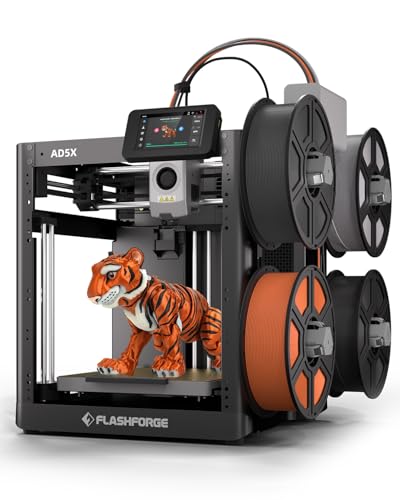 | Fast Pro | Build Volume: 220 × 220 × 220 mm | Max Print Speed: 600 mm/s | Multi‑Color Capability: Multi‑color via optional add‑on (not native) | VIEW LATEST PRICE | Read Our Analysis |
| Flashforge AD5X Multi-Material 3D Printer (4-Color) |  | Multi‑Material Master | Build Volume: 220 × 220 × 220 mm | Max Print Speed: 600 mm/s | Multi‑Color Capability: 4‑color (IFS) | VIEW LATEST PRICE | Read Our Analysis |
| Anycubic Kobra S1 3D Printer 600mm/s Auto Leveling 250³ Build Size | Hobbyist Favorite | Build Volume: 250 × 250 × 250 mm | Max Print Speed: 600 mm/s | Multi‑Color Capability: 4‑color native; 8‑color with ACE PRO | VIEW LATEST PRICE | Read Our Analysis | |
| T300D Pro Dual Extruder 3D Printer Dual Color High Speed | 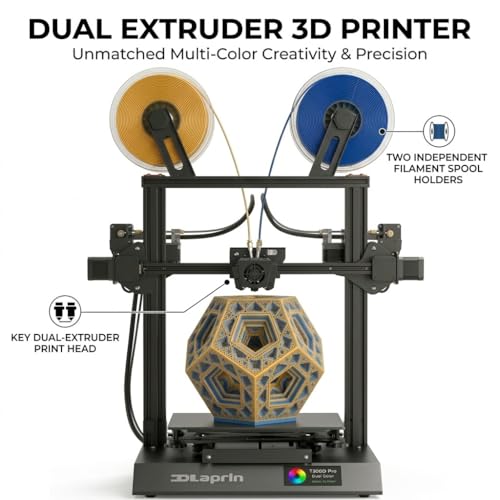 | Dual‑Extruder Champ | Build Volume: 250 × 250 × 250 mm (dual‑extruder, same as Kobra S1) | Max Print Speed: 600 mm/s | Multi‑Color Capability: 2‑color (dual extruder) | VIEW LATEST PRICE | Read Our Analysis |
| Anycubic Kobra 3 Max 3D Printer – Large Volume High Speed Auto-Leveling |  | Large‑Volume Leader | Build Volume: 420 × 420 × 500 mm | Max Print Speed: 600 mm/s | Multi‑Color Capability: 4‑color native; 8‑color with ACE PRO | VIEW LATEST PRICE | Read Our Analysis |
| Bambu Lab P1S Enclosed 3D Printer 500mm/s 16‑Color Support |  | Enclosed Excellence | Build Volume: 300 × 300 × 300 mm (implied large, not exact) | Max Print Speed: 500 mm/s | Multi‑Color Capability: Up to 16 colors (AMS) | VIEW LATEST PRICE | Read Our Analysis |
| Creality SPARKX I7 3D Printer Combo 500mm/s High Speed | 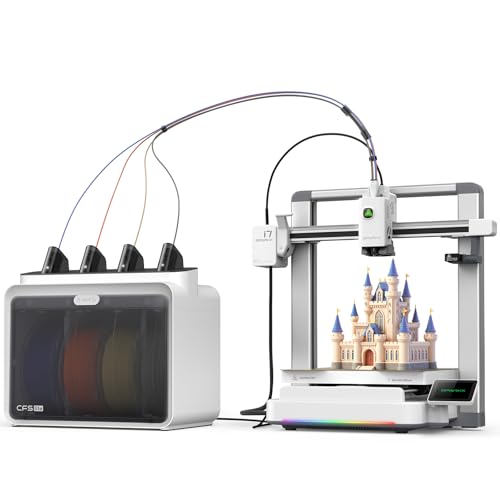 | Smart Automation | Build Volume: 260 × 260 × 255 mm | Max Print Speed: 500 mm/s | Multi‑Color Capability: Multi‑color via CFS Lite (up to 4 colors) | VIEW LATEST PRICE | Read Our Analysis |
| ELEGOO Centauri Carbon 2D 3D Printer | 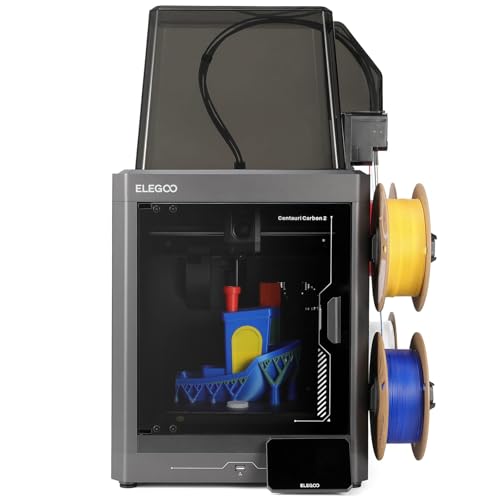 | Precision Performer | Build Volume: 256 × 256 × 256 mm | Max Print Speed: 500 mm/s | Multi‑Color Capability: 4‑color via CANVAS | VIEW LATEST PRICE | Read Our Analysis |
More Details on Our Top Picks
Creality K2 Combo 3D Printer with Multicolor Printing
If you want multicolor prints without spending hours painting afterward, the K2 Combo’s 16‑color capability lets you finish a vibrant piece in one go. For anyone who works on medium‑sized projects, the 260 mm cube build volume gives you enough space to create functional parts or decorative items. You get a metal frame that stays steady even when the printer darts at 600 mm/s, so your models stay accurate.
What makes this 3D printer stand out is the direct‑drive extruder that feeds filament smoothly, while three step‑servo motors adjust torque in under a millisecond for precise motion. The smart auto‑leveling probe maps the actual print area, cutting setup time dramatically. The AI camera watches each layer and pauses if it spots spaghetti, saving you from failed prints.
You get silent operation without sacrificing speed, keeping your workspace calm while the machine handles PLA, PETG, ABS, and reinforced filaments. Perfect for hobbyists and small‑scale designers, this printer delivers reliable, colorful results without extra equipment. The combination of fast moves, stable frame, and real‑time monitoring makes it a solid choice for anyone who values both quality and convenience.
- Build Volume:260 × 260 × 260 mm
- Max Print Speed:600 mm/s
- Multi‑Color Capability:Up to 16 colors (CFS system)
- Auto‑Leveling:Smart auto‑leveling probe
- Material Compatibility:PLA, PETG, ABS, PLA‑CF, PET, etc.
- Connectivity / Monitoring:AI camera monitoring, laptop/phone/tablet control
- Additional Feature:Step‑servo motor control
- Additional Feature:AI failure detection camera
- Additional Feature:Dynamic torque adjustment
Recommended Products

【Vivid 19-Color and Versatile Materials】Unleash creativity beyond limits. The Kobra X supports 4-color standard and expands up to 19 colors with 4 ACE 2 Pro for stunning artistic models. Adaptive extrusion force compensater handles everything from TPU(recommended 68D) to PLA. No more manual adjustments—transition from hard to soft materials seamlessly for professional-grade multi-material projects
Build for Speed and Full-Color Printing: Bring your creative vision to life with vibrant and multicolored 3D prints in 4-colors. With speed of up to 600mm/s and acceleration up to 20000mm/s², AD5X delivers ultrafast printing, while maintaining exceptional accuracy and detail in your prints.
FLASHFORGE AD5X 3D Printer High-Speed CoreXY Auto-Leveling
If you need to crank out prototypes fast without sacrificing detail, the CoreXY layout gives you smooth, simultaneous X‑ and Y‑movement that cuts inertia. You’ll see speeds up to 600 mm/s and acceleration of 20,000 mm/s², yet the vibration‑compensation keeps everything steady. The 1‑click auto‑leveling sets the bed in seconds, so you’re ready to print right away.
For anyone who juggles multiple filament colors, the dual‑extruder lets you switch between them without a hassle. Your prints stay crisp thanks to dual‑channel cooling and automatic filament retraction. The direct‑drive hot end reaches 300 °C, handling both fine 0.25 mm detail and larger nozzles for quick builds.
What makes this 3‑D printer stand out is its power‑loss recovery, which picks up right where you left off after an outage. You can monitor and tweak jobs from the Flash Maker app, no matter where you are. The metal frame adds a tough, durable backbone for batch production.
- Build Volume:220 × 220 × 220 mm
- Max Print Speed:600 mm/s
- Multi‑Color Capability:Multi‑color via optional add‑on (not native)
- Auto‑Leveling:1‑click auto‑leveling
- Material Compatibility:PLA, PETG, ABS, TPU, etc.
- Connectivity / Monitoring:Remote control via Flash Maker app
- Additional Feature:Dual‑channel cooling fans
- Additional Feature:Vibration compensation system
- Additional Feature:Remote mobile app control
Recommended Products
One-Click Automatic Printing: Experience hassle-free 3D printing with the Adventurer 5M Series. Enjoy automatic bed leveling for flawless first layers, ensuring consistent adhesion and saving time with no manual adjustments required.

Vivid Multi-Color Printing: Bring your creations to life with vibrant, multi-color prints. This printer supports up to 4 colors simultaneously, giving you endless creative possibilities.
Flashforge AD5X Multi-Material 3D Printer (4-Color)
If you need to crank out colorful prototypes fast, the Flashforge AD5X lets you print with four spools side‑by‑side, so you can switch colors or materials on the fly. Its intelligent filament system handles the swapping automatically, and you start a job with a single click—no fiddling with settings.
For anyone who teaches hands‑on design, the printer’s coreXY all‑metal frame keeps everything rigid while vibration‑suppression algorithms keep layers aligned, so sharp details stay crisp. The auto‑leveling sensors probe multiple points on the bed, guaranteeing a consistent nozzle distance and reliable first‑layer adhesion.
What makes this multi‑material printer stand out is the speed: it reaches up to 600 mm/s with 20 000 mm/s² acceleration, letting you finish projects in a fraction of the usual time. You can work with PLA, TPU, PETG, SILK, and carbon‑fiber blends, giving you flexibility for a range of classroom or workshop tasks.
You get a compact, tabletop‑friendly machine that weighs about 22 lb, making it easy to move between workstations. It hit the market in November 2026, and its lightweight design means it won’t dominate your space. Perfect for makers and educators, this printer delivers fast, multi‑color results without the hassle of constant filament changes.
- Build Volume:220 × 220 × 220 mm
- Max Print Speed:600 mm/s
- Multi‑Color Capability:4‑color (IFS)
- Auto‑Leveling:Full‑auto leveling sensor
- Material Compatibility:PLA, TPU, PETG, SILK, PLA‑CF, PETG‑CF, etc.
- Connectivity / Monitoring:Remote monitoring via Flash Maker app
- Additional Feature:Four‑spool side‑by‑side layout
- Additional Feature:Filament backup support
- Additional Feature:Compact modular design
Recommended Products
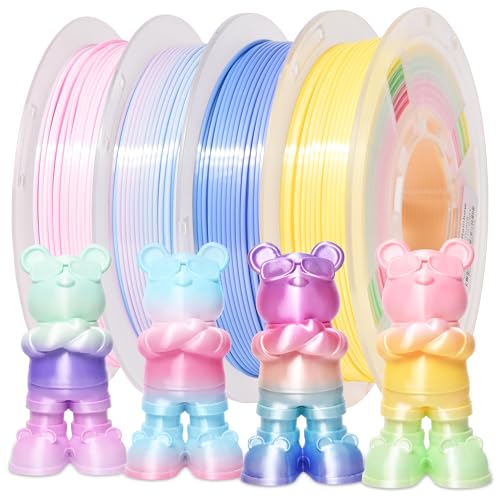
【Silk PLA 250g*4】Shiny Rainbow PLA Filament, each bundle 250g (0.55 lbs), total 2.2lbs. The color of filaments changes every 35-40g. This uniquely shining multicolor filament bundle allows you to print stunningly vibrant and beautiful objects.
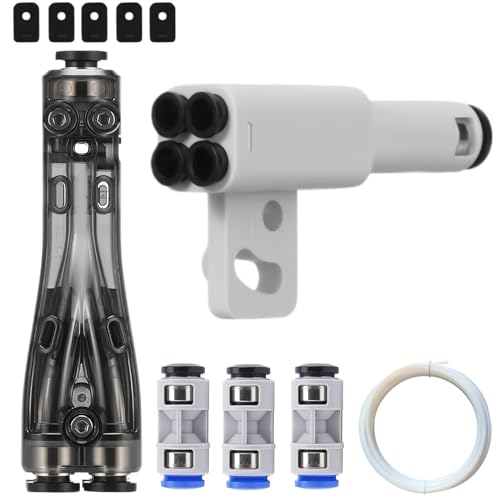
VALUE COMBO – TWO ADAPTERS IN ONE KIT – Get both the original 4-in-1 PTFE adapter and the upgraded version with a built‑in silicone filament cleaning wiper. Covers all your multi‑material workflows in a single purchase — no need to buy separate products.
6 Spools Dual Color Silk PLA Filament Bundle: This 2 Color in 1 Coextrusion Silk Filament Series, It's Amazing for Printing Multi Colors Products; This Bundle Pack Included 6 Metallic Shiny Colors: Silk Red-Gold; Silk Red-Black; Silk Black-Orange; Silk Gold-Copper; Silk Lime Green-Blue; Silk Green-Purple. Each Spool Weight is 0.25kg, 6 Spools Packed, Total is 1.5Kg 3D Printing Material, These Colors Are Very Suitable to Print Beautiful Shiny Multi-Colored 3d Print Objects
Anycubic Kobra S1 3D Printer 600mm/s Auto Leveling 250³ Build Size
If you need fast, reliable multi‑color prints for hobby projects or a small workshop, the Kobra S1 Combo gives you a 250 mm³ build area and native four‑color extrusion, plus the option to link two units for eight colors. You’ll love the 600 mm/s top speed and 20,000 mm/s² acceleration, which can cut print times by up to twelvefold compared with typical FDM machines. The automatic leveling and one‑click calibration remove the hassle of manual bed tweaks, so you can start printing right away.
For anyone who struggles with filament moisture, the dual PTC dryer circulates hot air 360° to keep material dry and extrusion consistent. You’ll notice smoother surfaces and less waste thanks to the Kobra OS flow‑compensation feature. The metal frame holds everything steady even at high speeds.
What makes this 3D printer stand out is the remote control via the Anycubic App, letting you pause or resume jobs from anywhere. You get real‑time monitoring without being glued to the machine. The overall experience feels like having a reliable, high‑speed partner in your creative workflow.
- Build Volume:250 × 250 × 250 mm
- Max Print Speed:600 mm/s
- Multi‑Color Capability:4‑color native; 8‑color with ACE PRO
- Auto‑Leveling:Automatic leveling
- Material Compatibility:PLA, PETG, ABS, TPU, etc.
- Connectivity / Monitoring:Anycubic App remote start/monitor
- Additional Feature:Dual PTC filament dryer
- Additional Feature:360° hot‑air circulation
- Additional Feature:Anycubic Kobra OS
T300D Pro Dual Extruder 3D Printer Dual Color High Speed
If you want to print two‑color objects without pausing, the simultaneous dual‑extrusion system lets you feed two filaments at once. You’ll love how the all‑metal aluminum frame cuts wobble, keeping prints stable even at high speed. Bed‑leveling knobs and a full‑color display make setup quick and intuitive.
For anyone who struggles with filament jams, the optimized hotend and dual‑drive gears reduce stringing and blockages. You can swap colors mid‑print thanks to independent spool holders. The printer handles 1.75 mm PLA, PETG, ABS, and TPU with ease.
What makes this dual‑extruder stand out is the lifetime technical support that helps you troubleshoot slicing issues fast. You get reliable, smooth surface finishes without the hassle of constant adjustments. Perfect for hobbyists and professionals alike, this machine delivers precise layering and consistent quality.
- Build Volume:250 × 250 × 250 mm (dual‑extruder, same as Kobra S1)
- Max Print Speed:600 mm/s
- Multi‑Color Capability:2‑color (dual extruder)
- Auto‑Leveling:Manual knobs (no auto‑level)
- Material Compatibility:PLA, PETG, ABS, TPU
- Connectivity / Monitoring:No specific remote app mentioned
- Additional Feature:Dual‑drive gear system
- Additional Feature:Lifetime technical support
- Additional Feature:Intuitive color display
Anycubic Kobra 3 Max 3D Printer – Large Volume High Speed Auto-Leveling
If you want to print life‑sized wall art or a full‑scale sand table, the Kobra 3 Max gives you the space you need. Its 420 × 420 × 500 mm build area lets you create pieces without cutting them up. You’ll see prints finish faster thanks to 600 mm/s speed and 10,000 mm/s² acceleration.
For anyone who struggles with wobble at high speeds, the SG15 high‑precision bearings and dual‑axis core design keep things steady. The printer stays accurate even when you push it to its limits. You can trust the motion system to stay smooth.
What makes this 3‑D printer stand out is the AI‑driven monitoring that watches each layer. It pauses automatically if it spots spaghetti filament or other issues, and it sends alerts to your phone or tablet. You’ll avoid wasted material and time.
You get four‑color printing without buying a separate machine when you pair it with one Anycubic ACE Pro. Add a second ACE Pro and you can go up to eight colors. Your projects can be as vibrant as you imagine.
The Kobra 3 Max solves the hassle of juggling multiple devices by running Kobra OS firmware across laptops, PCs, or smartphones. The interface stays the same no matter how you connect. You’ll feel comfortable using it right away.
Perfect for hobbyists who need a reliable, high‑volume printer, this model comes with a one‑year warranty and 24/7 support. Every unit passes strict quality checks before shipping. You can buy with confidence.
- Build Volume:420 × 420 × 500 mm
- Max Print Speed:600 mm/s
- Multi‑Color Capability:4‑color native; 8‑color with ACE PRO
- Auto‑Leveling:Automatic bed leveling
- Material Compatibility:PLA, PETG, TPU, etc.
- Connectivity / Monitoring:AI monitoring, remote app support
- Additional Feature:SG15 high‑precision bearings
- Additional Feature:AI real‑time monitoring
- Additional Feature:Dual‑axis core design
Bambu Lab P1S Enclosed 3D Printer 500mm/s 16‑Color Support
If you need a printer that can crank out high‑resolution parts in a flash, the P1S’s CoreXY system pushes the nozzle up to 500 mm/s while keeping motion smooth with a 20 000 mm/s² acceleration. You’ll notice the difference the you’re printing detailed prototypes or vibrant multi‑color models. The motion is fast, yet the prints stay crisp.
For anyone who struggles with filament swaps during complex projects, the built‑in AMS module lets you load up to 16 colors or materials and switch automatically. You can create intricate multi‑material pieces without stopping to change spools. No more manual juggling.
What makes this 3D printer stand out is its fully enclosed plastic housing that shields the build area from drafts. You’ll get consistent layer adhesion even when using PETG or ABS, which are sensitive to temperature changes. The enclosure is tough, not bulky.
You get a compact footprint without sacrificing build volume. The machine fits inside an 18.7‑inch cube and weighs around 38 pounds, so it’s easy to move around a workshop. Yet it can handle sizable prints.
The P1S solves bed‑leveling headaches by automatically calibrating the first layer for you. You’ll spend less time tweaking and more time printing. It’s a reliable start every time.
Perfect for hobbyists and small‑scale designers, this printer accepts PLA, TPU, and even PVA for soluble supports. You can experiment with a range of materials without worrying about jamming. Avoid carbon‑ or glass‑fiber‑reinforced filaments, as they may cause issues.
- Build Volume:300 × 300 × 300 mm (implied large, not exact)
- Max Print Speed:500 mm/s
- Multi‑Color Capability:Up to 16 colors (AMS)
- Auto‑Leveling:Automatic bed leveling
- Material Compatibility:PLA, PETG, TPU, PVA, PET ABS, ASA, PA, PC
- Connectivity / Monitoring:Enclosed design, remote monitoring via Bambu Lab app
- Additional Feature:Fully enclosed housing
- Additional Feature:16‑color AMS integration
- Additional Feature:Quick 15‑minute setup
Creality SPARKX I7 3D Printer Combo 500mm/s High Speed
If you need rapid, multicolor prints for prototypes or art pieces, the 500 mm/s speed cuts down hours into minutes. For anyone who worries about filament waste, the pressure‑advance control keeps oozing to, so your parts stay clean. You get a 260 × 260 × 255 mm build volume without sacrificing stability, thanks to the aluminum alloy frame and input‑shaping algorithm that tames vibrations. One‑tap calibration levels the bed and sets the Z‑offset, so you’re ready to print in under five minutes. The CFS Lite system reads filament type automatically and applies the right settings, eliminating manual tuning. AI camera watches for spaghetti and entanglement, sending alerts before a failure ruins your job. Perfect for hobbyists who love vibrant prints, the combo also includes RGB lighting and an AI Photo‑to‑3D feature that turns portraits into printable models in seconds. This plug‑and‑play setup balances speed, precision, and color flexibility for low‑waste production.
- Build Volume:260 × 260 × 255 mm
- Max Print Speed:500 mm/s
- Multi‑Color Capability:Multi‑color via CFS Lite (up to 4 colors)
- Auto‑Leveling:One‑tap auto‑leveling
- Material Compatibility:PLA, PETG, ABS, etc.
- Connectivity / Monitoring:AI camera, mobile app integration
- Additional Feature:Pressure Advance technology
- Additional Feature:Input shaping vibration cancellation
- Additional Feature:AI Photo‑to‑3D conversion
ELEGOO Centauri Carbon 2D 3D Printer
If you need fast, detailed prints in multiple colors, the Centauri Carbon 2 Combo delivers exactly that. Its CoreXY design moves the head diagonally with just two motors, cutting moving mass and letting you hit 500 mm/s speeds and 20 000 mm/s² acceleration. You’ll appreciate the 350 °C nozzle when you work with ABS, PETG, or nylon.
For anyone who wants a solid build volume without sacrificing stability, the 256 mm cube fits most projects and the aluminum frame stays stiff under rapid motion. One‑click auto‑leveling gets the bed ready in seconds, and active vibration compensation smooths out any wobble.
What makes this printer stand out is the CANVAS system that swaps four colors instantly, so you can create multicolor parts without manual filament changes. Smart filament detection stops jams before they happen, and the app lets you control the machine from a laptop, phone, or tablet.
You get high‑speed, high‑temp performance without the hassle of constant monitoring. Automated monitoring and refill alerts keep you informed, letting you focus on designing rather than troubleshooting.
Perfect for advanced hobbyists and small‑scale manufacturers, this printer balances speed, precision, and color flexibility in a user‑friendly package.
- Build Volume:256 × 256 × 256 mm
- Max Print Speed:500 mm/s
- Multi‑Color Capability:4‑color via CANVAS
- Auto‑Leveling:1‑click full auto leveling
- Material Compatibility:PLA, PETG, ABS, TPU, engineering‑grade filaments
- Connectivity / Monitoring:CANVAS ecosystem, remote monitoring via app
- Additional Feature:High‑temp 350°C nozzle
- Additional Feature:CANVAS instant color switching
- Additional Feature:Smart filament auto‑refill



Factors to Consider When Choosing a Multi‑Color 3D Printer
If you want to blend multiple filaments without fighting compatibility issues, check the printer’s color‑mixing system first. It lets you use the exact filaments you love, so you won’t be stuck with a limited palette.
For anyone who needs larger projects, compare build volume, print speed, and material range. A bigger build area means you can print bigger parts, faster speeds cut down wait time, and a wider material range expands what you can create.
What makes this 3D printer stand out is its auto‑leveling precision. Accurate bed leveling keeps every layer sticking together and maintains dimensional accuracy across all colors.
You get consistent results without tedious manual adjustments. The auto‑leveling sensor does the work for you, so you can focus on designing.
Perfect for hobbyists who switch colors often, this printer’s mixing system and reliable leveling keep your prints vibrant and accurate.
Print Color System Compatibility
If you want to print colorful objects without endless downtime, look for a printer that handles color changes efficiently. A system that swaps filaments on the fly lets you keep printing while the new color loads, so you won’t waste time waiting for a purge. Short and sweet.
For anyone who loves gradient prints, a cartridge that mixes pigments can give you smooth transitions. This approach reduces material waste because the printer only purges a tiny amount of mixed ink. It also means you can switch between dozens of hues without swapping spools. Quick tip: check if the printer supports automatic filament detection to avoid manual errors.
What makes this 3D printer stand out is its slicer compatibility. It reads 3MF and multi‑extruder G‑code files, so your designs stay true to color. You won’t have to fiddle with conversion tools or risk misplaced shades. Keep an eye on the native color count and whether expansion modules are available. This lets you grow your palette as your projects get more ambitious. Short note: true RGB mixing offers richer gradients than simple swaps.
Build Volume Size
If you’re tackling large multi‑color prints, you’ll need a build volume that comfortably fits your biggest part, because multi‑extrusion and color‑mixing hardware often require extra clearance for purge towers or mixing chambers. For anyone who prints murals or life‑size pieces, aim for a 400 mm+ cube or a taller Z axis; a 200–300 mm cube is fine for small detailed parts. You get the space you need without sacrificing accuracy, as a strong motion system keeps dimensions precise. The larger the build area, the more filament you’ll use and the longer each job takes. Remember that bigger machines are heavier, so make sure your workspace can support the footprint and that you have good temperature control for consistent color results. If you mostly produce many small items, a mid‑sized volume that lets you batch several models per run improves throughput without the cost and complexity of a huge printer. This approach lets you stay efficient while still handling occasional big projects.
Print Speed Capabilities
If you’re tackling big, multi‑color projects, a larger build volume gives you the space you need, but it also means the printer has to move more material quickly and accurately. For anyone who cares about speed, look past the headline max speed and check the acceleration and jerk settings, because they decide how fast the printer reaches that speed between moves. Higher acceleration cuts travel time, but an unstable motion system can cause ringing, layer shifts, or extrusion hiccups.
What makes this printer stand out is its ability to handle tool changes and filament switches without slowing you down too much. You’ll notice extra pauses for color changes, so factor those delays into your total print time. Functional prints with high‑temp filaments often need slower speeds to keep retraction and purging clean, so balance speed with material limits for reliable results.
You get consistent performance without sacrificing detail, even when you push the machine to its limits. Perfect for hobbyists who love vibrant, multi‑color prints, this printer lets you finish projects faster while still maintaining quality. Just remember that rapid moves demand a stable frame; otherwise you’ll see artifacts in the final piece.
Material Compatibility Range
If you want to print a variety of filaments without constantly swapping parts, look at the hotend’s temperature ceiling first. A hotend that reaches 300‑350 °C lets you tackle engineering plastics like PETG, PC, and high‑temp nylons. That means you can print tougher parts without buying a second printer.
For anyone who enjoys flexible or abrasive materials, check the nozzle material and extruder design. Hardened steel or specialty nozzles keep carbon‑ or glass‑filled filaments from wearing down quickly, and a direct‑drive extruder handles TPU and viscous blends far better than a Bowden setup. You’ll notice smoother prints right away.
What makes this multi‑color printer stand out is its filament‑diameter flexibility. Most models accept 1.75 mm, so you won’t need to hunt for rare sizes. Combine that with a heated bed that can stay hot enough for ABS, PC, and similar resins, and you’ll reduce warping without an extra enclosure.
You get a stable, high‑temperature build environment without the hassle of separate accessories. The heated bed and optional enclosure keep the temperature consistent, so your large prints stay flat and strong.
Perfect for hobbyists who switch between rigid and flexible filaments, this printer lets you experiment with a wide material range while keeping maintenance simple. Your projects stay on track, and you avoid the frustration of frequent nozzle changes.
Auto‑Leveling Precision
If you’re tired of uneven first layers ruining your prints, the auto‑leveling system will keep the nozzle at the right distance across the whole bed. It probes multiple points in a grid, spotting tilt and bumps, then fine‑tunes the Z‑offset so the first layer sticks perfectly. You’ll notice fewer failed prints and less filament waste.
For anyone who prints on a tight schedule, the “area” auto‑leveling option saves time by focusing only on the region you’ll use. The printer quickly runs a short probe sequence, then applies the exact spacing needed just that zone. Fast, repeatable probing finishes in seconds, keeping you productive.
What makes this 3D printer stand out is its high‑resolution sensor that takes many probe points and makes sub‑millimeter adjustments. This level of detail improves layer adhesion and dimensional accuracy, especially when you switch colors or print multi‑material parts. Your prints stay consistent even when the bed heats up and shifts.
You get reliable mesh compensation without constantly re‑calibrating. The firmware links the probe data to active Z‑offset correction, dynamically adjusting for thermal drift and mechanical movement during a print. Your parts stay true to size from start to finish.
Noise and Vibration Control
If you’re trying to keep your workshop quiet while printing, look for a machine that emphasizes noise‑ and vibration‑control. Low‑noise motor systems or step‑servo/quiet stepper drivers keep sound around 30–40 dBA, which is about as quiet as a laptop keyboard. Rigid all‑metal frames and reinforced gantry designs further cut ringing and keep dimensions accurate at speed.
For anyone who wants smooth surfaces without the hum, input shaping and resonance compensation actively cancel gantry‑induced vibrations. Tuned acceleration profiles let you travel faster while avoiding surface defects. Dynamically balanced fans cool parts without adding noise, and isolating them from the frame stops vibration from traveling.
What makes this printer stand out is its decoupled build plate and anti‑vibration feet. The enclosed chassis absorbs and blocks vibrational transfer, so you get a quieter, more stable printing experience. You’ll notice the difference right away.
Software Integration Features
If you want your multi‑color prints to look seamless, the slicer must handle several extruders without you touching G‑code. Look for native multi‑extruder support that automatically creates separate toolpaths for each nozzle. This saves you time and prevents color bleeding.
For anyone who hates manual scripts, automatic color assignment and purge‑block generation cut waste and keep the workflow smooth. The software should read G‑code and 3MF files, preserving both color and material data. You’ll avoid the hassle of re‑exporting or editing files.
What makes this printer stand out is its built‑in monitoring. You can watch a live camera feed, get failure alerts, and even pause to swap filaments from your phone. This gives you confidence that the job stays on track.
You get preset profiles for nozzle size, temperature, and retraction per filament type without endless tweaking. These profiles help each color stick together and reduce stringing. The result is a cleaner, more vibrant final part.
Frequently Asked Questions
Can I Print With Metallic Filaments on These Multi‑Color Printers?
You can use metallic filaments on most multi‑color printers, but you’ll need a hot‑end that reaches 250 °C – 280 °C because metal‑filled plastics require higher temperatures to melt and flow. Check that the printer’s extruder can handle abrasive particles; a hardened steel nozzle prevents wear. Some models mix colors by swapping filaments, so you may lose true multi‑color blending when printing metal. Finally, clean the nozzle regularly to avoid clogs from metal residue.
Do These Printers Support Flexible TPU Filament Without Nozzle Changes?
Yes, those printers can handle TPU without swapping nozzles, but you’ll need to adjust settings. TPU is a flexible thermoplastic that requires lower print speeds, reduced retraction, and a slightly higher nozzle temperature to flow smoothly. You should also keep the filament dry, because moisture causes bubbling and poor layer adhesion. A heated bed set around 50‑60 °C helps the first layer stick, while a smooth, non‑stick surface prevents warping. Finally, use a direct‑drive extruder, which pushes the filament more consistently, reducing jams.
What Is the Warranty Coverage for the Multi‑Extruder Mechanisms?
The warranty covers the multi‑extruder mechanism for two years, including defects in materials and workmanship, but it doesn’t include wear from normal use, accidental damage, or unauthorized modifications. You’ll receive free repairs or replacements for faulty gears, motors, and sensors within that period, provided you follow the maintenance schedule and keep purchase receipts. If a failure occurs after the warranty expires, you’ll need to pay for service or parts out of pocket.
How Do I Calibrate Color Mixing for Accurate Gradients?
You calibrate color mixing by first printing a test cube, then adjusting each filament’s flow rate in the slicer until the gradient appears smooth. Measure the resulting colors with a color‑meter, compare them to your target values, and tweak the extrusion percentages accordingly. Repeat the test after each adjustment, keeping the nozzle temperature constant, because temperature changes affect viscosity and blending. Once the gradient matches the reference, save the calibrated settings as a profile for future prints.
Are There Recommended Slicer Settings for Optimal Multi‑Material Adhesion?
Think of the printer as a bridge: you need solid supports on both sides. Use a 0.2 mm layer height, 60 % infill, and enable a brim or raft to increase surface contact. Set nozzle temperature 5–10 °C higher than single‑material prints, and keep bed temperature 5 °C above the material’s glass shift. Activate a slower first layer (20 mm/s) and enable a “coasting” setting to reduce oozing, ensuring each filament bonds tightly without gaps.